- Plants
- ›Vascular Plants
- ›flowering plants
- ›Dicots
- ›pinks, cactuses, and allies
- ›knotweed family
- ›Polygonoideae
- ›Polygoneae
- ›Reynoutriinae
- ›Fallopia
- ›Fallopia
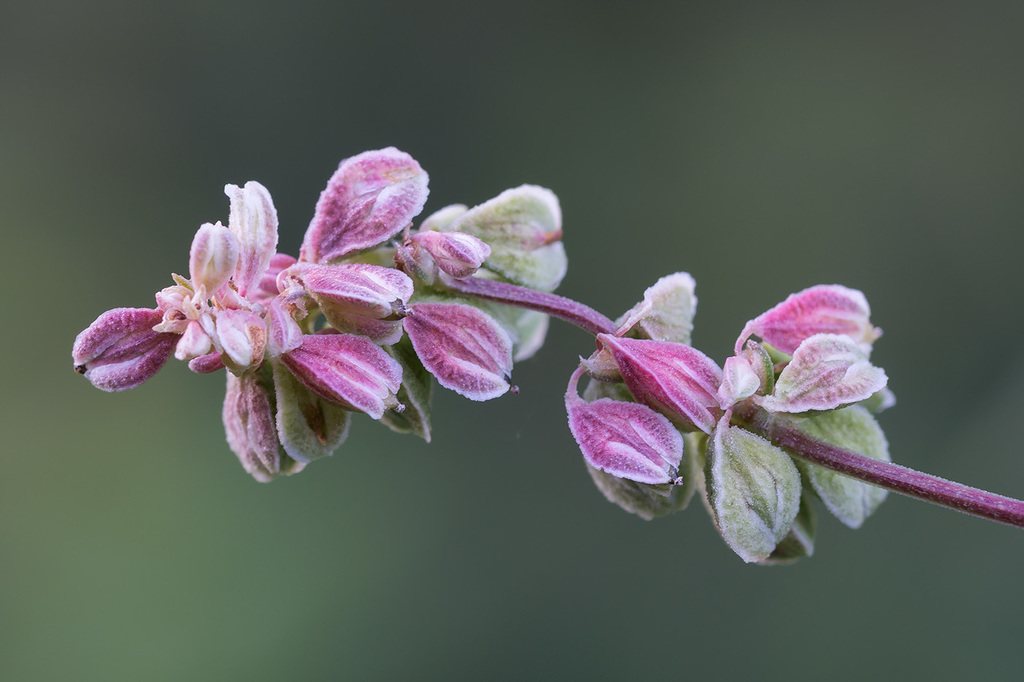
Black-bindweed
Fallopia convolvulus
Fallopia convolvulus, the black-bindweed or wild buckwheat, is a fast-growing annual flowering plant in the family Polygonaceae native throughout Europe, Asia and northern Africa.
Other old folk names include bear-bind, bind-corn, climbing bindweed, climbing buckwheat, corn-bind, corn bindweed, devil's tether, and wild buckwheat.
From the article Fallopia convolvulus on Wikipedia (CC BY-SA), quoted section by section
Description
Black-bindweed is a herbaceous vine growing to 1–1.5 m (39–59 in) long, with stems that twine clockwise round other plant stems. The alternate triangular leaves are 1.5–6 cm long and 0.7–3 cm broad with a 6–15 (–50) mm petiole; the basal lobes of the leaves are pointed at the petiole. The flowers are small, and greenish-pink to greenish white, clustered on short racemes. These clusters give way to small triangular achenes, with one seed in each achene. The flowers have 5 sepals, the 3 outer ones are larger and show a keel. It has 5 stamens and the fruit grows to 4 mm long. While it superficially resemble bindweeds in the genus Convolvulus there are many notable differences; it has ocrea (stipule-sheath at nodes), which Convolvulus does not; and Convolvulus has conspicuous trumpet-shaped flowers while Black-bindweed has flowers that are unobtrusive and only about 4 mm long.
Range & habitat
Fallopia convolvulus grows most commonly on disturbed or cultivated land, in northern Europe typically on warm, sunny, well-drained sandy or limestone soil types, but in hotter, drier areas like Pakistan, on moist shady sites. It ranges from sea level in the north of its range, up to 3,600 m (11,800 ft) altitude in the south in the Himalaya.
Wikipedia: “Distribution and habitat”
At the table
The seeds are edible, and were used in the past as a food crop, with remains found in Bronze Age middens. The seeds are too small and low-yielding to make a commercial crop, and it is now more widely considered a weed, occurring in crops, waste areas and roadsides. It can be a damaging weed when it is growing in a garden or crop, as it can not only damage the plants around which it twines, but also clog the machinery used to harvest a given crop. It is also an invasive species in North America.
== References ==
Wikipedia: “Cultivation and uses”
Where it lives
Recorded sightings
—
geo-referenced records in GBIF, from museums, herbaria and field observers.
Drag the globe to turn it. Dots are where records exist, not a range map; darker means more records.
In the stacks
Searching the stacks…
Every page naming Fallopia convolvulus in the Biodiversity Heritage Library →
This page is assembled live from iNaturalist, GBIF, Wikipedia, the Source Library and the Internet Archive. It is not yet part of the hand-edited codex. iNaturalist taxon 77129.