 NL·0681
Herbarium of the Nature Library
- Name
- Dryocampa rubicunda
- Family
- Saturniidae
- Native to
- Eastern North America, from southern Canada to Florida and eastern Texas
- Habitat
- Temperate deciduous forest, Suburban woodland
Rosy maple moth
Dryocampa rubicunda
Also calledDryocampe rubiconde (French) · Green-striped mapleworm (English, larva)
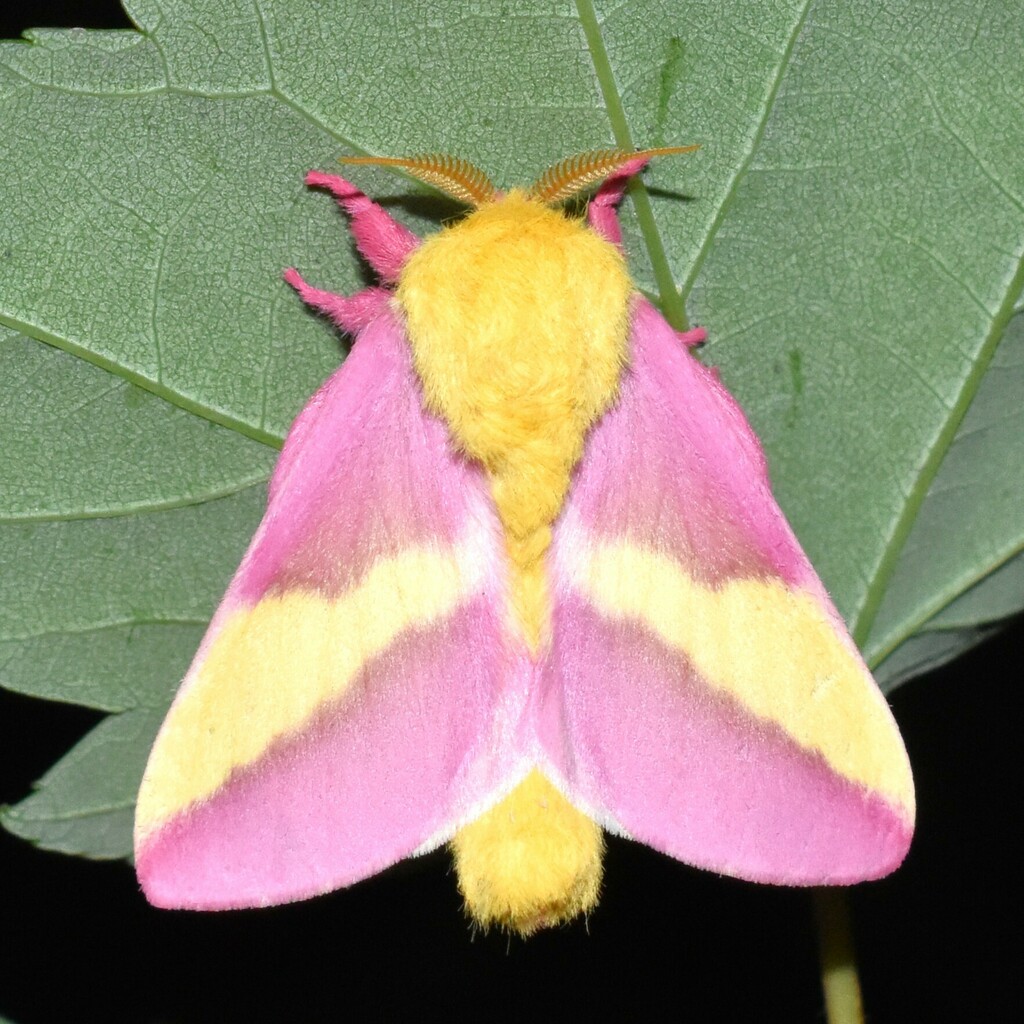
A small, woolly silk moth coloured like strawberry-lemonade sherbet in pink and yellow. Its caterpillar, the green-striped mapleworm, feeds on maples across eastern North America.
Dryocampa rubicunda, the rosy maple moth, is a small North American moth in the family Saturniidae, also known as the great silk moths. It was first described by Johan Christian Fabricius in 1793. The species is known for its wooly body and pink and yellow coloration, which varies from cream or white to bright pink or yellow. Males have bushier antennae than females, which allow them to sense female pheromones for mating. Wikipedia
What it can do
- iAdults do not feed; they mate and lay eggs within days
- iiCaterpillars can partly defoliate maples in outbreak years without usually killing the tree
In the field
Field marks
- aYellow forewings with a broad pink band across the middle and pink edges
- bFluffy yellow body and legs
- cPink, feathery antennae (larger in males)
- dCaterpillar pale green with darker stripes and two black horns behind the head
- Not to be confused with
- Pink-striped oakworm moth (Anisota virginiensis) is orange-brown and purplish with a translucent patch on the forewing. Spiny oakworm and other Anisota species are browner.
- Where to see it
- Porch lights near maple woods across the eastern US and southern Canada.
- When
- One generation in the north (May–Aug); two or three in the south (Apr–Sep)
Listen
Looking for field recordings…
Life & habits
- Diet
- Caterpillars eat maple leaves (especially red, silver and sugar maple) and sometimes oak; adults do not feed
- Habitat
- Deciduous forests and suburbs with maples
- Size
- Wingspan about 3.2–5 cm
Adults come to lights at night; young caterpillars feed in groups before dispersing.
Where it lives
Recorded sightings
—
geo-referenced records in GBIF, from museums, herbaria and field observers.
Native range
Eastern North America, from southern Canada to Florida and eastern Texas
Drag the globe to turn it. Dots are where records exist, not a range map; darker means more records.
In the stacks
Searching the stacks…
Every page naming Dryocampa rubicunda in the Biodiversity Heritage Library →
Marginalia
Curiosity
A pale form in Missouri and Kansas, sometimes called var. alba, is almost entirely white with little or no pink.
Kinship
- kingdomAnimalia
- ›phylumArthropoda
- ›subphylumHexapoda
- ›classInsecta
- ›subclassPterygota
- ›orderLepidoptera
- ›superfamilyBombycoidea
- ›familySaturniidae
- ›subfamilyCeratocampinae
- ›tribeDryocampini
- ›genusDryocampa
Neighbours on the shelf
Photographs: iNaturalist contributors under the licences shown. Records: GBIF.org. Historical plates: Source Library (CC BY-SA 4.0; originals public domain). Summary text: Nature Library editors and Wikipedia (CC BY-SA). Medicinal and edibility notes are historical and educational, not advice. iNaturalist taxon 48094.