- Animals
- ›Chordates
- ›Vertebrates
- ›Mammals
- ›Therians
- ›Placental Mammals
- ›Primates, Rodents, and Allies
- ›Primates
- ›Monkeys, Apes, and Tarsiers
- ›Monkeys and Apes
- ›Apes and Old World Monkeys
- ›Old World Monkeys
- ›Cercopithecines
- ›Baboons, Macaques, and Mangabeys
Baboons
Papio
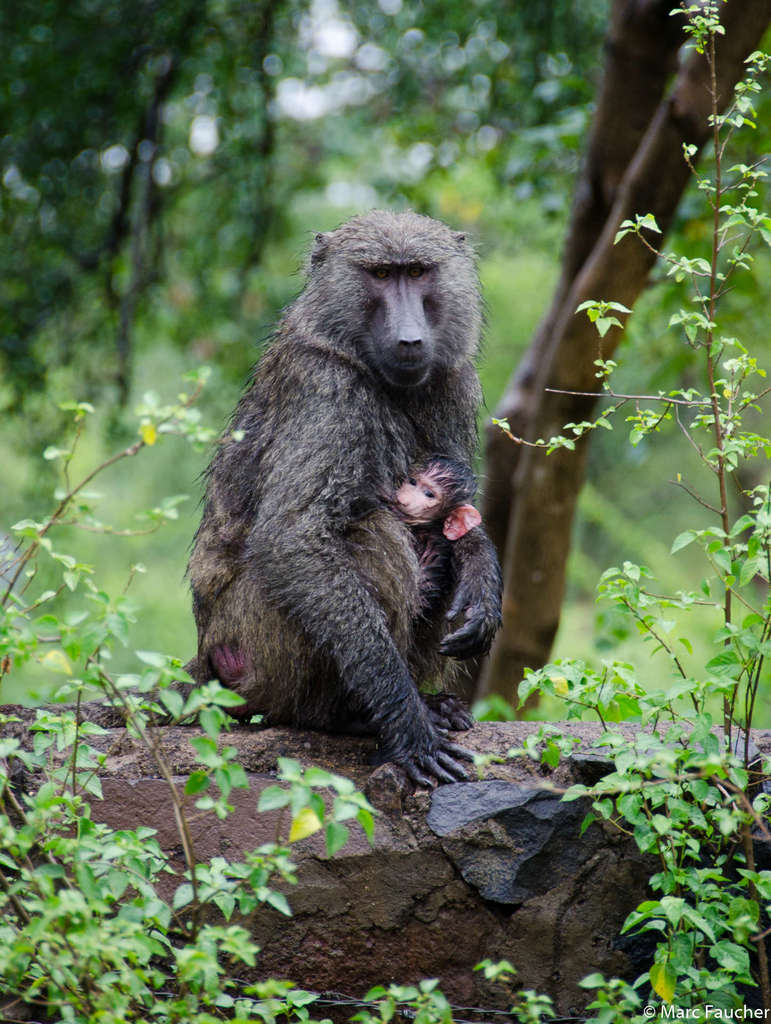
Baboons are primates comprising the genus Papio, one of the 23 genera of Old World monkeys, in the family Cercopithecidae. There are six species of baboon: the hamadryas baboon, the Guinea baboon, the olive baboon, the yellow baboon, the Kinda baboon and the chacma baboon. Each species is native to one of six areas of Africa and the hamadryas baboon is also native to part of the Arabian Peninsula. Baboons are among the largest non-hominoid primates and have existed for at least two million years.
Baboons vary in size and weight depending on the species. The smallest, the Kinda baboon, is 50 cm (20 in) in length and weighs only 14 kg (31 lb), while the largest, the chacma baboon, is up to 120 cm (47 in) in length and weighs 40 kg (88 lb). All baboons have long, dog-like muzzles, heavy, powerful jaws with sharp canine teeth, close-set eyes, thick fur except on their muzzles, short tails, and nerveless, hairless pads of skin on their protruding buttocks called ischial callosities that provide for sitting comfort. Male hamadryas baboons have large white manes. Baboons exhibit sexual dimorphism in size, colour, and canine teeth development.
7 branches of this genus, most-observed first · about 6 known species
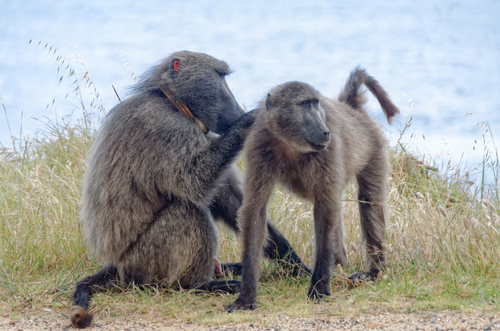
Chacma Baboon
speciesPapio ursinus
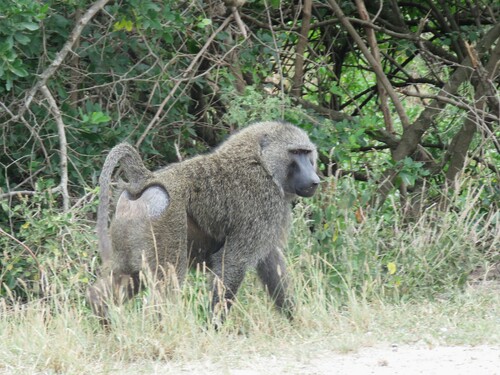
Olive Baboon
speciesPapio anubis
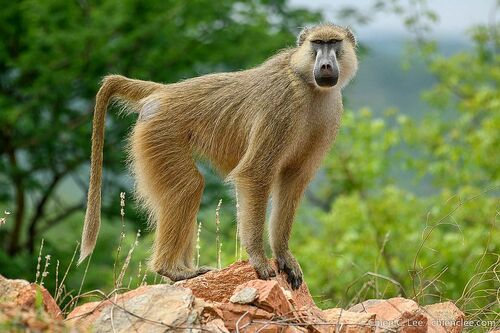
Yellow Baboon
speciesPapio cynocephalus
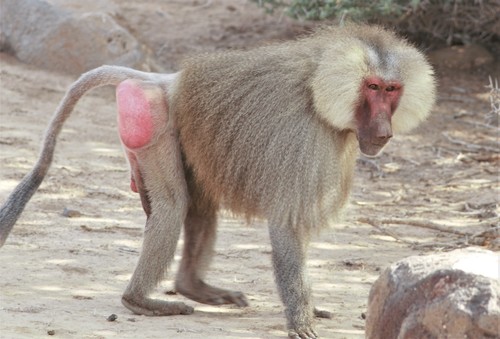
Hamadryas Baboon
speciesPapio hamadryas
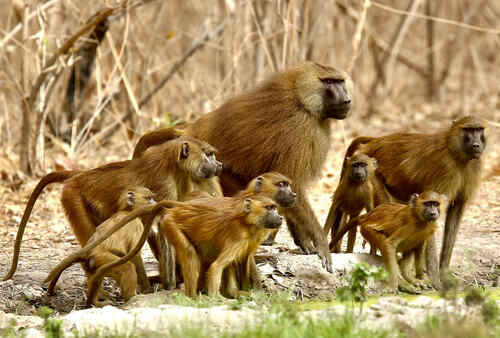
Guinea Baboon
speciesPapio papio
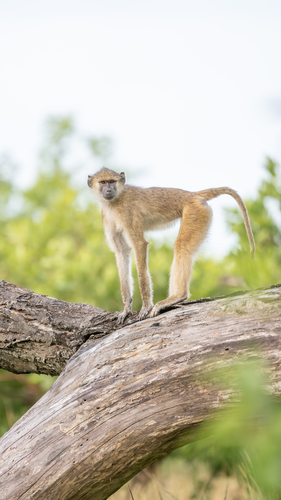
Kinda Baboon
speciesPapio kindae
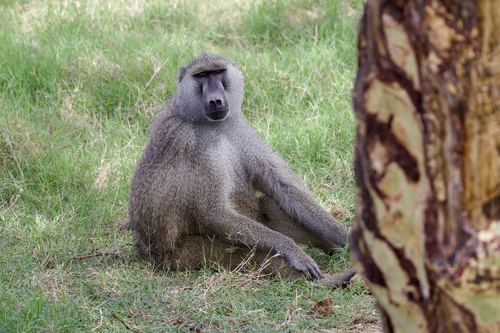
Olive × Yellow Baboon
hybridPapio anubis × cynocephalus
Where it lives
Recorded sightings
—
geo-referenced records in GBIF, from museums, herbaria and field observers.
Drag the globe to turn it. Dots are where records exist, not a range map; darker means more records.
In the old herbals & bestiaries

Jean Baptiste Audebert — Histoire naturelle des singes et des makis (1800)
Jean Baptiste Audebert · 1800 · p.89

Jean Baptiste Audebert — Histoire naturelle des singes et des makis (1800)
Jean Baptiste Audebert · 1800 · p.95

Jean Baptiste Audebert — Histoire naturelle des singes et des makis (1800)
Jean Baptiste Audebert · 1800 · p.92
In the stacks
Searching the stacks…
Every page naming Papio in the Biodiversity Heritage Library →
This page is assembled live from iNaturalist, GBIF, Wikipedia, the Source Library and the Internet Archive. It is not yet part of the hand-edited codex. iNaturalist taxon 43534.