- Animals
- ›Chordates
- ›Vertebrates
- ›Mammals
- ›Therians
- ›Placental Mammals
- ›Primates, Rodents, and Allies
- ›Primates
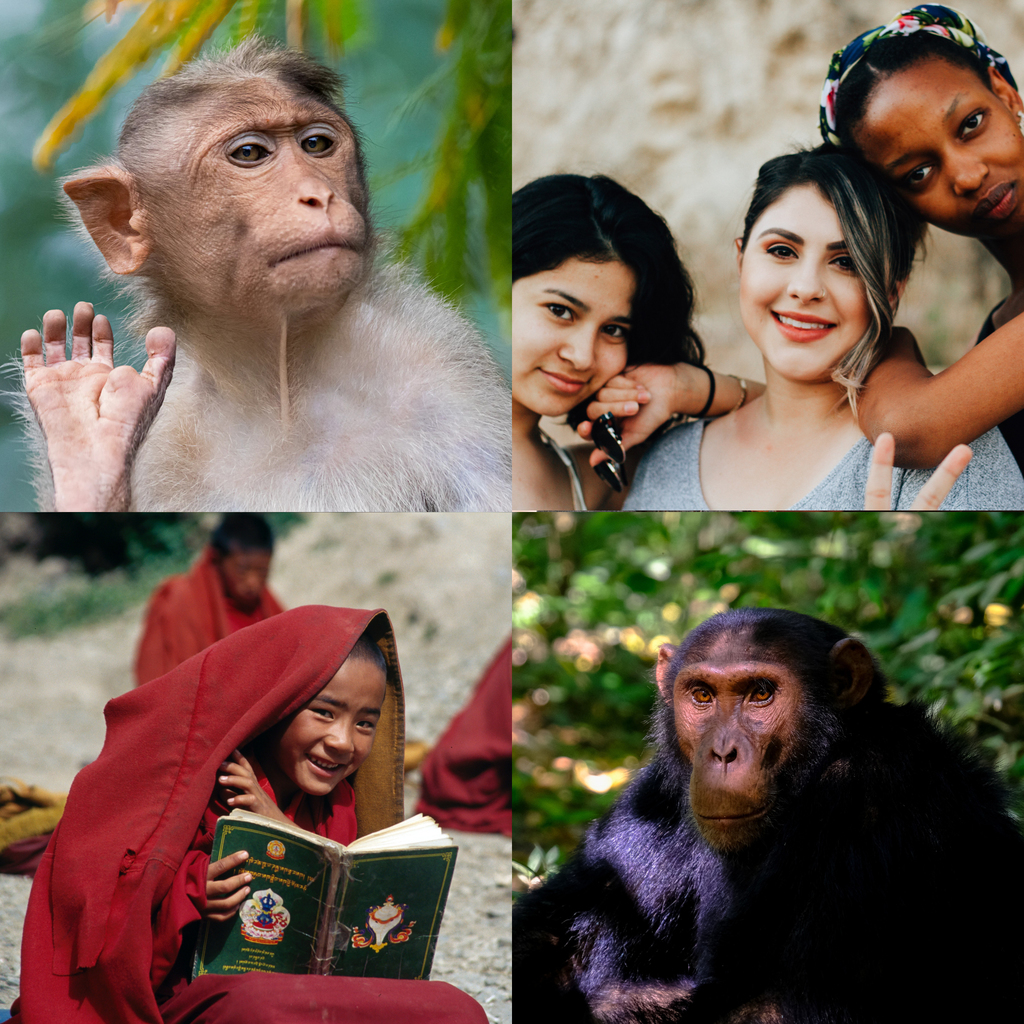
Monkeys, Apes, and Tarsiers
Haplorhini
Haplorhini (), the haplorhines (Greek for "simple-nosed") or the "dry-nosed" primates is a suborder of primates containing the tarsiers and the simians (Simiiformes or anthropoids), as sister of the Strepsirrhini ("moist-nosed"). The name is sometimes spelled Haplorrhini. The simians include catarrhines (Old World monkeys and apes, including humans), and the platyrrhines (New World monkeys).
Haplorhini was proposed by Pocock in 1918 when he realized the tarsiers were actually sister to the monkeys rather than the lemurs, also following findings of Hugh Cuming 80 years earlier and Linnaeus 160 years earlier. For Linnaeus, this ensemble of primates constituted a genus "Simia". For religious reasons, Homo constituted its own genus (which has remained).
2 branches of this suborder, most-observed first · about 390 known species
See this branch on the Wheel of Life →

Where it lives
Recorded sightings
—
geo-referenced records in GBIF, from museums, herbaria and field observers.
Drag the globe to turn it. Dots are where records exist, not a range map; darker means more records.
In the stacks
Searching the stacks…
Every page naming Haplorhini in the Biodiversity Heritage Library →
This page is assembled live from iNaturalist, GBIF, Wikipedia, the Source Library and the Internet Archive. It is not yet part of the hand-edited codex. iNaturalist taxon 786045.