- Animals
- ›Arthropods
- ›Hexapods
- ›Insects
- ›Winged and Once-winged Insects
- ›Butterflies and Moths
- ›Hawk, Sphinx, Silk, Emperor, and Allied Moths
- ›Emperor and Giant Silk Moths
- ›Emperor Moths
- ›Saturniini
- ›Antheraea
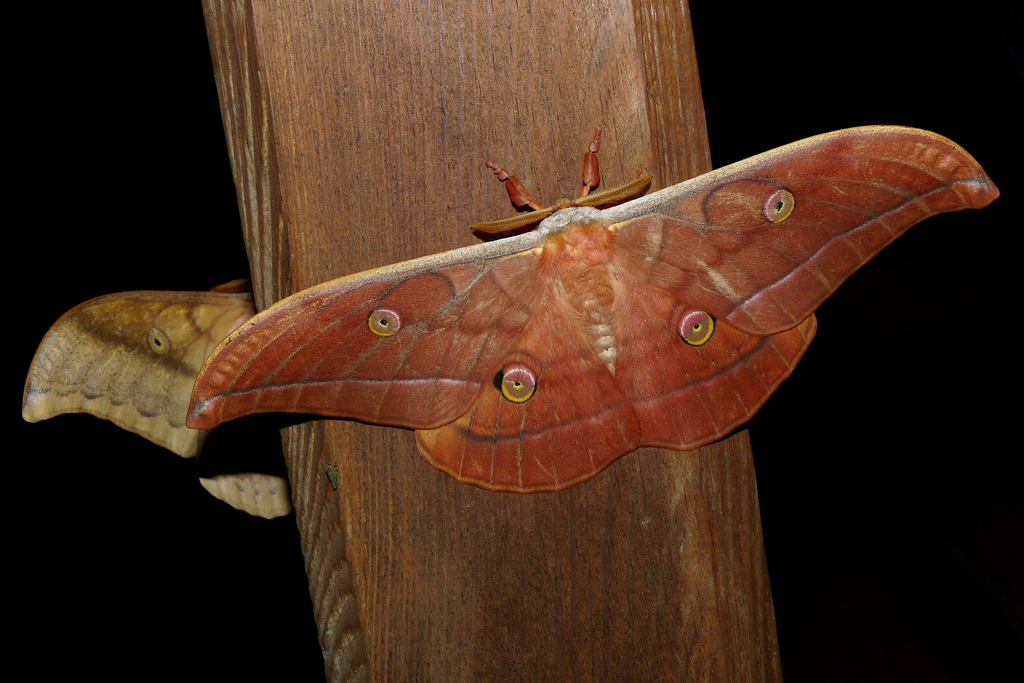
Japanese Silk Moth
Antheraea yamamai
Antheraea yamamai, the Japanese silk moth or Japanese oak silkmoth (Japanese: yamamayu(ga) (山繭(蛾)・ヤママユ(ガ)) or tensan (天蚕)) is a moth of the family Saturniidae. It is endemic to east Asia, but has been imported to Europe for tussar silk production and is now found in southeastern Europe, mainly in Austria, northeastern Italy, and the Balkans. It seems to be spreading north and a population has been reported near Deggendorf and Passau in Germany. The species was first described by Félix Édouard Guérin-Méneville in 1861. It has been hybridized artificially with Antheraea polyphemus of North America.
This moth has been cultivated in Japan for more than 1000 years. It produces a naturally white silk that is very strong and elastic, but does not dye well. It is now very rare and expensive.
Listen
Looking for field recordings…
Where it lives
Recorded sightings
—
geo-referenced records in GBIF, from museums, herbaria and field observers.
Drag the globe to turn it. Dots are where records exist, not a range map; darker means more records.
In the stacks
Searching the stacks…
Every page naming Antheraea yamamai in the Biodiversity Heritage Library →
This page is assembled live from iNaturalist, GBIF, Wikipedia, the Source Library and the Internet Archive. It is not yet part of the hand-edited codex. iNaturalist taxon 348017.