- Animals
- ›Arthropods
- ›Hexapods
- ›Insects
- ›Winged and Once-winged Insects
- ›Butterflies and Moths
- ›Geometrid and Swallowtail Moths
- ›Geometer Moths
- ›Carpet Moths
- ›Pug Moths & Allies
- ›Eupithecia
- ›Eupithecia semigraphata
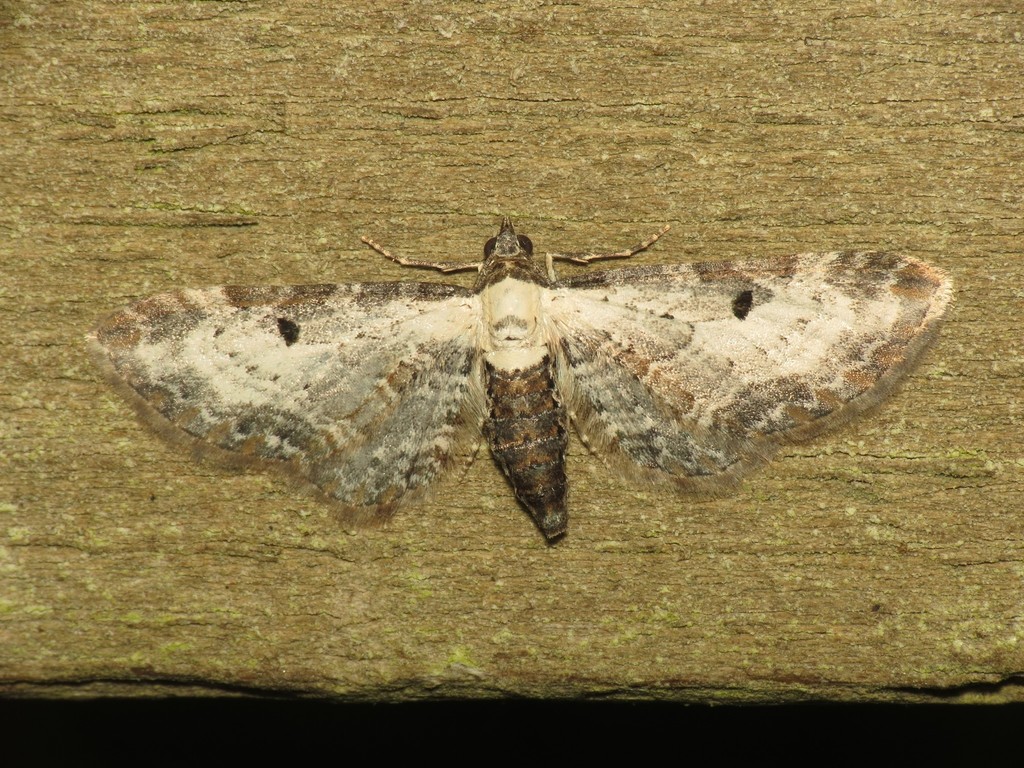
Bordered Pug
Eupithecia succenturiata
The bordered pug (Eupithecia succenturiata) is a moth of the family Geometridae. It is found across the Palearctic region. In the Pyrenees, the species can be found up to an altitude of 1800 metres. It prefers steppe areas, open bushy terrain, fallow and unimproved grasslands and parkland.
From the article Bordered pug on Wikipedia (CC BY-SA), quoted section by section
Description
This is an easily recognisable species, mainly due to the combination of colours and its large size relative to most other pugs (wingspan 21–24 mm). Typically this moth has whitish forewings with broad dark grey margins or suffused with brown margins. It is very variable, however, and can be nearly all white or nearly all grey. There is a small dark-coloured discal spot. The hindwings are similar in colour with a small discal spot. The abdomen is conspicuously patterned. It is grey, with a white base. The larva is light brown with numerous, small white warts scattered throughout the body. It has a narrow white lateral stripe and a variety of diamond-shaped brown spots along the back.
Listen
Looking for field recordings…
Where it lives
Recorded sightings
—
geo-referenced records in GBIF, from museums, herbaria and field observers.
Drag the globe to turn it. Dots are where records exist, not a range map; darker means more records.
In the stacks
Searching the stacks…
Every page naming Eupithecia succenturiata in the Biodiversity Heritage Library →
This page is assembled live from iNaturalist, GBIF, Wikipedia, the Source Library and the Internet Archive. It is not yet part of the hand-edited codex. iNaturalist taxon 324394.