- Animals
- ›Arthropods
- ›Hexapods
- ›Insects
- ›Winged and Once-winged Insects
- ›Butterflies and Moths
- ›Pyralid and Crambid Snout Moths
- ›Crambid Snout Moths
- ›Moss-eating Crambid Snout Moths
- ›Scoparia
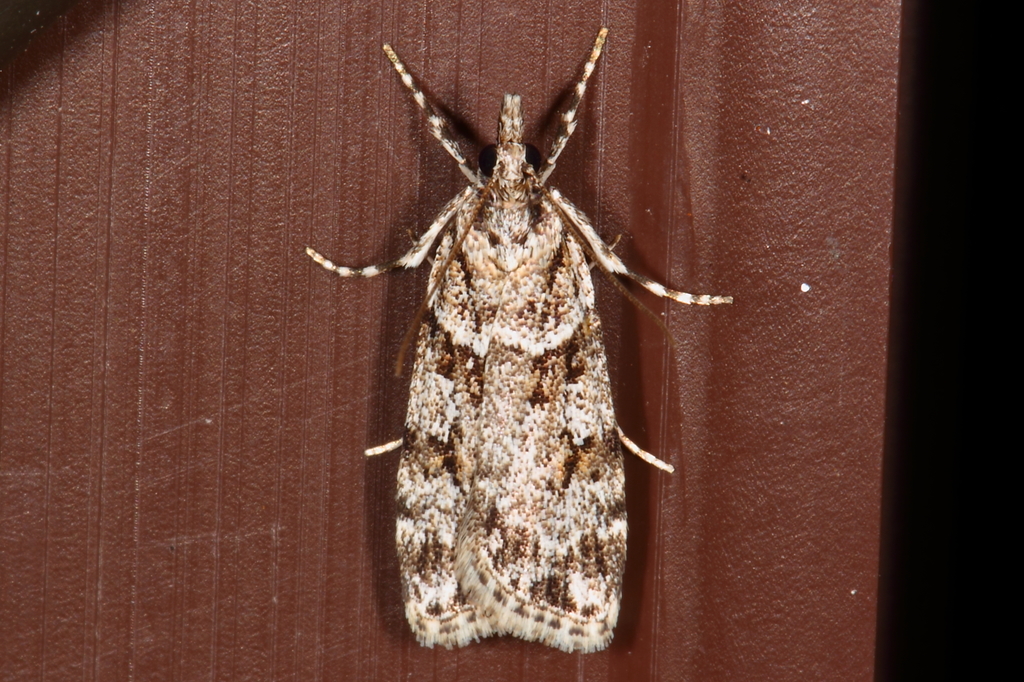
Double-striped Scoparia Moth
Scoparia biplagialis
Scoparia biplagialis, the double-striped scoparia moth, is a moth in the family Crambidae. It was described by Francis Walker in 1866. It is found in North America, where it has been recorded from Alabama, Alaska, Alberta, British Columbia, California, Colorado, Florida, Georgia, Illinois, Indiana, Kentucky, Maine, Manitoba, Maryland, Massachusetts, Michigan, Minnesota, Montana, New Brunswick, New Hampshire, New Jersey, New York, North Carolina, North Dakota, Nova Scotia, Ohio, Ontario, Oregon, Pennsylvania, Quebec, Tennessee, Virginia, Washington, West Virginia and Wisconsin.
The length of the forewings is 6–8 mm. Adults are on wing from June to August.
Listen
Looking for field recordings…
Where it lives
Recorded sightings
—
geo-referenced records in GBIF, from museums, herbaria and field observers.
Drag the globe to turn it. Dots are where records exist, not a range map; darker means more records.
In the stacks
Searching the stacks…
Every page naming Scoparia biplagialis in the Biodiversity Heritage Library →
This page is assembled live from iNaturalist, GBIF, Wikipedia, the Source Library and the Internet Archive. It is not yet part of the hand-edited codex. iNaturalist taxon 146963.