- Animals
- ›Arthropods
- ›Hexapods
- ›Insects
- ›Winged and Once-winged Insects
- ›Ants, Bees, Wasps, and Sawflies
- ›Narrow-waisted Wasps, Ants, and Bees
- ›Ants, Bees, and Stinging Wasps
- ›Formicoidea
- ›Ants
- ›Formicine Ants
- ›Camponotine Ants
- ›Camponotus
- ›Tanaemyrmex
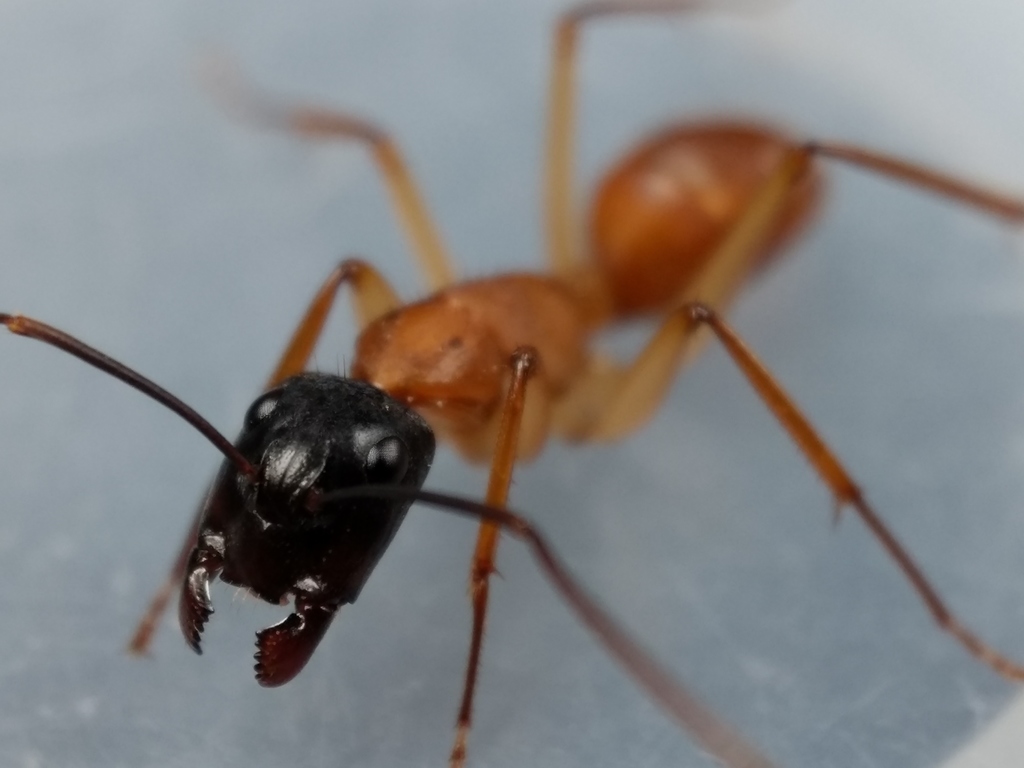
Nigriceps-group Sugar Ants
Camponotus nigriceps
The black-headed sugar ant (Camponotus nigriceps), also known as the brown sugar ant, is a species of Formicinae ant endemic to Australia. Found throughout most states, the species is a member of the genus Camponotus, a cosmopolitan genus of ants commonly known as carpenter ants. It was formally described and named by British entomologist Frederick Smith in 1858. These ants are characterised by their black head, reddish-brown mesosoma and black gaster, which can change in colour.
The species is polymorphic: workers and soldiers measure 6 to 12 millimetres (0.24 to 0.47 in) and males are 12 millimetres (0.47 in). The queens are the largest members of the colony, measuring 16 millimetres (0.63 in). Colonies dwell in dry regions, including open areas or in dry sclerophyll woodland, where they nest in soil, large mounds or under stones. Nuptial flight occurs in summer and nests can hold several thousand individuals. Considered a household pest, black-headed sugar ants feed on sweet foods and insects and tend to butterfly larvae. Numerous birds and fish prey on these ants.
9 branches of this group, most-observed first
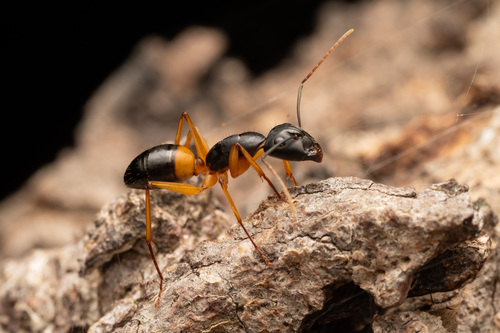
Banded Sugar Ant
speciesCamponotus consobrinus
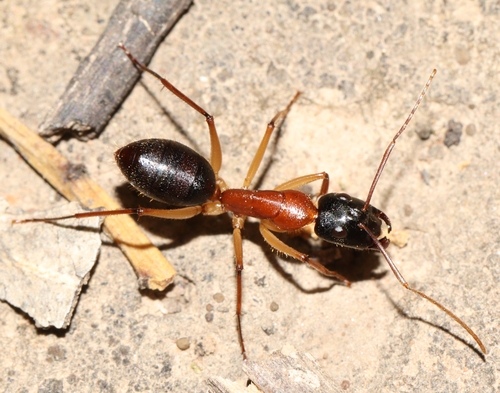
Black-headed Sugar Ant
speciesCamponotus nigriceps

Camponotus eastwoodi
speciesCamponotus eastwoodi
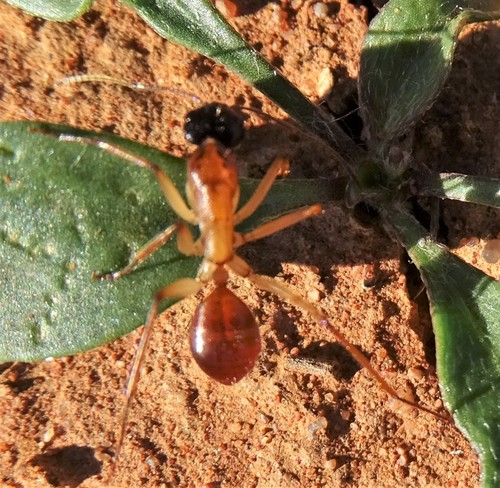
Camponotus loweryi
speciesCamponotus loweryi
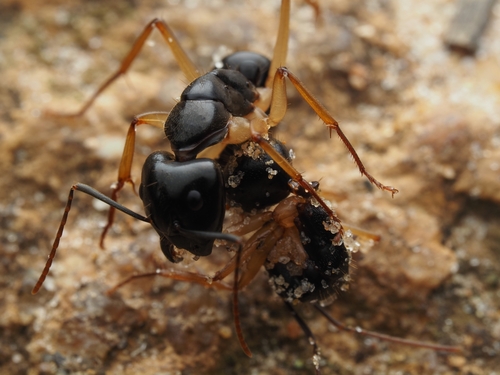
Camponotus prostans
speciesCamponotus prostans

Camponotus pallidiceps
speciesCamponotus pallidiceps

Camponotus clarior
speciesCamponotus clarior
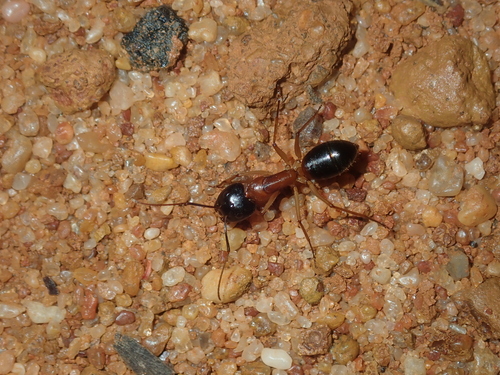
Camponotus dryandrae
speciesCamponotus dryandrae
Camponotus longideclivis
speciesCamponotus longideclivis
Where it lives
Recorded sightings
—
geo-referenced records in GBIF, from museums, herbaria and field observers.
Drag the globe to turn it. Dots are where records exist, not a range map; darker means more records.
In the stacks
Searching the stacks…
Every page naming Camponotus nigriceps in the Biodiversity Heritage Library →
This page is assembled live from iNaturalist, GBIF, Wikipedia, the Source Library and the Internet Archive. It is not yet part of the hand-edited codex. iNaturalist taxon 1352297.