On eBird ↗
Coal Tit
Live sightings near you, the range map, bar charts of when it is seen, and Macaulay Library photos and recordings.
Coal Tit
Periparus ater
The coal tit (Periparus ater) is a passerine bird in the tit family, Paridae. It is a widespread and common resident breeder in forests throughout the temperate to subtropical Palearctic, including North Africa. The black-crested tit is now included in this species.
From the article Coal tit on Wikipedia (CC BY-SA), quoted section by section
Description
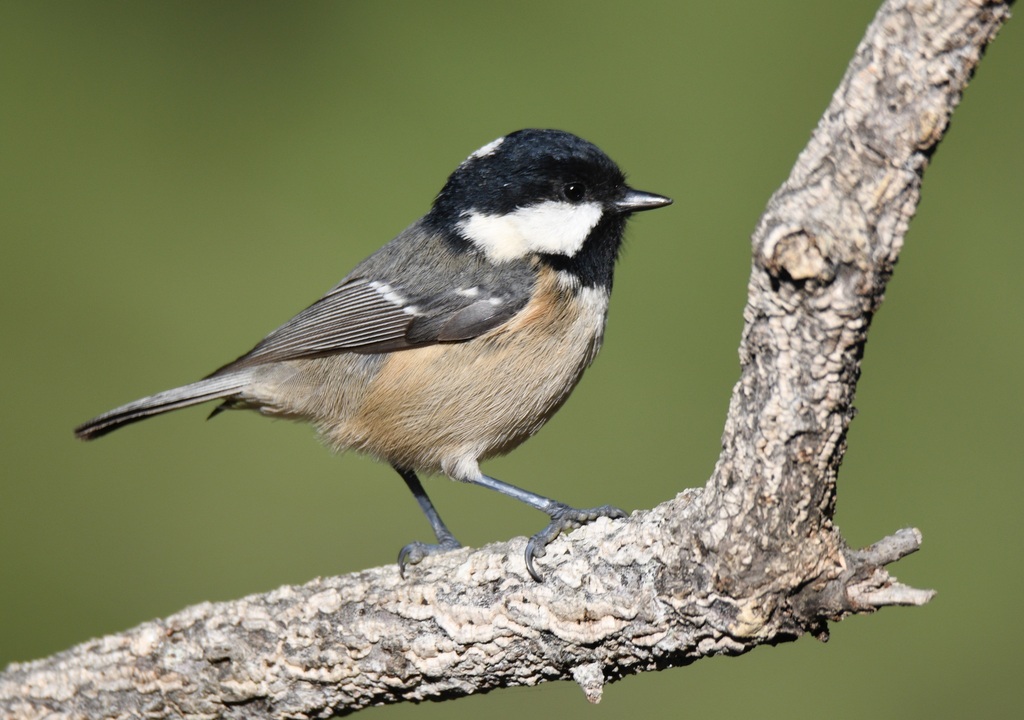
The coal tit is 10–11.5 cm in length, and has a distinctive large white nape spot on its black head. The head, throat and neck of the adult are glossy blue-black, contrasting with the off-white sides of the face, which are tinged grey or yellow depending on subspecies. The brilliant white nape is another striking feature, as are the white tips of the wing coverts, which appear as two wingbars. The underparts are whitish, shading from buff to rufous on the flanks. The bill is black, the legs are lead-coloured, and the irides are dark brown. Juvenile birds have duller plumage than adults. They lack the glossy black head of adults and the white nape and cheeks are tinged yellow. While searching for food, flocks of coal tits maintain contact with incessant short dee or see-see calls. The species' song – if "song" it can be called – is a strident if-he, if-he, if-he, most frequently heard from January to June, but also in autumn. It resembles the song of the great tit, but is much faster and higher in pitch. One variant of this song ends with a sharp ichi. North African birds also have a currr call similar to that of the crested tit (Lophophanes cristatus) which is not found in Africa.
What it does
It is typically a bird of temperate humid conifer forest, but apart from that shows little habitat specificity. In Bhutan for example coal tits are fairly common residents above the subtropical zone, at an altitude of around 3,000–3,800 m ASL, and are found in forests dominated by Bhutan fir (Abies densa) as well as in those characterized by Himalayan hemlock (Tsuga dumosa) and rhododendrons. The coal tit is year-round resident throughout most of its range, making only local movements in response to particularly severe weather. Only the Siberian birds migrate more regularly. On rare occasions, vagrants may travel longer distances. For instance, the nominate subspecies of continental Europe was recorded in Ireland once in 1960 and once prior to then, but not since. In winter, coal tits form small flocks in winter with other tit species. This species resembles other tits in its acrobatic skills and restless activity. However, it more frequently perches on a trunk and, with its little hops, resembles a treecreeper (Certhia). Its diet is similar to that of other tits; it particularly enjoys beechmast and picks out the seeds from fir (Abies) and larch (Larix) cones. It also joins Carduelis redpolls and siskins in alders (Alnus) and birches (Betula). …
Wikipedia: “Behaviour and ecology”
Listen
Looking for field recordings…
Where it lives
Recorded sightings
—
geo-referenced records in GBIF, from museums, herbaria and field observers.
Drag the globe to turn it. Dots are where records exist, not a range map; darker means more records.
In the old herbals & bestiaries


In the stacks
Searching the stacks…
Every page naming Periparus ater in the Biodiversity Heritage Library →
This page is assembled live from iNaturalist, GBIF, Wikipedia, the Source Library and the Internet Archive. It is not yet part of the hand-edited codex. iNaturalist taxon 144823.