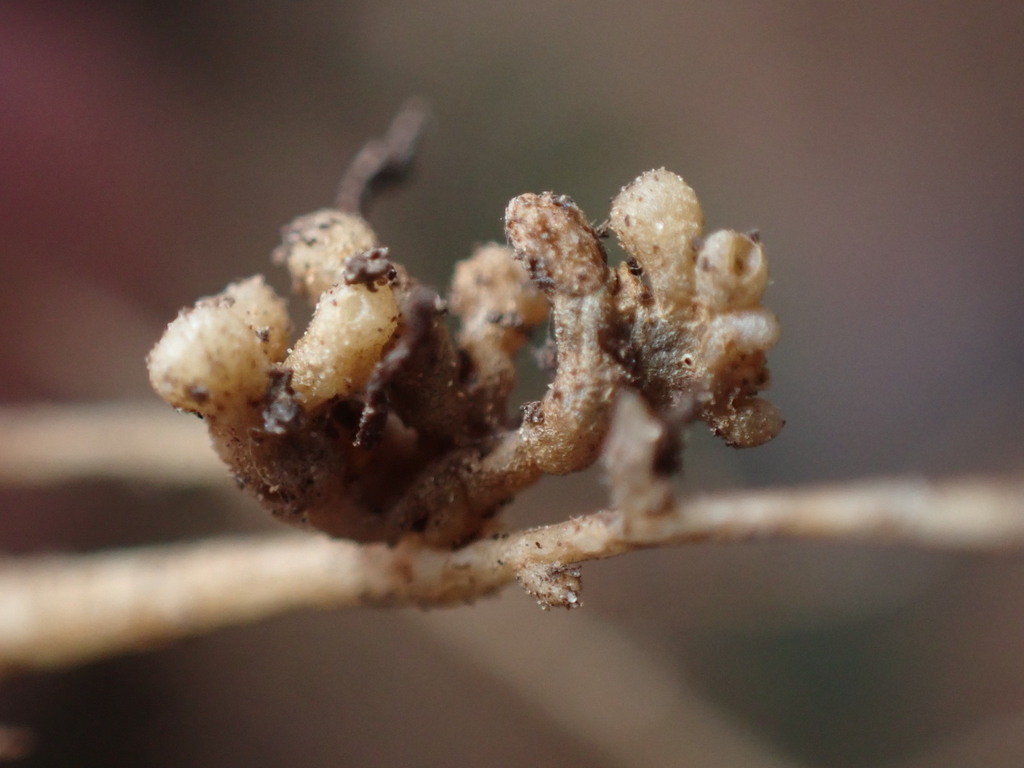
Ensifer medicae
Ensifer medicae (also known as Sinorhizobium medicae) is a species of gram-negative, nitrogen-fixing, rod-shaped bacteria. They can be free-living or symbionts of leguminous plants in root nodules. E.medicae was first isolated from root nodules on plants in the genus Medicago. Some strains of E.medicae, like WSM419, are aerobic. They are chemoorganotrophic mesophiles that prefer temperatures around 28 °C. In addition to their primary genome, these organisms also have three known plasmids, sized 1,570,951 bp, 1,245,408 bp and
Where it lives
Recorded sightings
—
geo-referenced records in GBIF, from museums, herbaria and field observers.
Drag the globe to turn it. Dots are where records exist, not a range map; darker means more records.
In the stacks
Searching the stacks…
Every page naming Ensifer medicae in the Biodiversity Heritage Library →
This page is assembled live from iNaturalist, GBIF, Wikipedia, the Source Library and the Internet Archive. It is not yet part of the hand-edited codex. iNaturalist taxon 975346.