- Plants
- ›Vascular Plants
- ›flowering plants
- ›Dicots
- ›magnolias, nutmegs, and allies
- ›custard-apples
- ›Malmeoideae
- ›Malmeeae
- ›Unonopsis
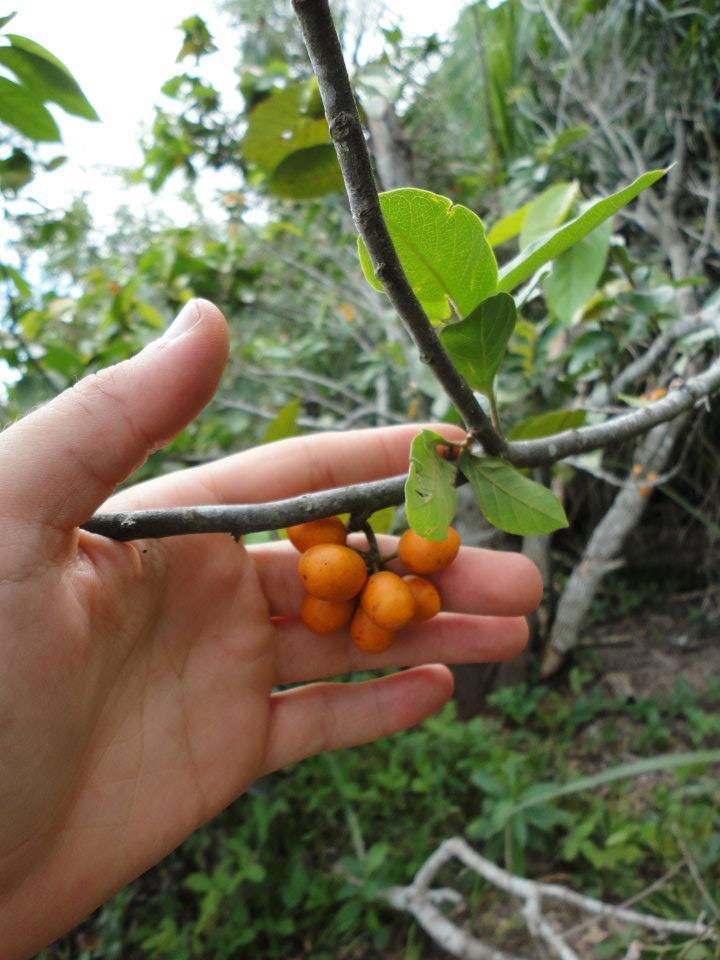
Unonopsis guatterioides
Unonopsis guatterioides, also known as envieira, is a species of flowering plant in the genus Unonopsis. It is a tree native to tropical Southern America which produces white flowers, and is known to be used in both construction and tropical medicine.
From the article Unonopsis guatterioides on Wikipedia (CC BY-SA), quoted section by section
Description
Unonopsis guatterioides is an evergreen tree, typically growing from 4–7 m (13–23 ft) tall, with a trunk diameter of 8–18 cm (3.1–7.1 in). It has imparipinnate, alternate leaves with petioles that are 2–8 mm (0.079–0.315 in) long. It has entire, narrowly elliptic, camptodromous, petiolate leaves with an acuminate apex. The young twigs, petioles, and midribs are covered densely with white hairs. The inflorescences are 1-2 flowered, with pedicels ranging from 12–35 mm (0.47–1.38 in). The inflorescences produce globose flower buds, with free, ovate, triangular, 2–3 mm (0.079–0.118 in) long sepals, which are covered with brown hairs on the outer face. The petals are white or cream in colour, and are free, ovate, 2–7 mm (0.079–0.276 in) long and 4–6 mm (0.16–0.24 in) wide. The tree flowers in October, and the flowers have a strong scent in the mornings. The berries start green and ripen through orange and red to become 'dark purplish', they are 10-18mm long, and rounded to minutely apiculate, with 5–12 mm (0.20–0.47 in) long stipes. The tree is monocarpic, and fruits between May and October.
Range & habitat
U. guatterioides is well documented to grow along river sides in tropical lowland areas. It is described to grow in "non-inundated forest on sandy to clayey soil". On the Global Biotic Interactions database, there are seven documented herbivores for U. guatterioides. In a study of U. guatterioides floral biology, pollination visits by at least three groups were documented: male Elumaema bombiformis, Meliponidae bees, and Chrysomelidae coleopterans. Aspergillus flavus (Aspergillus ear rot) is a documented pest of Unonopsis guatterioides.
Wikipedia: “Habitat and ecology”
At the table
There are a number of documented uses for U. guatterioides. An extract made from the bark, and the bark itself are known to be used to treat snakebite and fevers respectively. One source cites that the trunk is used for construction, however, other sources cite that the wood is of low quality, not used for construction or for fuel. The wood is light, and can be used for the construction of light boxes. In addition to use in medicine, the bark is documented to be used as strapping for carrying objects, or to make rudimentary fibre.
Wikipedia: “Uses”
In human culture
The derivation of the Latin bimodal specific epithet Unonopsis guatterioides refers to the similarity of the plant to another Annonaceae genus, Guatteria.
Wikipedia: “Etymology”
Where it lives
Recorded sightings
—
geo-referenced records in GBIF, from museums, herbaria and field observers.
Drag the globe to turn it. Dots are where records exist, not a range map; darker means more records.
In the stacks
Searching the stacks…
Every page naming Unonopsis guatterioides in the Biodiversity Heritage Library →
This page is assembled live from iNaturalist, GBIF, Wikipedia, the Source Library and the Internet Archive. It is not yet part of the hand-edited codex. iNaturalist taxon 910457.