- Plants
- ›Vascular Plants
- ›flowering plants
- ›Dicots
- ›Legumes, Milkworts, and Allies
- ›Legumes
- ›Faboideae
- ›Millettieae
- ›Lonchocarpus
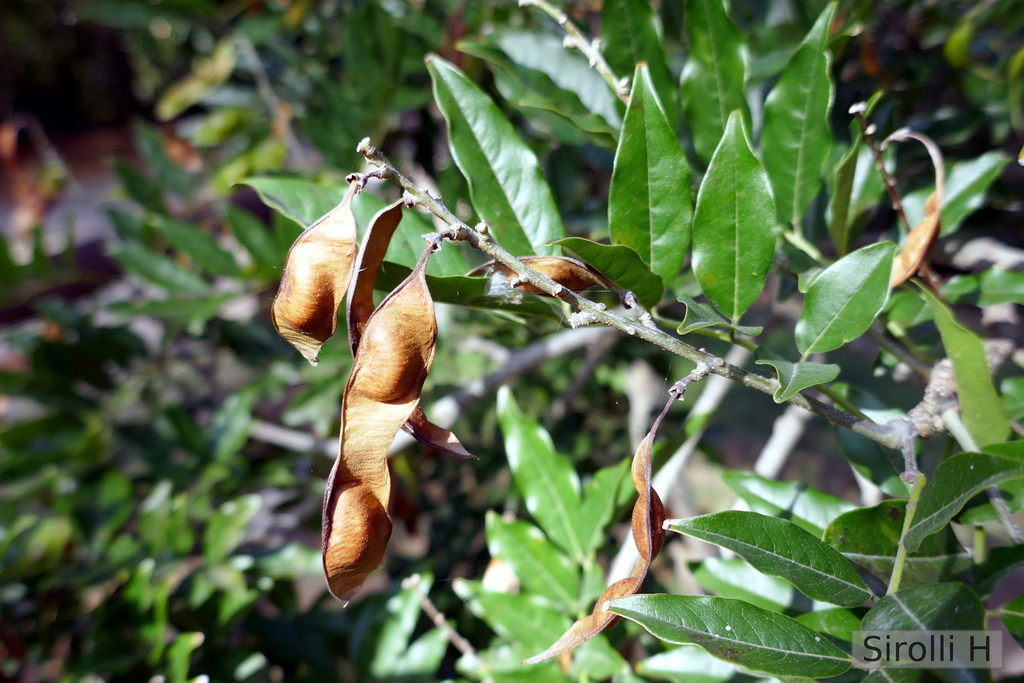
Lonchocarpus nitidus
Lonchocarpus is a plant genus in the legume family (Fabaceae). It includes 166 species native to the tropical Americas, tropical Africa, and Madasgascar. The species are called lancepods due to their fruit resembling an ornate lance tip or a few beads on a string.
Cubé resin is produced from the roots of L. urucu and namely ''L. utilis (cubé). It contains enough of the toxic rotenoids rotenone and deguelin to be used as an insecticide and piscicide. As these are naturally occurring compounds, they were formerly used in organic farming. Since it is highly unselective and kills useful, as well as pest, animals, it is considered harmful to the environment today. Also, chronic exposure to rotenone and deguelin appears to increase the risk of Parkinson's disease, even in mammals, for which these compounds are less immediately toxic than for fish and insects. Deguelin might be useful in cancer therapy if it can be applied directly into tumors, and Lonchocarpus root is used to a probably insignificant extent by indigenous peoples as an aid in fish stunning, e.g. by the Nukak who call it nuún.
Where it lives
Recorded sightings
—
geo-referenced records in GBIF, from museums, herbaria and field observers.
Drag the globe to turn it. Dots are where records exist, not a range map; darker means more records.
In the stacks
Searching the stacks…
Every page naming Lonchocarpus nitidus in the Biodiversity Heritage Library →
This page is assembled live from iNaturalist, GBIF, Wikipedia, the Source Library and the Internet Archive. It is not yet part of the hand-edited codex. iNaturalist taxon 884049.