- Plants
- ›Vascular Plants
- ›flowering plants
- ›Dicots
- ›Mints, Plantains, Olives, and Allies
- ›Mint Family
- ›Nepetoideae
- ›Mentheae
- ›balms, mints, and thymes
- ›Clinopodium
- ›Clinopodium
- ›Pseudomelissa
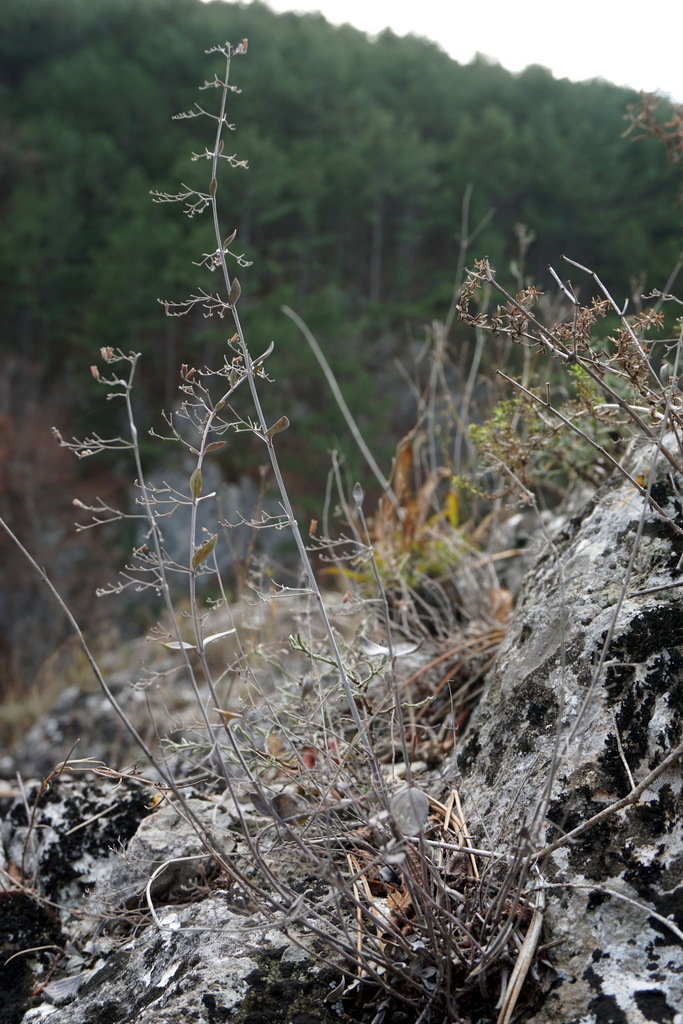
Clinopodium serpyllifolium
Micromeria fruticosa (syn. Clinopodium serpyllifolium spp.), commonly known as white micromeria or white-leaved savory, is a dwarf evergreen shrub endemic to the eastern Mediterranean.
The plant's aromatic leaves (resembling mint) are used in making decoctions (herbal teas).
From the article Micromeria fruticosa on Wikipedia (CC BY-SA), quoted section by section
Range & habitat
White-leaved savory is endemic to the eastern Mediterranean (Turkey, Syria, Lebanon and Israel). It grows mainly on rock surfaces in the low Mediterranean region, and is more common on chalk and calcrete rocks than on rocks of limestone. In the Levant its white blossoms can be seen between July and November. Related species are found in the Balkans.
Wikipedia: “Distribution and habitat”
At the table
Besides tea which can be made by an infusion of its mint-flavored leaves, the Arabic speaking population in the Hebron area often prepared dried figs (Arabic: قطين, romanized: quṭṭēn) by laying them out to dry upon a large stone slab that had been covered with crushed leaves and stems of thyme-leaved savory (Micromeria fruticosa) for flavoring. This is also thought to have been done because of the thyme-leaved savory's anti-fungal properties. The ideal time of foraging the plant is between late January and March.
Wikipedia: “Culinary uses”
In medicine
A total of 215 phenolics and other chemical compounds were identified in the methanol extracts of M. fruticosa leaves. Of these, over 180 phytochemicals (87 flavonoids, 41 phenolic acids, 16 terpenoids, 8 sulfate derivatives, 7 iridoids, and others) are reported in Micromeria. Some of the metabolites separated are acacetin-7-O-rutinoside, apigenin 7-O-rutinoside, chlorogenic acid, coumaroylagmatine, lithospermic acid, rosmarinic acid, rutin, sagerinic acid, salvinorin C, santaflavone, and other sulfate derivatives.
Wikipedia: “Phytochemistry”
Where it lives
Recorded sightings
—
geo-referenced records in GBIF, from museums, herbaria and field observers.
Drag the globe to turn it. Dots are where records exist, not a range map; darker means more records.
In the stacks
Searching the stacks…
Every page naming Clinopodium serpyllifolium in the Biodiversity Heritage Library →
This page is assembled live from iNaturalist, GBIF, Wikipedia, the Source Library and the Internet Archive. It is not yet part of the hand-edited codex. iNaturalist taxon 856718.