- Plants
- ›Vascular Plants
- ›flowering plants
- ›monocots
- ›Agaves, Orchids, Irises, and Allies
- ›amaryllis, onions, and allies
- ›onion subfamily
- ›Allieae
- ›Allium
- ›Anguinum
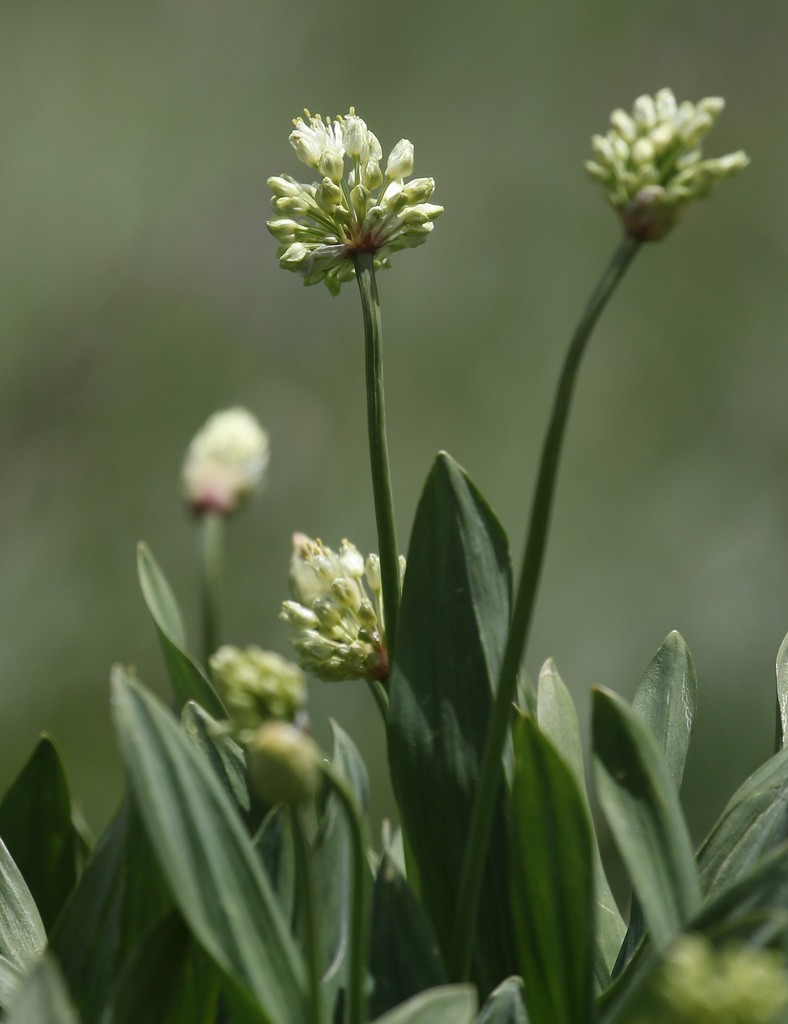
Alpine leek
Allium victorialis
Allium victorialis, commonly known as victory onion, Alpine leek, and Alpine broad-leaf allium is a broad-leaved Eurasian species of wild onion. It is a perennial of the Amaryllis family that occurs widely in mountainous regions of Europe (including Caucasus) and parts of Asia (Himalayas).
Some authors consider certain East Asian and Alaskan populations as constituting subspecies platyphyllum within the species Allium victorialis. Recent sources recognize this group as a distinct species, called Allium ochotense.
From the article Allium victorialis on Wikipedia (CC BY-SA), quoted section by section
Range & habitat
Allium victorialis is found widely across mountain ranges Europe, as well as the Caucasus and the Himalayas.
Wikipedia: “Distribution”
At the table
The plant, in past centuries in certain mountainous regions of Europe, "was cultivated as a medicinal and fetish plant". The plant known as pukusa to the Ainu people in northern Japan, an important food source, had been classed as A .victorialis subsp. platyphyllum, but recent genetics classify it under its own species, Allium ochotense.
Wikipedia: “Uses”
Where it lives
Recorded sightings
—
geo-referenced records in GBIF, from museums, herbaria and field observers.
Drag the globe to turn it. Dots are where records exist, not a range map; darker means more records.
In the old herbals & bestiaries


In the stacks
Searching the stacks…
Every page naming Allium victorialis in the Biodiversity Heritage Library →
This page is assembled live from iNaturalist, GBIF, Wikipedia, the Source Library and the Internet Archive. It is not yet part of the hand-edited codex. iNaturalist taxon 85437.