- Animals
- ›Arthropods
- ›Hexapods
- ›Insects
- ›Winged and Once-winged Insects
- ›Cockroaches and Termites
- ›Giant and Wood Cockroaches
- ›Giant Cockroaches
- ›Pycnoscelinae
- ›Pycnoscelus
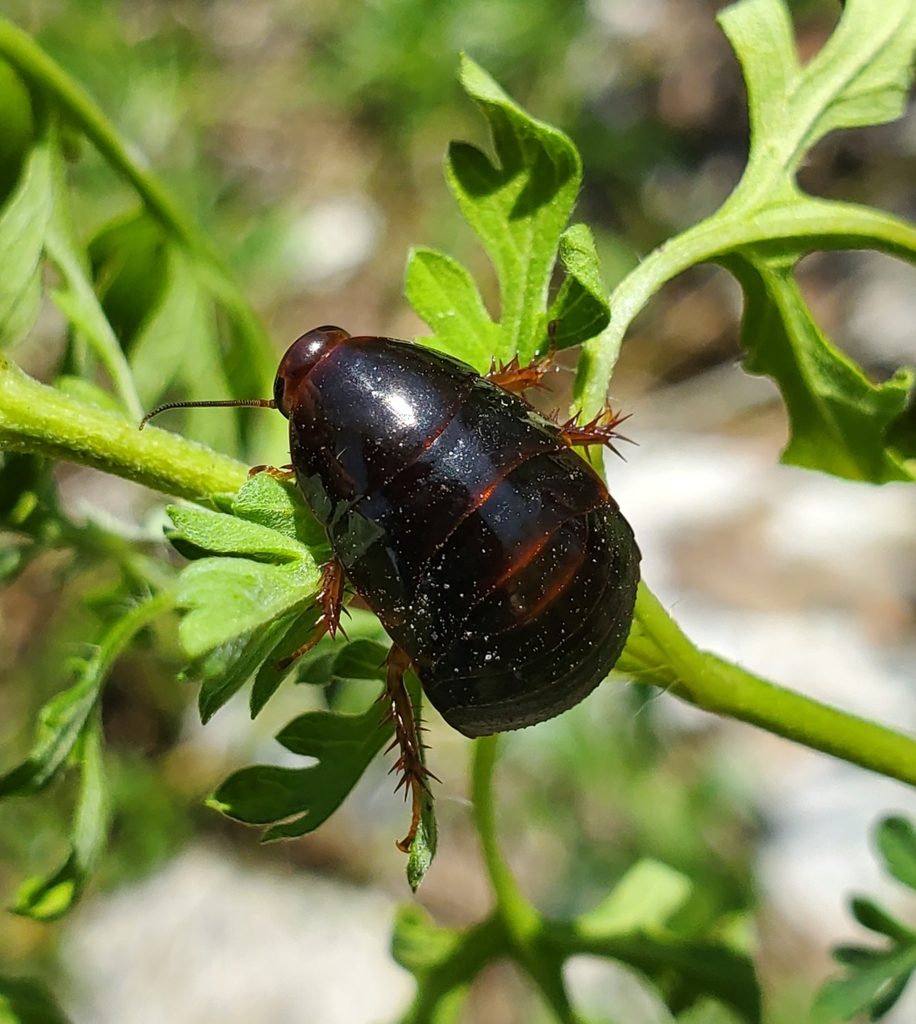
Surinam Cockroach
Pycnoscelus surinamensis
The Surinam cockroach or greenhouse cockroach (Pycnoscelus surinamensis) is a species of burrowing cockroach. It is a common plant pest endemic to the Indomalayan realm that has spread to tropical and into subtropical regions around the world, and in isolated populations to temperate climates where protective habitat such as greenhouses provide shelter for individuals inadvertently shipped in the soil of plants. Its populations are almost exclusively female, and it reproduces through parthenogenesis, having evolved several clonal strains from its sexual progenitor P. indicus.
From the article Surinam cockroach on Wikipedia (CC BY-SA), quoted section by section
Description
Adults are around 18–25 mm (0.71–0.98 in) in length, and have dark brown to black bodies with shiny paler brown wings. The front edge of the pronotum (head shield) has a pale white band. While males are rarely produced, male adults have longer wings than females, completely covering the abdomen, although both sexes are poor flyers. Nymphs are around 4.5 mm (0.18 in) long at birth, translucent white with orange-brown mandibles and spines, and darker eye spots than the rest of the head. The exoskeleton gradually hardens on exposure to air, becoming a glossy brown in 5 to 6 hours, while its underside and legs remain translucent. Older nymphs develop shiny black anterior abdominal segments, and roughened, dull black posterior segments.
Range & habitat
P. surinamensis originated in the Indomalayan region and is now cosmopolitan, found around the world in tropical regions, extending into subtropical regions, and temporarily establishing populations in protective habitats in temperate climates, particularly in greenhouses (also called glasshouses) or other areas heated during colder periods. It can be spread to greenhouses with shipments of tropical plants. In the United States it is common in the southeastern region from North Carolina to Texas, in addition to temporary populations in more temperate climates.
Wikipedia: “Range”
Listen
Looking for field recordings…
Where it lives
Recorded sightings
—
geo-referenced records in GBIF, from museums, herbaria and field observers.
Drag the globe to turn it. Dots are where records exist, not a range map; darker means more records.
In the stacks
Searching the stacks…
Every page naming Pycnoscelus surinamensis in the Biodiversity Heritage Library →
This page is assembled live from iNaturalist, GBIF, Wikipedia, the Source Library and the Internet Archive. It is not yet part of the hand-edited codex. iNaturalist taxon 84635.