- Animals
- ›Arthropods
- ›Hexapods
- ›Insects
- ›Winged and Once-winged Insects
- ›True Bugs, Hoppers, Aphids, and allies
- ›True Hoppers
- ›Spittlebugs, Cicadas, Leafhoppers and Treehoppers
- ›Cicadas
- ›Typical Cicadas
- ›Largeclasper Cicadas
- ›Widehead Cicadas
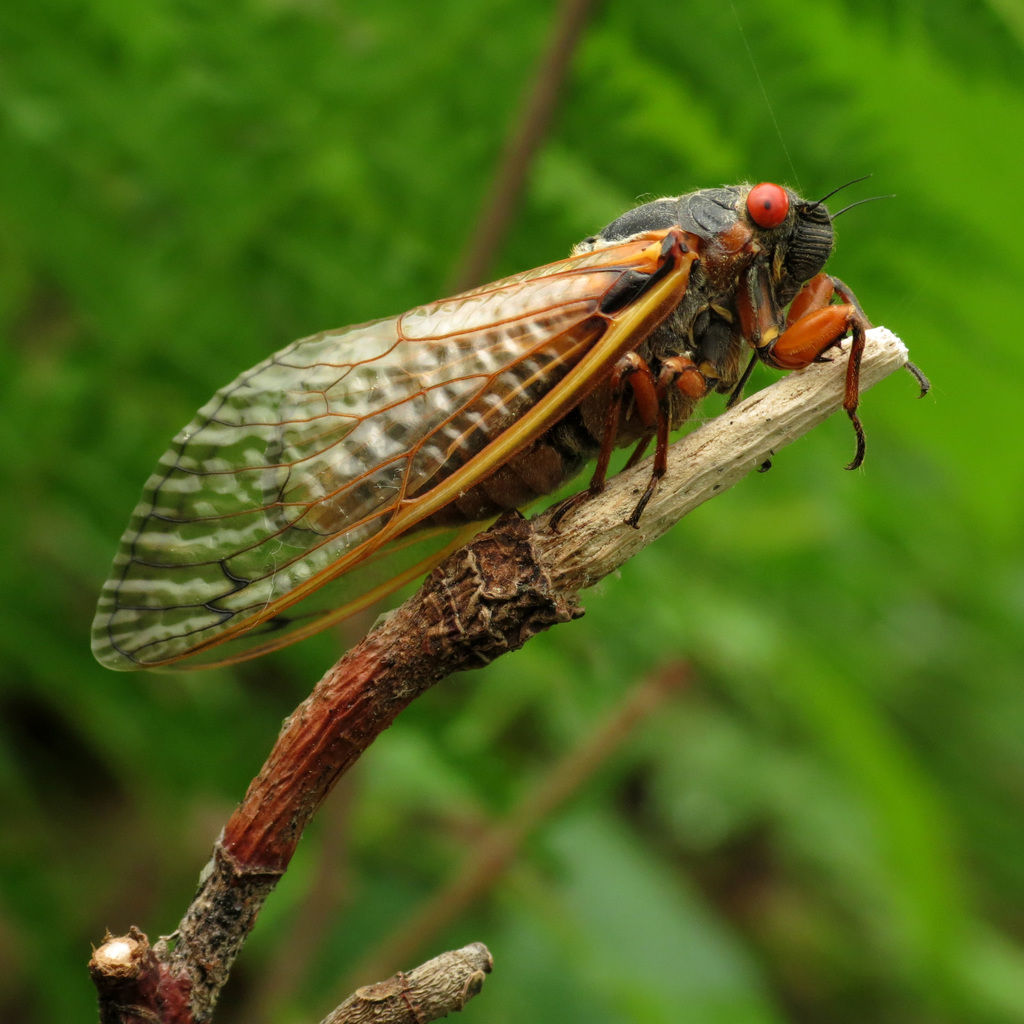
Periodical Cicadas
Magicicada
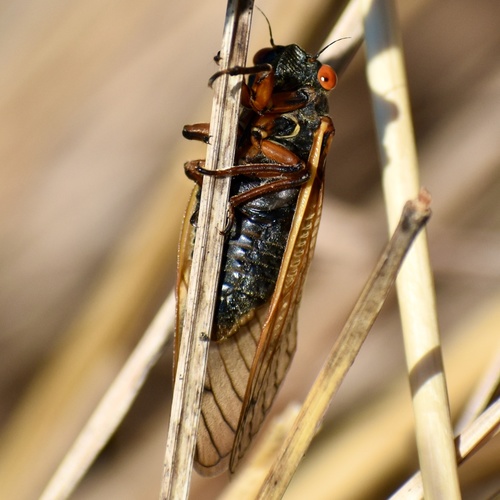
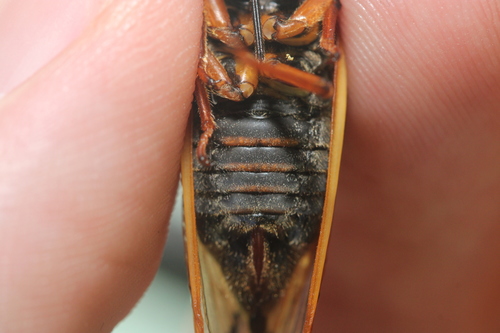
A periodical cicada is any of the seven species of the genus Magicicada of eastern North America, the 13- and 17-year cicadas. They are called "periodical" because nearly all individuals in a local population are developmentally synchronized and emerge in the same year. Although they are sometimes called "locusts", this is a misnomer, as cicadas belong to the taxonomic order Hemiptera (true bugs), suborder Auchenorrhyncha, while locusts are grasshoppers belonging to the order Orthoptera. Magicicada belongs to the cicada tribe Lamotialnini, a group of genera with representatives in Australia, Africa, and Asia, as well as the Americas.
Magicicada species spend around 99.5% of their lives underground in an immature state called a nymph. While underground, the nymphs feed on xylem fluids from the roots of broadleaf forest trees in the eastern United States. In the spring of their 13th or 17th year, mature cicada nymphs emerge between late April and early June (depending on latitude), synchronously and in tremendous numbers. The adults are active for only about four to six weeks after the unusually prolonged developmental phase.

Where it lives
Recorded sightings
—
geo-referenced records in GBIF, from museums, herbaria and field observers.
Drag the globe to turn it. Dots are where records exist, not a range map; darker means more records.
In the stacks
Searching the stacks…
Every page naming Magicicada in the Biodiversity Heritage Library →
This page is assembled live from iNaturalist, GBIF, Wikipedia, the Source Library and the Internet Archive. It is not yet part of the hand-edited codex. iNaturalist taxon 83854.