- Plants
- ›Vascular Plants
- ›flowering plants
- ›Dicots
- ›Heathers, Balsams, Primroses, and Allies
- ›persimmon family
- ›Diospyros
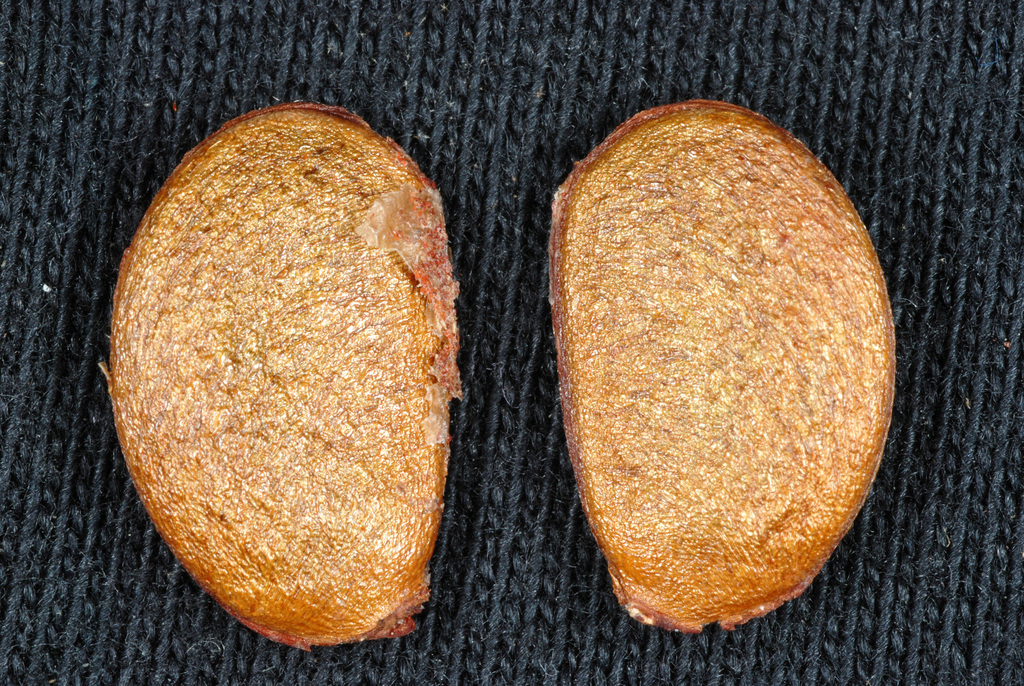
American persimmon
Diospyros virginiana
Diospyros virginiana is a persimmon species commonly called the American persimmon, common persimmon, eastern persimmon, simmon, possumwood, possum apples, or sugar plum. The tree is typically dioecious, so one must have both male and female plants to obtain fruit.
It ranges from southern Connecticut to Florida, and west to Texas, Louisiana, Oklahoma, Kansas, and Iowa. The tree grows in the wild but has been cultivated for its fruit and wood since prehistoric times by Native Americans. Both the tree and the fruit are referred to as persimmons, with the latter appearing in desserts and cuisine in the U.S. South and Midwest.
From the article Diospyros virginiana on Wikipedia (CC BY-SA), quoted section by section
Description
The common persimmon is a generally small to medium sized tree, usually 30 to 80 feet (9 to 24 m) in height, but reaching 115 feet (35 m) west of the southern Mississippi. The roots are thick, fleshy, and stoloniferous. It has a short, slender trunk and spreading, often pendulous branches, which form a broad or narrow, round-topped canopy. The species has a shrubby growth form. The bark is dark brown or dark gray, deeply divided into plates whose surface is scaly. The branchlets are slender, zigzagging, with thick pith or large pith cavity; at first light reddish brown and pubescent. They vary in color from light brown to ashy gray and finally become reddish brown, the bark somewhat broken by longitudinal fissures. Astringent and bitter. The wood is very dark; sapwood yellowish white; heavy, hard, strong and very close grained. Specific gravity, 0.7908; weight of cubic foot, 49.28 lb (22.35 kg). The heartwood is a true ebony. Forestry texts indicate that about a century of growth is required before a tree will produce a commercially viable yield of ebony wood. The termite resistance of the wood is attributed to the component 7-methlyjuglone. The plant has oval entire leaves on short stalks. They are alternate, simple, four to six inches (152 mm) long, narrowed or rounded or cordate at base, entire, acute or acuminate. …
Range & habitat
The tree is very common in the South Atlantic and Gulf states, and attains its largest size in the basin of the Mississippi River. Its habitat is southern, at the turn of the 20th century it appeared along the coast from Connecticut to Florida; west of the Alleghenies it is found in southern Ohio and along through southeastern Iowa and southern Missouri; and in Louisiana, eastern Kansas and Oklahoma, where it grew tallest. Its fossil remains have been found in Miocene rocks of Greenland and Alaska and in Cretaceous formations in Nebraska. Diospyros virginiana is considered to be an evolutionary anachronism that was consumed by one or more of the Pleistocene megafauna that roamed the North American continent until 10,000 years ago. A 2015 study found that passage of persimmon seeds through the gut of modern elephants increased the rate of seed germination and decreased time to sprouting, which supports the idea that Pleistocene members of the elephant family were the ghost partner who accomplished seed dispersal prior to extinction of the North American members of the elephant family.
Wikipedia: “Distribution”
At the table
The fruit is high in vitamin C, and extremely astringent when unripe. It is eaten by birds, raccoons, skunks, white-tailed deer, semi-wild hogs, flying squirrels, and opossums. The ripe fruit may be eaten raw by humans, typically once bletted, or it can be cooked or dried. The fruit pulp can be made into pie, pudding, jam, molasses, and candy. An herbal tea can be made from the leaves and the roasted seed is used as a coffee substitute. The fruit is also fermented with hops, cornmeal or wheat bran into a sort of beer or made into brandy. The wood is heavy, strong and very close-grained and used in woodturning. Its heartwood, which may take a century before being produced, is a true ebony, extremely close-grained and almost black; it is not harvested commercially. The seeds were used as buttons during the privation of the American Civil War in the South.
Wikipedia: “Uses”
How it is grown
The American persimmon mostly grows wild. Experimental research stations in the 1890s tested native varieties of persimmon, but interest in cultivation of the native persimmon has been limited. Newly planted persimmon trees take a relatively long time to bear fruit. There are many sorts of fruit trees that are easier to grow for commercial purposes. Wild varieties contain a lot of seeds, making the processing of fruit pulp used in food and beverage manufacture more difficult. Cultivation has reduced the number of seeds, and some varieties have developed a very sweet flavor profile without the dreaded astringency of wild persimmon. Harvested fruits are shelf durable. It was brought to England before 1629 and is cultivated, but rarely if ever ripens its fruit. It is easily raised from seed and can also be propagated from stolons, which are often produced in great quantity. The tree is hardy in the south of England and in the Channel Islands. The American persimmon was successfully hybridized with the kaki at Nikitsky Botanical Garden in 1948. The resulting plants show intermediate cold-hardiness and fruit size and are commonly cultivated. Persimmons are now grown on small farms as a heritage crop. The tree prefers light, sandy, well-drained soil, but will grow in rich southern bottom lands. …
Wikipedia: “Cultivation”
Where it lives
Recorded sightings
—
geo-referenced records in GBIF, from museums, herbaria and field observers.
Drag the globe to turn it. Dots are where records exist, not a range map; darker means more records.
In the stacks
Searching the stacks…
Every page naming Diospyros virginiana in the Biodiversity Heritage Library →
This page is assembled live from iNaturalist, GBIF, Wikipedia, the Source Library and the Internet Archive. It is not yet part of the hand-edited codex. iNaturalist taxon 83435.