- Plants
- ›Vascular Plants
- ›flowering plants
- ›Dicots
- ›Legumes, Milkworts, and Allies
- ›Legumes
- ›Faboideae
- ›Indigofereae
- ›Indigofera
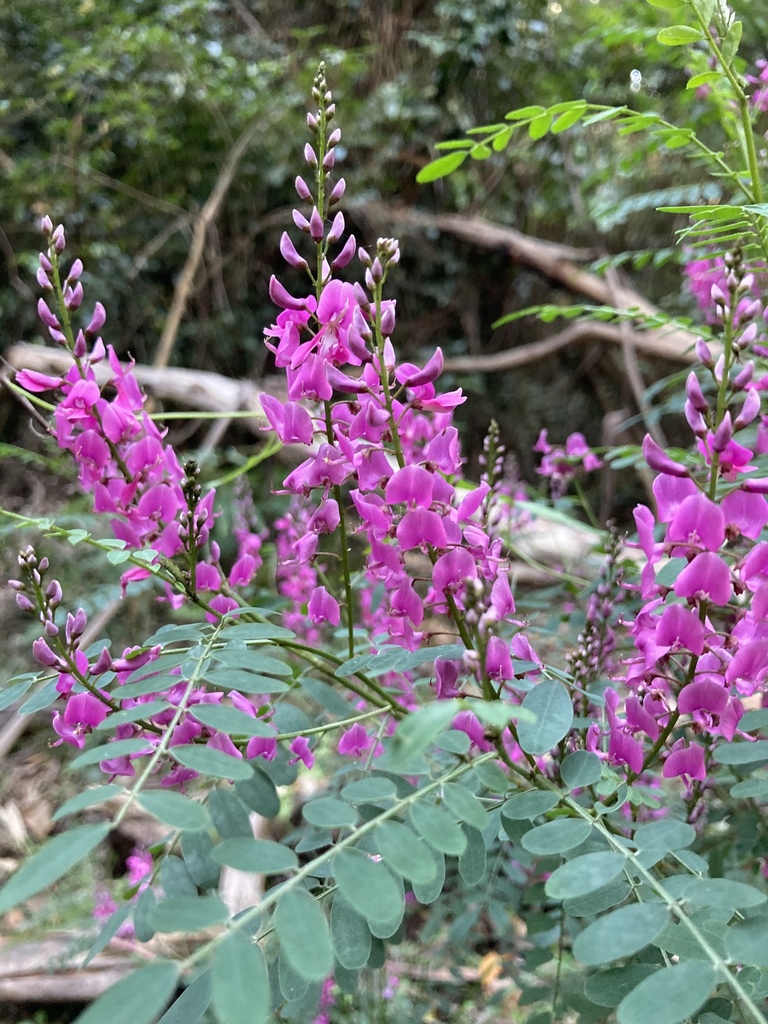
Australian Indigo
Indigofera australis
Indigofera australis, known as Australian Indigo, is an attractive species of leguminous shrub in the genus Indigofera (Fabaceae family). The genus name "Indigofera" is Neo-Latin for "bearing Indigo" (Indigo is a purple dye originally obtained from some Indigofera species), while "australis" from the Latin, means "southern", referring to the geographical distribution of the species.
From the article Indigofera australis on Wikipedia (CC BY-SA), quoted section by section
Description
Indigofera australis is an upright, spreading shrub 2 m (6 ft 7 in) high, 2.5 m (8 ft 2 in) wide and arching branches with flexible stems. The leaves are pinnate, openly spaced on the stems, bluish-green, around 10 cm (3.9 in) long and velvety smooth to the touch. The flower color is unusual, ranging through soft purple hues, often pinkish and a change from other species flowering at the same time. The flowers are smooth, in short spires in the leaf axils, freely produced and showy, outlining the curves of the stems. They may open at any time from July and may continue till November in a cool spring. It can regrow and sucker from rootstocks and lateral roots after fire.
Range & habitat
A very common and widespread species in Australia, Indigofera australis grows in a variety of different habitats, mainly open woodland and eucalypt forest, but also in desert and in the margins of rainforest. It is widespread in southern Australia from the southeastern Western Australia to northeastern Queensland.
Wikipedia: “Distribution”
At the table
The attractive flowers, and the plants adaptability to grow in different situations make it suitable as an ornamental plant in Australia. However, it may become invasive. First Nations Australians are said to crush the leaves and added these to water to kill or stun fish and eels. The leaves and stems produce yellow-fawn dye with alum as mordant.
Wikipedia: “Uses”
Where it lives
Recorded sightings
—
geo-referenced records in GBIF, from museums, herbaria and field observers.
Drag the globe to turn it. Dots are where records exist, not a range map; darker means more records.
In the stacks
Searching the stacks…
Every page naming Indigofera australis in the Biodiversity Heritage Library →
This page is assembled live from iNaturalist, GBIF, Wikipedia, the Source Library and the Internet Archive. It is not yet part of the hand-edited codex. iNaturalist taxon 83364.