- Plants
- ›Vascular Plants
- ›flowering plants
- ›Dicots
- ›Legumes, Milkworts, and Allies
- ›Legumes
- ›Acacias, Mimosas, Mesquites, and Allies
- ›Mimoseae
- ›Prosopis
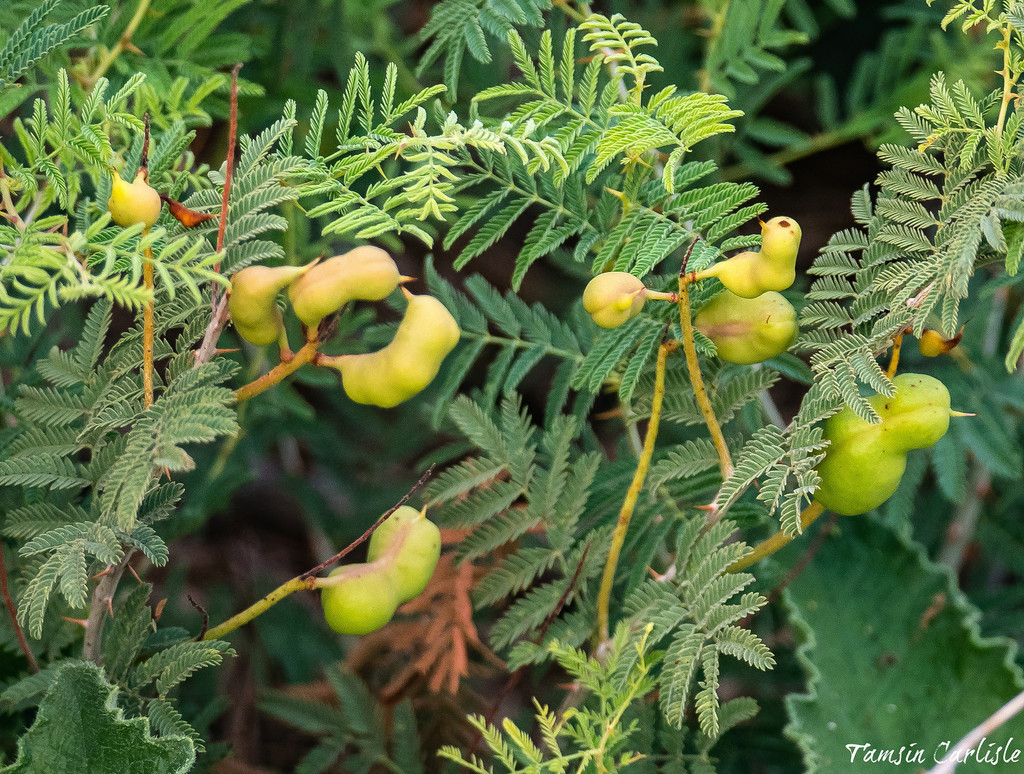
Syrian Mesquite
Prosopis farcta
Prosopis farcta, the Syrian mesquite, is a species of the genus Prosopis, growing in and around the Middle East.
From the article Prosopis farcta on Wikipedia (CC BY-SA), quoted section by section
At the table
The mesquite is considered very damaging to agriculture in deep and heavy soils. To eliminate it, one must not only remove the shrubs, but also completely remove all the roots-trunk from underground. If a small piece of root is left deep underground, a new mesquite can grow from it. In folk medicine, the fruit is used as a diuretic, and against constipation, hemorrhoids, tooth pain, diabetes, kidney stones, skin conditions, and more.
Wikipedia: “Human uses”
Toxicity
By and large the plant and its constituent parts are not toxic. There has been just one report where four children developed mild clinical toxicity after ingestion of seeds with pods.
== References ==
Where it lives
Recorded sightings
—
geo-referenced records in GBIF, from museums, herbaria and field observers.
Drag the globe to turn it. Dots are where records exist, not a range map; darker means more records.
In the stacks
Searching the stacks…
Every page naming Prosopis farcta in the Biodiversity Heritage Library →
This page is assembled live from iNaturalist, GBIF, Wikipedia, the Source Library and the Internet Archive. It is not yet part of the hand-edited codex. iNaturalist taxon 82810.