- Animals
- ›Arthropods
- ›Hexapods
- ›Insects
- ›Winged and Once-winged Insects
- ›True Bugs, Hoppers, Aphids, and allies
- ›True Bugs
- ›Water Bugs
- ›Nepoidea

Giant Water Bugs
Belostomatidae
Belostomatidae is a family of freshwater hemipteran insects known as giant water bugs or colloquially as toe-biters, Indian toe-biters, electric-light bugs (because they fly to lights in large numbers), alligator ticks, or alligator fleas (in Florida). They are the largest insects in the order Hemiptera. There are about 170 species found in freshwater habitats worldwide, with more than 110 in the Neotropics, more than 20 in Africa, almost as many in the Nearctic, and far fewer elsewhere. These predators are typically encountered in freshwater ponds, marshes and slow-flowing streams. Most species are at least 2 cm (0.8 in) long, although smaller species, down to 0.9 cm (0.35 in), also exist. The largest are members of the genus Lethocerus, which can exceed 12 cm (4.5 in) and nearly reach the length of some of the largest beetles in the world. Giant water bugs are a popular food in parts of Asia.
The oldest fossil member of this family is Triassonepa from the Late Triassic-aged Cow Branch Formation of Virginia and North Carolina, United States.
4 branches of this family, most-observed first

Lethocerinae
subfamilyLethocerinae

Belostomatinae
subfamilyBelostomatinae
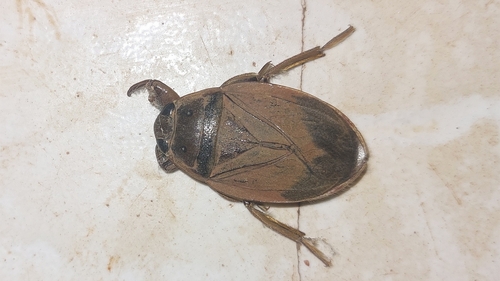
Horvathinia
genusHorvathinia
Scarabaeides
genusScarabaeides
Where it lives
Recorded sightings
—
geo-referenced records in GBIF, from museums, herbaria and field observers.
Drag the globe to turn it. Dots are where records exist, not a range map; darker means more records.
In the stacks
Searching the stacks…
Every page naming Belostomatidae in the Biodiversity Heritage Library →
This page is assembled live from iNaturalist, GBIF, Wikipedia, the Source Library and the Internet Archive. It is not yet part of the hand-edited codex. iNaturalist taxon 81570.