On eBird ↗
Leaden Flycatcher
Live sightings near you, the range map, bar charts of when it is seen, and Macaulay Library photos and recordings.
Leaden Flycatcher
Myiagra rubecula
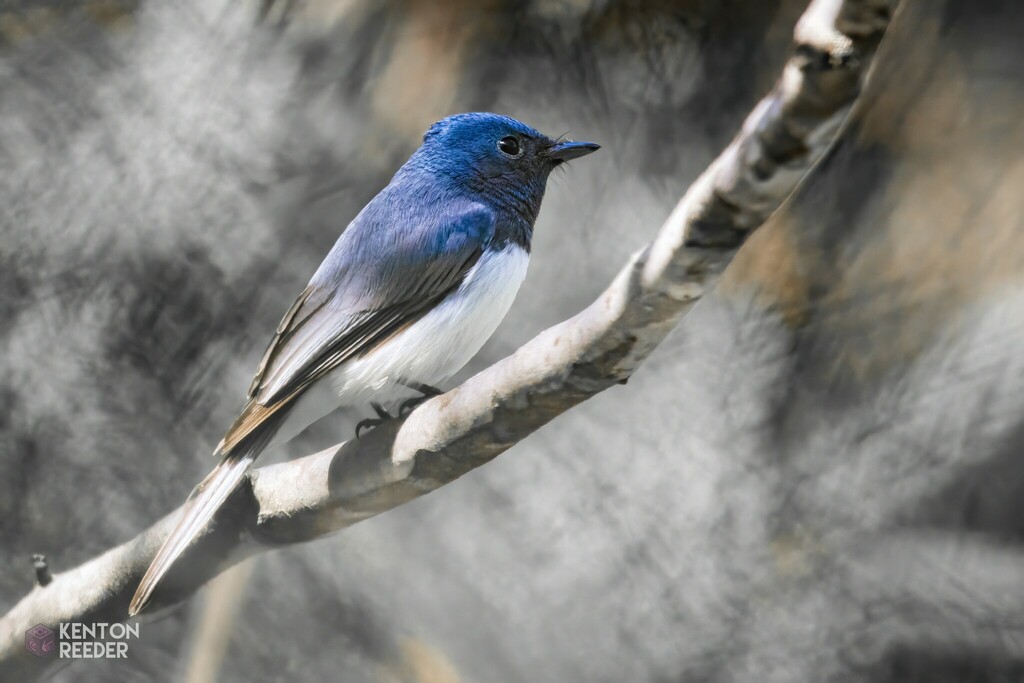
The leaden flycatcher (Myiagra rubecula) is a species of passerine bird in the family Monarchidae. Around 15 cm (6 in) in length, the male is lustrous azure with white underparts, while the female possesses leaden head, mantle and back and rufous throat and breast. It is found in eastern and northern Australia, Indonesia, and Papua New Guinea. Its natural habitat is subtropical or tropical mangrove forests in the northern parts of its range, in the south and inland it is eucalypt woodland.
From the article Leaden flycatcher on Wikipedia (CC BY-SA), quoted section by section
Description
The leaden flycatcher is 14.5–16 cm (6-6½ in) long and weighs around 10–15 g. It is a shiny lead-grey in colour with a brownish tinge to the wings, a bluish black bill, black legs and dark brown iris. The male has darker grey lores, and a white breast and belly, while the female has an orange-tan throat and breast with a white belly. The juvenile resembles the adult female, but with paler wing-edges.
Range & habitat
The leaden flycatcher is found from King Sound in northwestern Australia, across the Top End to Cape York, and then down the east coast to central-southern Victoria. It is rare in Tasmania. It is highly migratory within this range. Sclerophyll forest, rainforest margins, mangroves and coastal scrub are the preferred habitats.
Wikipedia: “Distribution and habitat”
What it does
As its name suggests, the leaden flycatcher is insectivorous. A very active and agile bird, it hops between branches and catches insects in flight.
Breeding. Breeding season is September to February with one brood raised. The nest is a deep cup made of strips of bark and dry grass, woven together with spider webs and decorated with lichen, generally sited on a small branch well away from the trunk of a sizeable tree some 5–10 m above the ground. Two or three white eggs tinted bluish, greyish or lavender and splotched with dark grey-brown are laid measuring 17 mm x 14 mm. They have an unusual swollen oval shape. The species is parasitised by the brush cuckoo (Cacomantis variolosus). Both sexes incubate the eggs and brood the chicks, although the female undertakes slightly more of the duties and also incubates at night. Nesting success is low, with only 23% of nests successfully fledging a chick.
Wikipedia: “Behaviour”
Listen
Looking for field recordings…
Where it lives
Recorded sightings
—
geo-referenced records in GBIF, from museums, herbaria and field observers.
Drag the globe to turn it. Dots are where records exist, not a range map; darker means more records.
In the stacks
Searching the stacks…
Every page naming Myiagra rubecula in the Biodiversity Heritage Library →
This page is assembled live from iNaturalist, GBIF, Wikipedia, the Source Library and the Internet Archive. It is not yet part of the hand-edited codex. iNaturalist taxon 8064.