- Plants
- ›Vascular Plants
- ›flowering plants
- ›Dicots
- ›honeysuckles, moschatels, and allies
- ›elder family
- ›Viburnum
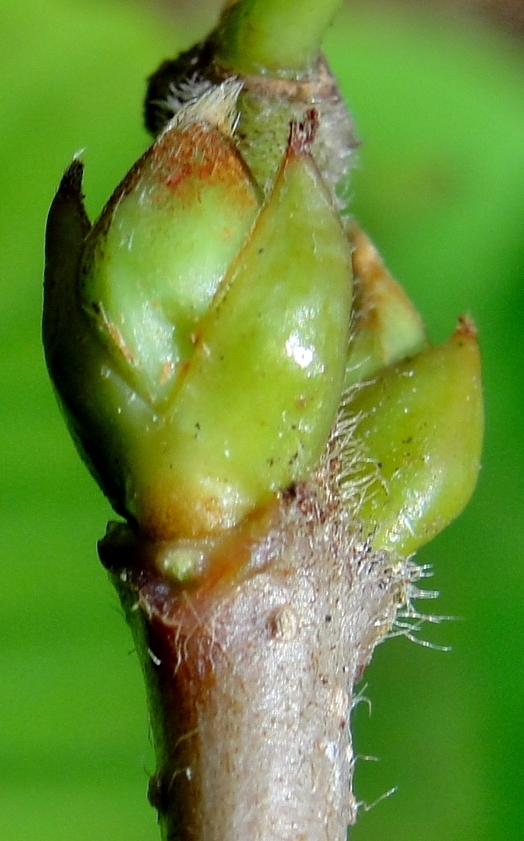
wright viburnum
Viburnum wrightii
Viburnum wrightii is a species of flowering plant in the family Viburnaceae. It is a shrub or tree with white flowers and red berries. The species is native to east Asia, and was described in 1866.
From the article Viburnum wrightii on Wikipedia (CC BY-SA), quoted section by section
Description
Viburnum wrightii is a deciduous shrub or tree that grows 2.5–4 metres (8.2–13.1 ft) high. The leaves are oval-shaped, bright green, toothed, and have pointed ends. In autumn, the leaves turn red. The flowers are white, and arranged into clusters with flat tops. The plant flowers in late spring. The fruit is a bright red berry, and is potentially harmful if eaten. The plant fruits in autumn.
Range & habitat
Viburnum wrightii is native to the temperate biome of Japan, Korea, the Kuril Islands, and Russia (Sakhalin). It has been introduced to the United States (Massachusetts and Rhode Island).
Wikipedia: “Distribution”
What it does
Viburnum wrightii is a host of Nothopucciniastrum miyabeanum, Erysiphe viburni, Armillaria mellea, and Phyllonorycter viburni.
Wikipedia: “Ecology”
Where it lives
Recorded sightings
—
geo-referenced records in GBIF, from museums, herbaria and field observers.
Drag the globe to turn it. Dots are where records exist, not a range map; darker means more records.
In the stacks
Searching the stacks…
Every page naming Viburnum wrightii in the Biodiversity Heritage Library →
This page is assembled live from iNaturalist, GBIF, Wikipedia, the Source Library and the Internet Archive. It is not yet part of the hand-edited codex. iNaturalist taxon 793969.