- Plants
- ›Vascular Plants
- ›flowering plants
- ›Dicots
- ›Legumes, Milkworts, and Allies
- ›Legumes
- ›Faboideae
- ›Phaseoleae
- ›Glycininae
- ›Pueraria
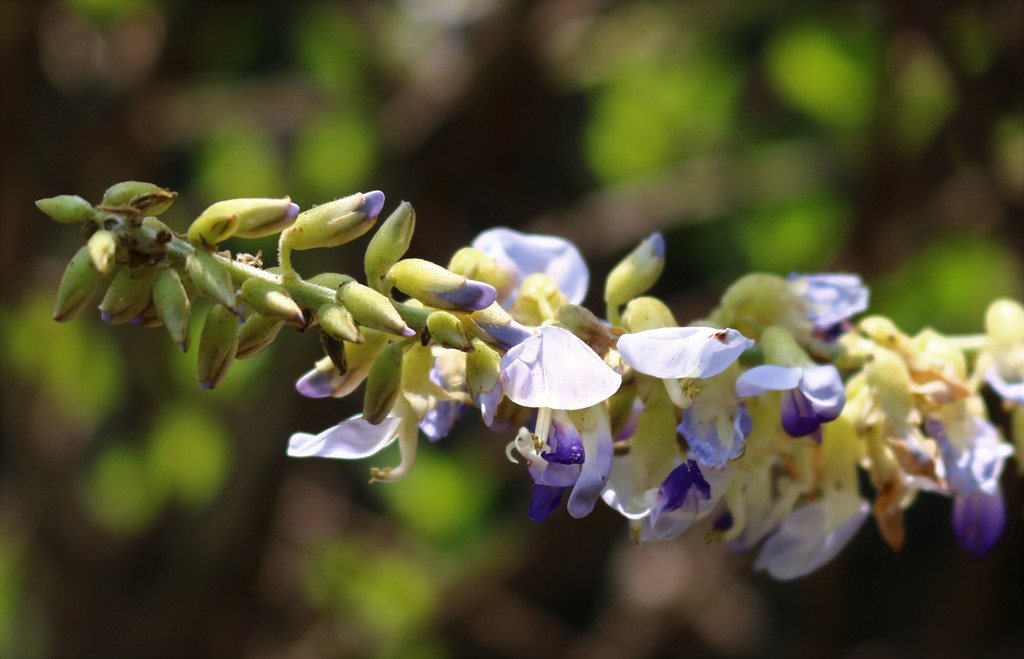
Pueraria tuberosa
Pueraria tuberosa, commonly known as kudzu, Indian kudzu, or Nepalese kudzu, Vidarikand, Sanskrit: Bhukushmandi (भूकुशमंडी) is a climber with woody tuberculated stem. It is a climbing, coiling and trailing vine with large tuberous roots. The tubers are globose or pot-like, about 25 centimetres (9.8 in) across and the insides are white, starchy and mildly sweet. Leaves are trifoliate and alternate, while the leaflets are egg-shaped, with round base and unequal sides. They are 18 cm (7.1 in) long and 16 cm (6.3 in) wide and are hairless above. Flowers are bisexual, around 1.5 cm (0.59 in) across and blue or purplish-blue in color. The fruit pods are linear, about 2–5 cm (0.79–1.97 in) long and constricted densely between the seeds. They have silky, bristly reddish-brown hair. Seeds vary from 3 to 6 in number.
It is native to India, Pakistan, and Nepal. In Telugu, Kudzu is termed as Nela Gummadi, Dari Gummadi, Vidari Kanda.
Where it lives
Recorded sightings
—
geo-referenced records in GBIF, from museums, herbaria and field observers.
Drag the globe to turn it. Dots are where records exist, not a range map; darker means more records.
In the stacks
Searching the stacks…
Every page naming Pueraria tuberosa in the Biodiversity Heritage Library →
This page is assembled live from iNaturalist, GBIF, Wikipedia, the Source Library and the Internet Archive. It is not yet part of the hand-edited codex. iNaturalist taxon 793345.