- Plants
- ›Vascular Plants
- ›flowering plants
- ›Dicots
- ›Nances, Willows, and Allies
- ›willow family
- ›Salix
- ›Vetrix
- ›Cordatae
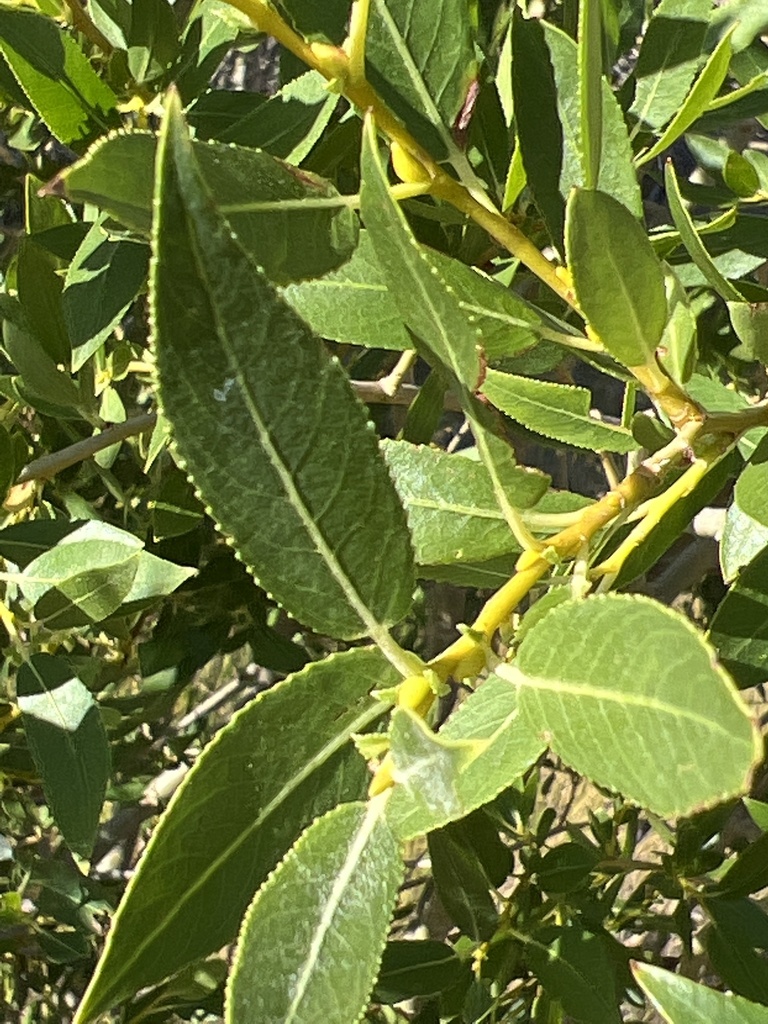
yellow willow
Salix lutea
Salix lutea is a species of willow known by the common name yellow willow. It is native to North America, including central Canada and parts of the western and central United States, with the exception of the Great Basin. It can be found in moist and wet habitat types, such as riverbanks, meadows, and gullies. It is a shrub up to 7 m tall, sometimes forming colonial thickets or becoming erect and treelike. The lance-shaped leaves may grow over 11 cm long and may have smooth, lightly serrated, wavy, or gland-studded edges. The inflorescence is a catkin of flowers up to 4 or 5 cm long, stout to slender in shape.
This and other willow species are used in revegetation projects in riparian habitat where erosion is a problem. This species reproduces vegetatively by sprouting from pieces of stem, but its primary method of reproduction is sexual, by the dispersal of a large amount of wind-carried seed.
Where it lives
Recorded sightings
—
geo-referenced records in GBIF, from museums, herbaria and field observers.
Drag the globe to turn it. Dots are where records exist, not a range map; darker means more records.
In the stacks
Searching the stacks…
Every page naming Salix lutea in the Biodiversity Heritage Library →
This page is assembled live from iNaturalist, GBIF, Wikipedia, the Source Library and the Internet Archive. It is not yet part of the hand-edited codex. iNaturalist taxon 78946.