- Plants
- ›Vascular Plants
- ›flowering plants
- ›Dicots
- ›Sunflowers, Bellflowers, Fanflowers, and Allies
- ›Sunflowers, Daisies, Asters, and Allies
- ›Asteroideae
- ›Chamomiles, yarrows, and allies
- ›Pentziinae
- ›Oncosiphon
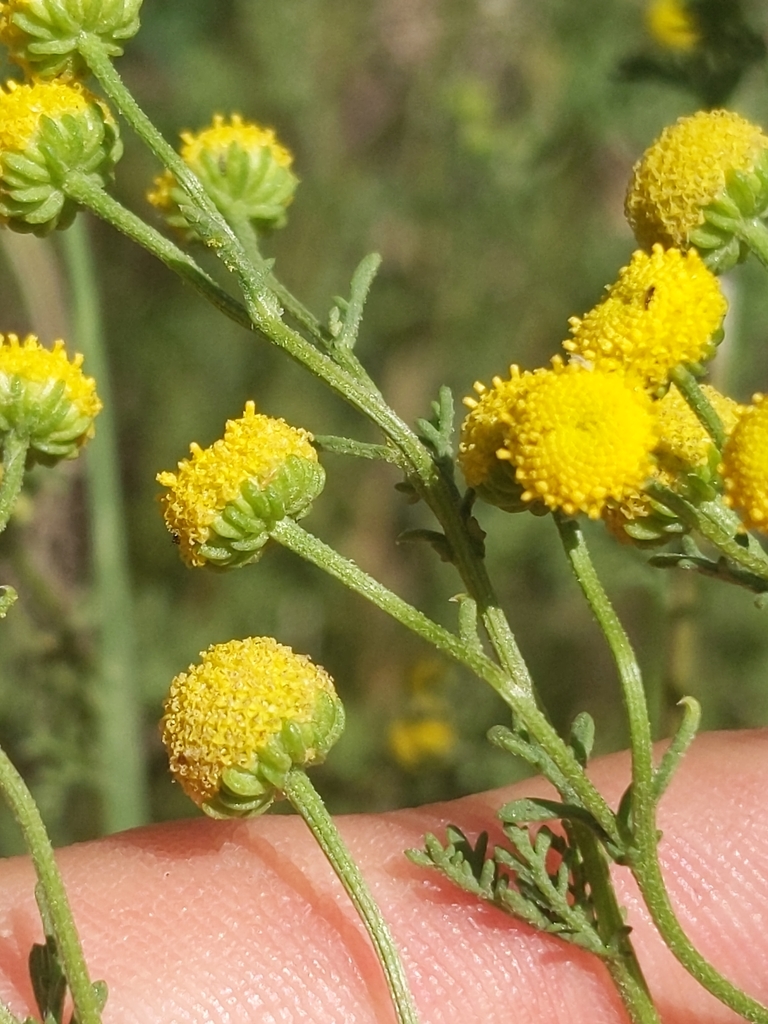
stinknet
Oncosiphon pilulifer
Oncosiphon pilulifer (often spelled piluliferum) is a flowering plant in the daisy family (Asteraceae) native to southern Africa. It is known as globe chamomile and sometimes stinknet due to its strong, unpleasant odor. It is a species of "least concern" (low conservation concern) in South Africa and considered invasive in some parts of North America.
From the article Oncosiphon pilulifer on Wikipedia (CC BY-SA), quoted section by section
Description
Globe chamomile is a straggly, branching annual plant with a strong smell, growing up to 2 ft (60 cm) tall. The bipinnate or tripinnate leaves have a fleshy midrib which widens at the base. The globular flowers are borne in paniculate flower heads. There are no ray florets and the disc florets are yellow.
What it does
Globe chamomile is native to South Africa and Lesotho. It is also found in the Australian states of Victoria and Western Australia. In North America, globe chamomile grows from seed in November to January when it begins flowering and setting new seeds. With sufficient moisture, three generations can grow by April. Wind-borne seed transportation spreads the plant which takes root in sunny, disturbed soil in natural and cultivated areas. Plants can cause skin irritation or allergic reaction through contact with the plant or inhalation of its pollen. A single plant can contain up to 4000 flower balls, each ball being made up of hundreds of flowers.
Wikipedia: “Ecology”
Where it lives
Recorded sightings
—
geo-referenced records in GBIF, from museums, herbaria and field observers.
Drag the globe to turn it. Dots are where records exist, not a range map; darker means more records.
In the stacks
Searching the stacks…
Every page naming Oncosiphon pilulifer in the Biodiversity Heritage Library →
This page is assembled live from iNaturalist, GBIF, Wikipedia, the Source Library and the Internet Archive. It is not yet part of the hand-edited codex. iNaturalist taxon 78258.