- Plants
- ›Vascular Plants
- ›flowering plants
- ›Dicots
- ›beeches, oaks, walnuts, and allies
- ›beech family
- ›Quercus
- ›Quercus
- ›Ponticae
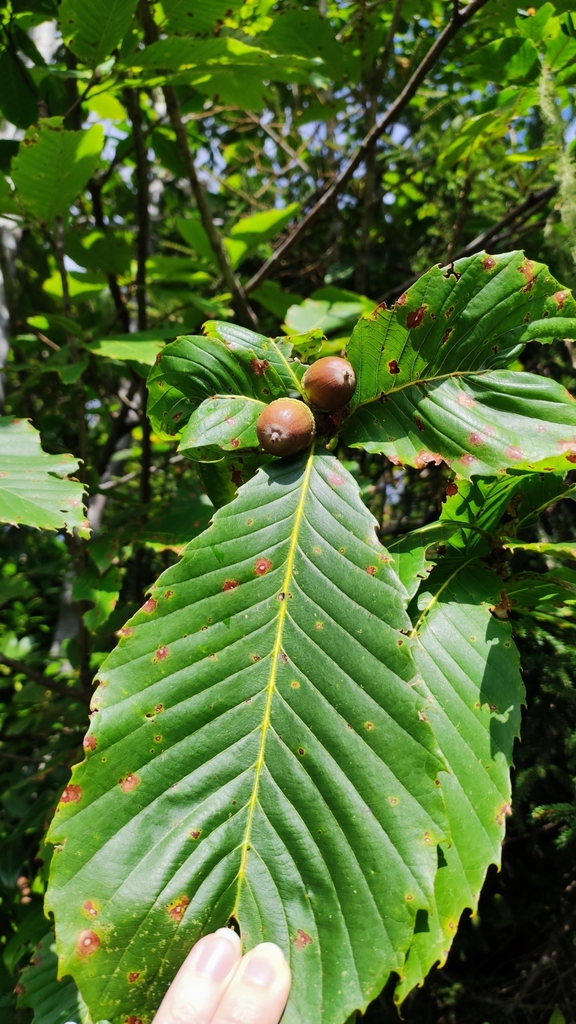
Russian oak
Quercus pontica
Quercus pontica, the Pontic oak or Armenian oak, is a species of endangered oak in the family Fagaceae. It is currently extant to the western Caucasus mountains of Georgia and northeastern Turkey where it grows at elevations of 1,300–2,100 metres (4,300–6,900 feet).
From the article Quercus pontica on Wikipedia (CC BY-SA), quoted section by section
Description
Quercus pontica is a deciduous small tree or large shrub growing to 6–10 metres (20–33 feet) tall, with a trunk up to 40 centimetres (16 inches) in diameter and sparse, stout shoots. Its bark is greyish to purple-brown, smooth on young trees but becoming rough later in its life. Its leaves grow to 10–20 cm (4–8 in) long, rarely 35 cm, and 4–15 cm across. They are ovate, and have a serrated margin with numerous small, pointed teeth. The leaves are covered in hairs when they are young, but become smoother as they age. They become bright green later in life and turn yellow brown in autumn. The flowers are catkins, the male catkins 5–20 cm long. The fruit is a large acorn 2.5–4 cm long, produced in clusters of 2–5 together.
Where it lives
Recorded sightings
—
geo-referenced records in GBIF, from museums, herbaria and field observers.
Drag the globe to turn it. Dots are where records exist, not a range map; darker means more records.
In the stacks
Searching the stacks…
Every page naming Quercus pontica in the Biodiversity Heritage Library →
This page is assembled live from iNaturalist, GBIF, Wikipedia, the Source Library and the Internet Archive. It is not yet part of the hand-edited codex. iNaturalist taxon 782340.