- Plants
- ›Vascular Plants
- ›flowering plants
- ›Dicots
- ›Sunflowers, Bellflowers, Fanflowers, and Allies
- ›Sunflowers, Daisies, Asters, and Allies
- ›Asteroideae
- ›Chamomiles, yarrows, and allies
- ›Leucantheminae
- ›Mauranthemum
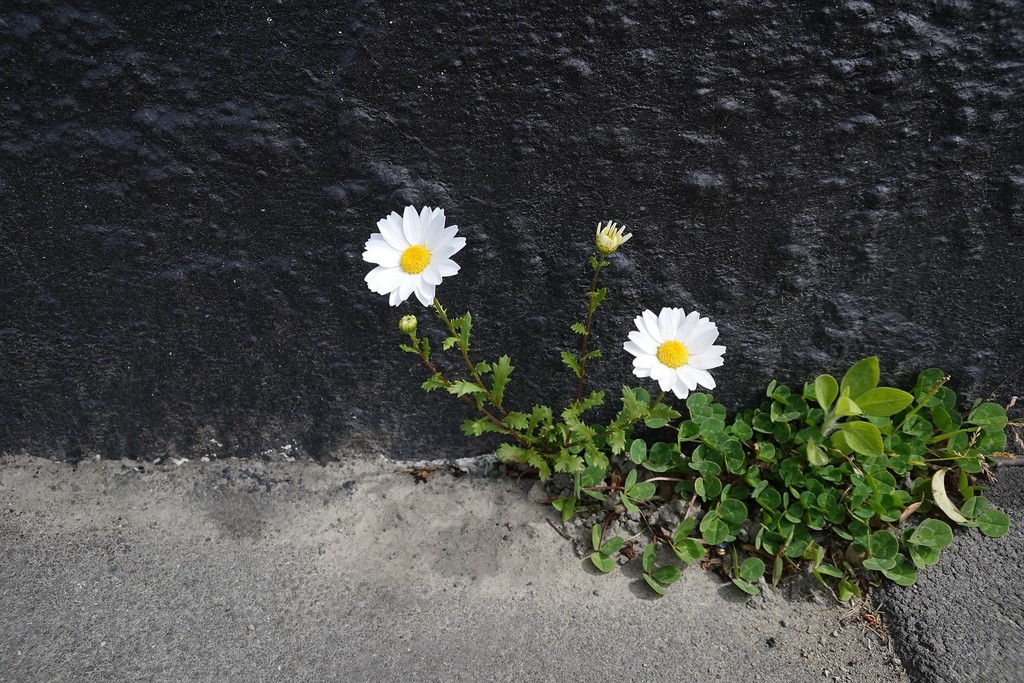
mini-marguerite
Mauranthemum paludosum
Leucanthemum paludosum (formerly Chrysanthemum paludosum and Mauranthemum paludosum), commonly known as creeping daisy or mini marguerite, is a perennial plant of the family Asteraceae.
From the article Mauranthemum paludosum on Wikipedia (CC BY-SA), quoted section by section
Description
A perennial, the plant height is about 15 cm to 25 cm. It is a dwarf and is an ornamental plant. Also grown as a cool season annual plant, the flower's inflorescences are small flower heads with white ligules arranged around the yellow centre. Its green leaves are coarse, leathery and rather greyish 125 mm (5 in) long or shorter. The flowers open when the sun shines on them.
Range & habitat
Mauranthemum paludosum is native to the western Mediterranean, including Algeria, Morocco, and Tunisia, eastern and southern Spain, and the Balearic Islands. It is widely distributed along the Mediterranean coast.
Wikipedia: “Distribution”
How it is grown
Tolerant of many soils and requiring full sun, it is usually planted in rock gardens and border fronts, and can be ideal for all sorts of containers.
Wikipedia: “Cultivation”
Where it lives
Recorded sightings
—
geo-referenced records in GBIF, from museums, herbaria and field observers.
Drag the globe to turn it. Dots are where records exist, not a range map; darker means more records.
In the stacks
Searching the stacks…
Every page naming Mauranthemum paludosum in the Biodiversity Heritage Library →
This page is assembled live from iNaturalist, GBIF, Wikipedia, the Source Library and the Internet Archive. It is not yet part of the hand-edited codex. iNaturalist taxon 77968.