- Plants
- ›Vascular Plants
- ›flowering plants
- ›Dicots
- ›Mints, Plantains, Olives, and Allies
- ›Plantain Family
- ›Toadflaxes and Allies
- ›Linaria
- ›Speciosae
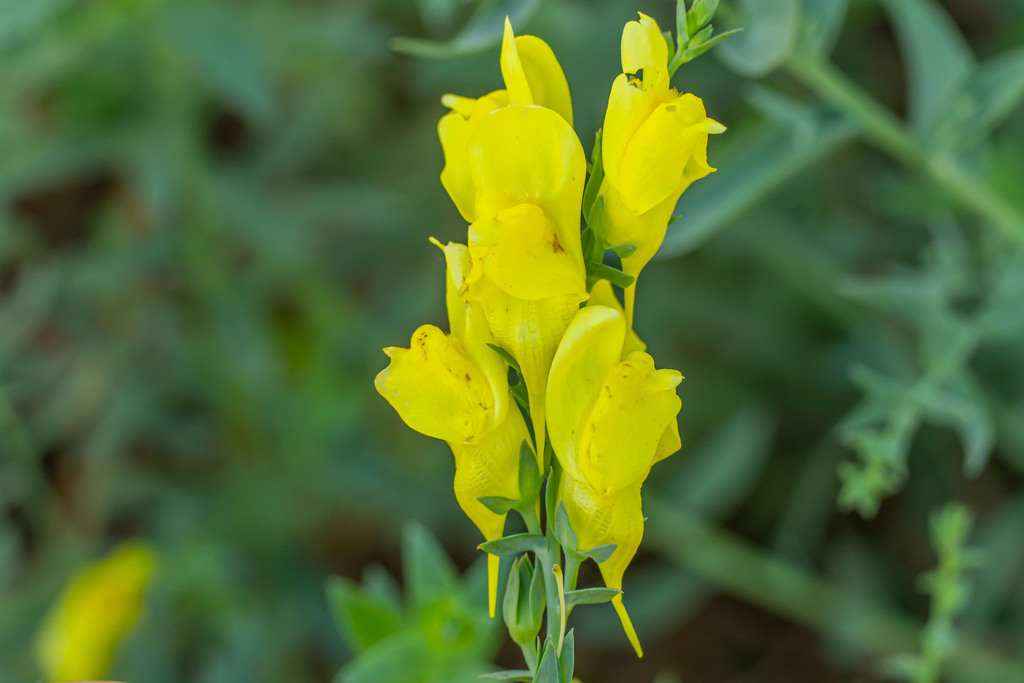
Balkan toadflax
Linaria dalmatica
Linaria dalmatica is a herbaceous, short-lived perennial plant in the family Plantaginaceae native to western Asia and southeastern Europe. As with related species, it was formerly included in the family Scrophulariaceae (figwort) family. Its common names include Balkan toadflax, broadleaf toadflax, and Dalmatian toadflax. The distribution of L. dalmatica to North America can be attributed to use as a fabric dye, folk remedies and as an ornamental plant. However, it is now classified as a weed in both Canada and the U.S.
From the article Linaria dalmatica on Wikipedia (CC BY-SA), quoted section by section
Toxicity
Regarding the toxicity level of L. dalmatica, there is a lack of information to determine if it is toxic or not to both animals and humans. For animals, exposure and consumption of this plant is observed to be relatively low as it is not their preferred forage although grazing does occur. It is likely that, after initial consumption of the plant ruminants experience uncomfortable symptoms and avoid grazing on it. No data existed as of 2011 on the human toxicity of toadflaxes, although it has been listed as an irritant and a hay fever trigger. It has been used in folk medicine as a sedative, and in a compound with vasicine as an expectorant in traditional Chinese medicine. These vasicine compounds can provoke miscarriage.
In human culture
The genus name Linaria, appears to stem from the Latin word linum, meaning flax, as some species have leaves that appear flax-like. The species name dalmatica refers to the region of Dalmatia on the Balkan Peninsula.
Wikipedia: “Etymology”
Where it lives
Recorded sightings
—
geo-referenced records in GBIF, from museums, herbaria and field observers.
Drag the globe to turn it. Dots are where records exist, not a range map; darker means more records.
In the stacks
Searching the stacks…
Every page naming Linaria dalmatica in the Biodiversity Heritage Library →
This page is assembled live from iNaturalist, GBIF, Wikipedia, the Source Library and the Internet Archive. It is not yet part of the hand-edited codex. iNaturalist taxon 77776.