- Plants
- ›Vascular Plants
- ›flowering plants
- ›Dicots
- ›austrobaileya, anises, and allies
- ›austrobaileya family
- ›Austrobaileya
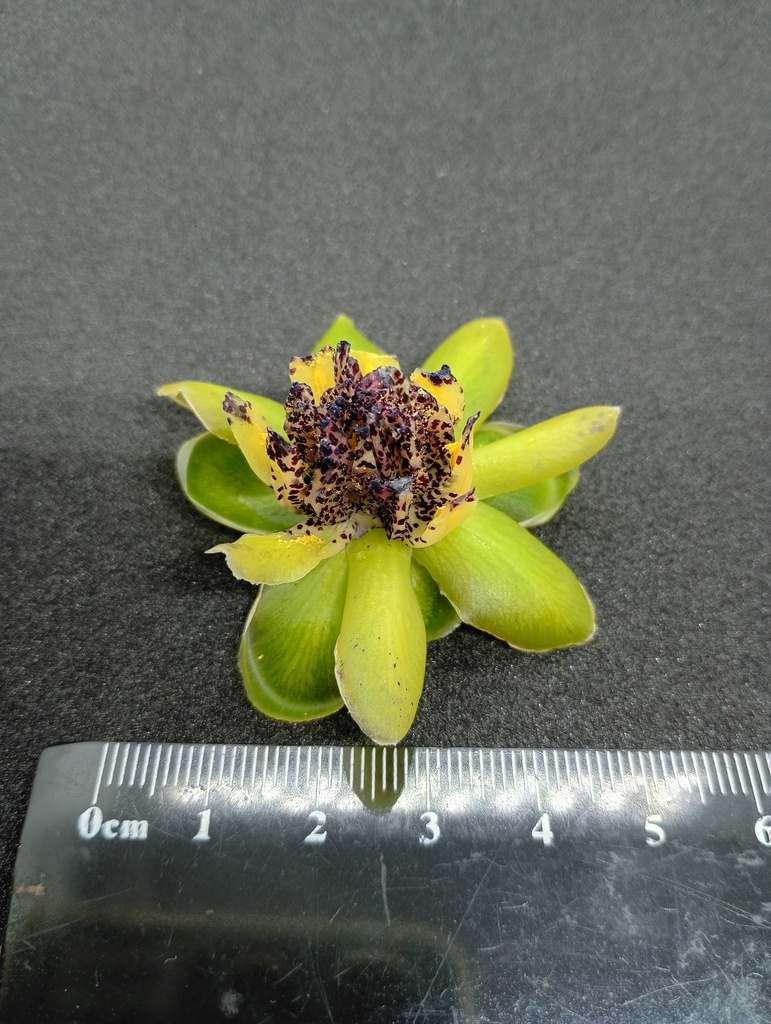
Austrobaileya scandens
Austrobaileya is the sole genus in the plant family Austrobaileyaceae – the family is thus 'monotypic' as it includes a single child taxon. It is one of the basal angiosperm families, the most ancient group of flowering plants. The genus is also monotypic, containing the single species Austrobaileya scandens. The species is endemic to the Wet Tropics bioregion of Queensland, Australia, where it occurs in well-developed upland rainforest. It was first described in 1933.
From the article Austrobaileya on Wikipedia (CC BY-SA), quoted section by section
Description
Austrobaileya plants grow as woody lianas or vines. Their main growing stems loosely twine, with straight, extending, leafy branches. The leaves are leathery, veined and simple. The leaves produce essential oils in spherical ethereal oil cells. Their foliage is damaged by oxidation in direct sunlight, so it tends to grow beneath the rainforest canopy, in low-sunlight and very humid conditions. Like many other flowering plants growing in the understory of tropical rainforest, it does not have palisade mesophyll tissue or low leaf photosynthetic rates. It relies strongly on vegetative reproduction for continuation of the species.
Where it lives
Recorded sightings
—
geo-referenced records in GBIF, from museums, herbaria and field observers.
Drag the globe to turn it. Dots are where records exist, not a range map; darker means more records.
In the stacks
Searching the stacks…
Every page naming Austrobaileya scandens in the Biodiversity Heritage Library →
This page is assembled live from iNaturalist, GBIF, Wikipedia, the Source Library and the Internet Archive. It is not yet part of the hand-edited codex. iNaturalist taxon 774276.