- Plants
- ›Vascular Plants
- ›flowering plants
- ›monocots
- ›grasses, sedges, cattails, and allies
- ›grasses
- ›Pooideae
- ›melic grasses, manna grasses, and relatives
- ›Glyceria
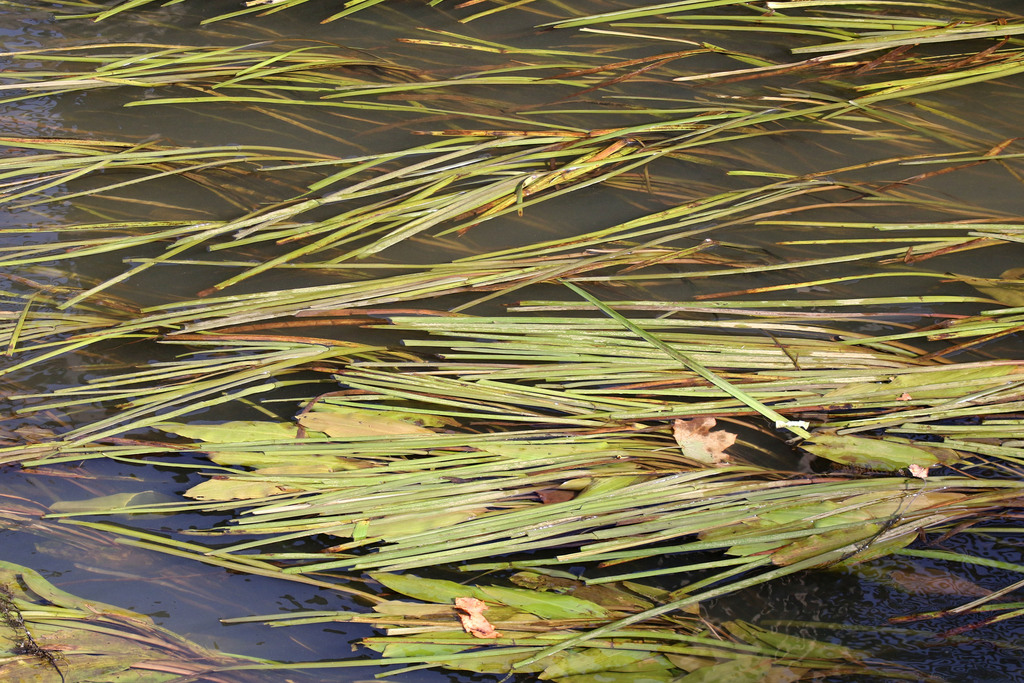
water manna grass
Glyceria fluitans
Glyceria fluitans (syns Festuca fluitans, Poa fluitans, Panicularia fluitans), known as floating sweet-grass and water mannagrass, is a species of perennial grass in the genus Glyceria native to Europe, the Mediterranean region and Western Asia and occurring in wet areas such as ditches, riverbanks and ponds.
It has a creeping rootstock, a thick stem which rises to one metre. The leaves are long, narrow and pale green, rough on both sides, often folded at the keel which lies on the surface of the water.
From the article Glyceria fluitans on Wikipedia (CC BY-SA), quoted section by section
At the table
Glyceria fluitans grains were popular in Poland, Germany, Hungary and other European countries for their sweet taste and nutrient richness. In Poland, foods containing Glyceria fluitans were pointed out as specialities of the local cuisine. Originally, Glyceria fluitans was used to prepare dishes as sweet cakes, flatbreads, dumplings, with butter or boiled milk, broths and soups, with oriental spices, as well as in sausages as binding additive. Due to its healthy properties, between the 17th and 18th century, pharmacopoeias advised its consumption to people with debilitating diseases as well as malnourished young people.
Nutrient content. 100 g of Glyceria fluitans grains (endosperm, ca. 13.5% water content) contain about: 9.69% of protein, 0.43% of total fat, 75.06% of carbohydrate (starch and sugar), 0.21% of dietary fiber and 0.61% of ash.
Wikipedia: “As a food”
In human culture
Before the 19th century, the grains were widely harvested in Central Europe and Sweden, and traded as far as England. It was cooked and eaten as gruel.
Wikipedia: “History”
Where it lives
Recorded sightings
—
geo-referenced records in GBIF, from museums, herbaria and field observers.
Drag the globe to turn it. Dots are where records exist, not a range map; darker means more records.
In the stacks
Searching the stacks…
Every page naming Glyceria fluitans in the Biodiversity Heritage Library →
This page is assembled live from iNaturalist, GBIF, Wikipedia, the Source Library and the Internet Archive. It is not yet part of the hand-edited codex. iNaturalist taxon 77290.