- Plants
- ›Vascular Plants
- ›flowering plants
- ›Dicots
- ›Mustards, Capers, and Allies
- ›mustard family
- ›Brassicoideae
- ›Brassicodae
- ›Brassiceae
- ›Brassica
- ›Brassica
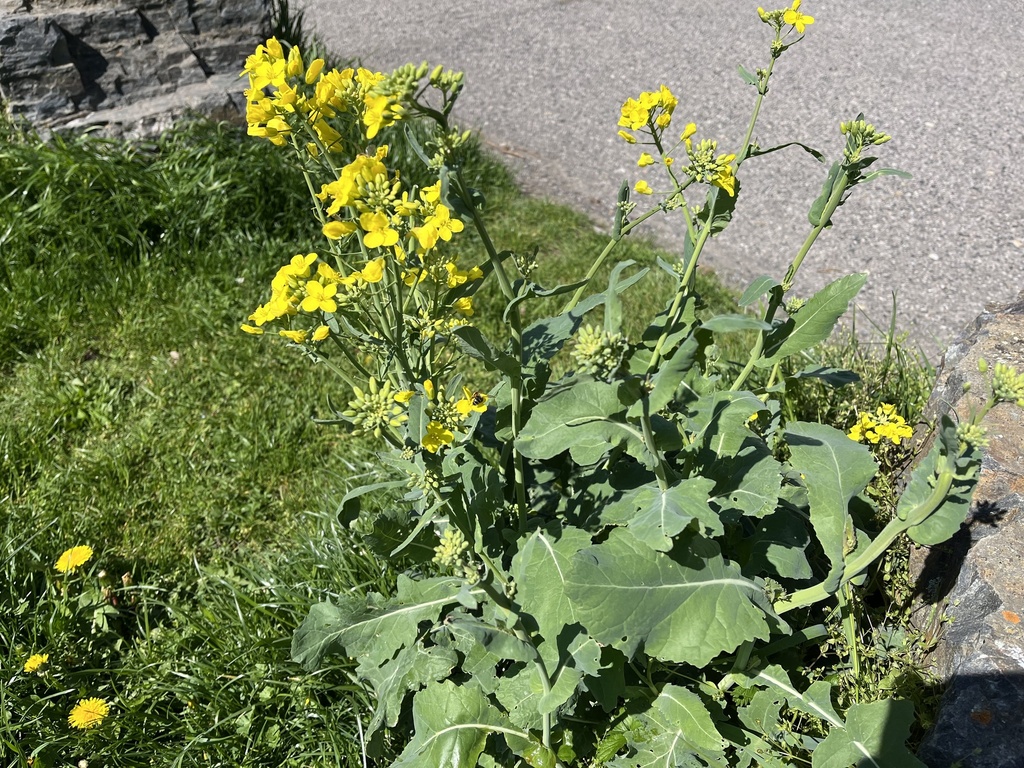
rapeseed
Brassica napus
Rapeseed (Brassica napus subsp. napus) is a bright-yellow flowering member of the family Brassicaceae (mustard or cabbage family), cultivated mainly for its oil-rich seed, which naturally contains appreciable amounts of erucic acid. Canola are a group of rapeseed cultivars which were bred to have very low levels of erucic acid and are especially prized for use for human and animal food. Rapeseed is the third-largest source of vegetable oil and second-largest source of protein meal in...
Where it lives
Recorded sightings
—
geo-referenced records in GBIF, from museums, herbaria and field observers.
Drag the globe to turn it. Dots are where records exist, not a range map; darker means more records.
In the old herbals & bestiaries

Notable Commentaries on the History of Plants
Leonhart Fuchs · 1542 · p.211

Notable Commentaries on the History of Plants
Leonhart Fuchs · 1549 · p.208

On the Names of Plants
Hieronymus Bock (Tragus) · 1552 · p.802

Compendium of Materia Medica: Illustrated Volume Middle of Middle
李時珍 · 1596 · p.64

Complete Treatise on Agricultural Administration
Xu Guangqi · 1909 · p.826
In the stacks
Searching the stacks…
Every page naming Brassica napus in the Biodiversity Heritage Library →
This page is assembled live from iNaturalist, GBIF, Wikipedia, the Source Library and the Internet Archive. It is not yet part of the hand-edited codex. iNaturalist taxon 75869.