 NL·0028
Herbarium of the Nature Library
- Name
- Artemisia annua
- Family
- Asteraceae
- Native to
- Temperate Asia, especially China; naturalised in Europe, North America and elsewhere
- Habitat
- Disturbed ground, Riverbanks, Steppe
Sweet wormwood
Artemisia annua
Also calledQīnghāo 青蒿 (Chinese) · Sweet Annie (English) · Einjähriger Beifuß (German) · Ajenjo dulce (Spanish) · Kusoninjin クソニンジン (Japanese)
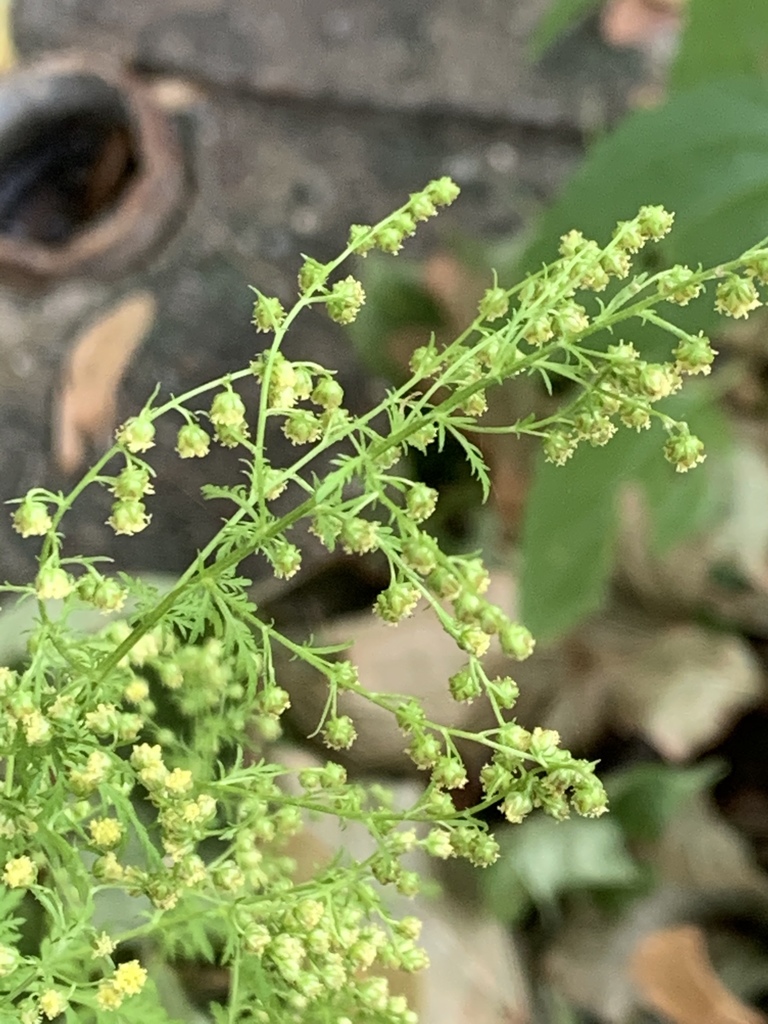
A tall, sweet-smelling annual weed whose leaf glands make artemisinin, the basis of the world's front-line malaria drugs. Its rediscovery came from a 4th-century Chinese recipe and won Tu Youyou the 2015 Nobel Prize.
Artemisia annua, also known as sweet wormwood, sweet annie, sweet sagewort, annual mugwort or annual wormwood, is a common type of wormwood native to temperate Asia, but naturalized in many countries including scattered parts of North America. Wikipedia
What it can do
- iGlandular hairs on leaves and flowers make artemisinin, an endoperoxide that kills malaria parasites
- iiGrows from seed to over 2 m tall in a single season
- iiiProduces enormous numbers of tiny wind-pollinated flowers
At the table
Not a food. Bitter; used medicinally as tea or extract.
In the medicine cabinet
| Tradition | Use |
|---|---|
| Traditional Chinese Medicine | Qinghao clears summer heat and 'deficiency heat' and treats intermittent fevers (malaria); Ge Hong's 4th-century recipe soaks the herb in cold water and drinks the juice |
| Modern medicine | Artemisinin derivatives (artesunate, artemether, dihydroartemisinin) in artemisinin-based combination therapies (ACTs), the WHO-recommended treatment for malaria |
Weight of evidence
Strong. An approved drug, or consistent results in well-run clinical trials.
Active compounds
artemisinin, arteannuin B, artemisinic acid, dihydroartemisinic acid, artemisia ketone, casticin
Fruit & seed
Fruit
Cypsela (achene)
Ripens: Autumn
Minute, smooth, brown achenes.
Seed
~0.5–1 mm
Dust-like seeds
- Dispersal
- Wind and water
- Germination
- Needs light; surface-sow, 5–10 days at 20 °C
How to grow it
Hardiness (USDA zones)
Annual; USDA 4–10. Survives winters down to about -34 °C.
- Light
- Full sun
- Water
- Moderate
- Soil
- Well-drained loam
- Propagation
- Seed
- To harvest
- Leaves just before flowering (late summer)
- Climates
- Temperate, Subtropical
- 1Surface-sow under cover in spring
- 2Plant out 60–100 cm apart after frost
- 3Harvest leaves at early bud stage, when artemisinin peaks
- 4Dry in shade
Can it grow where you are?
Where it lives
Recorded sightings
—
geo-referenced records in GBIF, from museums, herbaria and field observers.
Native range
Temperate Asia, especially China; naturalised in Europe, North America and elsewhere
Drag the globe to turn it. Dots are where records exist, not a range map; darker means more records.
In the old herbals & bestiaries
Woodcuts and engravings matched from the Source Library’s scanned books by name. Plates marked “relative” show a close kin rather than this exact species. Click a plate to read the page it came from, with translation.


In the stacks
Searching the stacks…
Every page naming Artemisia annua in the Biodiversity Heritage Library →
Marginalia
Ge Hong's Zhouhou Beiji Fang (Handbook of Prescriptions for Emergencies, c. 340 CE) told readers to soak a handful of qinghao in water and drink the juice for fevers. In 1971 Tu Youyou of China's secret malaria programme, Project 523, read the line and switched to a low-temperature extraction, which preserved the active compound.
Curiosity
Artemisinin is also made by engineered yeast. Sanofi launched semi-synthetic artemisinin production in 2013, but it struggled to compete on price with farm-grown plants.
Kinship


Photographs: iNaturalist contributors under the licences shown. Records: GBIF.org. Historical plates: Source Library (CC BY-SA 4.0; originals public domain). Summary text: Nature Library editors and Wikipedia (CC BY-SA). Medicinal and edibility notes are historical and educational, not advice. iNaturalist taxon 75584.