- Plants
- ›Vascular Plants
- ›flowering plants
- ›Dicots
- ›Heathers, Balsams, Primroses, and Allies
- ›Lecythis Family
- ›Petersianthus
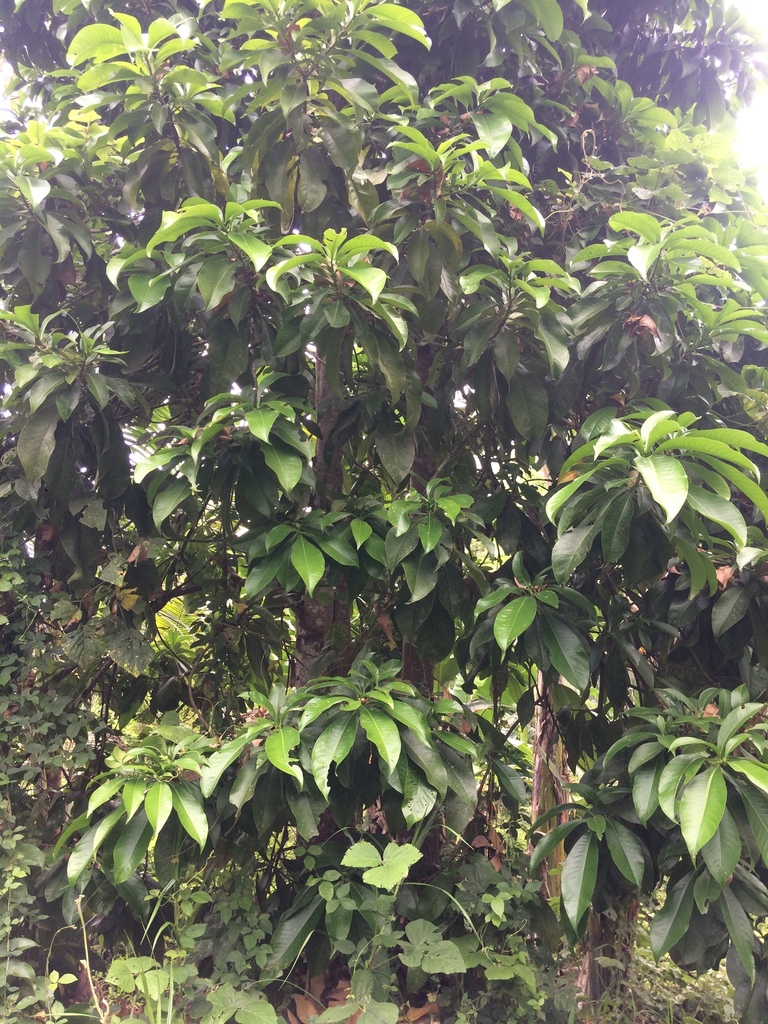
Petersianthus quadrialatus
Petersianthus quadrialatus (also called toog and Philippine rosewood) is an emergent tropical rainforest tree species in the Lecythidaceae family. In the Visayas region called kapullan, in the Samar and Leyte areas - magtalisai. It is an indigenous tree species in the southeastern Philippines and one of the largest tree species in the Philippines islands.
From the article Petersianthus quadrialatus on Wikipedia (CC BY-SA), quoted section by section
Description
The leaves are simple, spirally arranged, obovate, 10–16 cm long and 5–8 cm wide. The base is acutely acuminate, long cuneate, apex rounded caudate. Glossy and dark green, the petioles are short with short soft hairs. Fruits are in capsule form in flat circular outline containing four large winged seeds.
Wikipedia: “Morphology”
Range & habitat
Petersianthus quadrialatus is endemic to the part of the southeastern Philippines - Mindanao, Panay, Leyte, Samar, Negros, Masbate and surrounding smaller islands.
Wikipedia: “Distribution”
At the table
Leaves are medicinal especially in treating skin rashes. Seeds are edible and taste like groundnut. Because its wood is hard and difficult to cut and is as strong as molave (Vitex parviflora), its highly preferred for heavy construction such as bridges, beams, joists, poles, wood piles of wharves and piers, veneer, and plywood, also for door faces and door components like jambs, stops and casing.
Habitat destruction. Considered a disappearing tree due to logging and kaingin-making.
Wikipedia: “Uses”
Where it lives
Recorded sightings
—
geo-referenced records in GBIF, from museums, herbaria and field observers.
Drag the globe to turn it. Dots are where records exist, not a range map; darker means more records.
In the stacks
Searching the stacks…
Every page naming Petersianthus quadrialatus in the Biodiversity Heritage Library →
This page is assembled live from iNaturalist, GBIF, Wikipedia, the Source Library and the Internet Archive. It is not yet part of the hand-edited codex. iNaturalist taxon 748416.