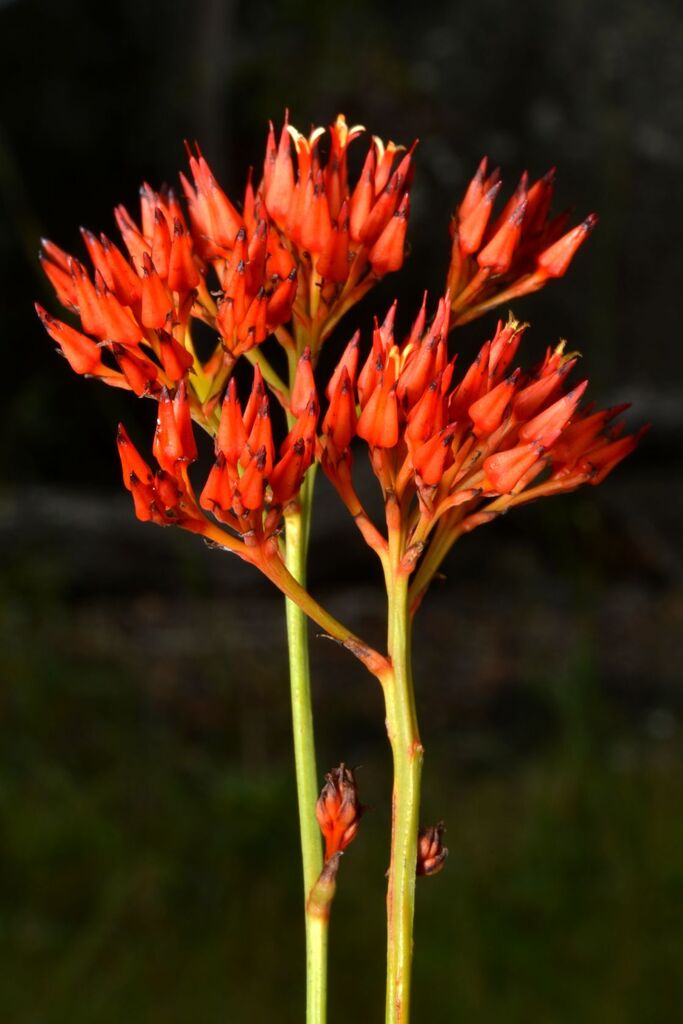
Bloodroots
Haemodoraceae
Haemodoraceae is a family of perennial herbaceous angiosperms (flowering plants) containing 15 genera and 102 known species, sometimes known as the "bloodroots", found throughout the Southern Hemisphere, from Australia and New Guinea to South Africa, as well as the Americas (from extreme southeastern USA through tropical South America).
Perhaps the best-known (and most popular in cultivation) genera from the family are the unusual Anigozanthos and Macropidia, both commonly called "kangaroo-paw" or "kangaroo's paw" due to their fuzzy flowers. These genera are hugely popular in both private gardens and public landscaping projects in Mediterranean climate regions, such as in Chile, northwestern Mexico (Baja California), Southern California (and the Bay Area) and Western Australia, among other locations; the kangaroo-paws are valued for their hardiness, adaptability and low irrigation requirements, once established.
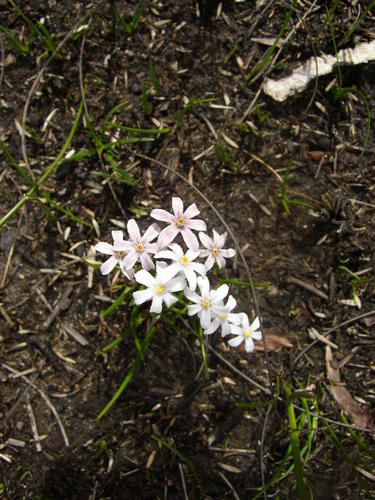
2 branches of this family, most-observed first
See this branch on the Wheel of Life →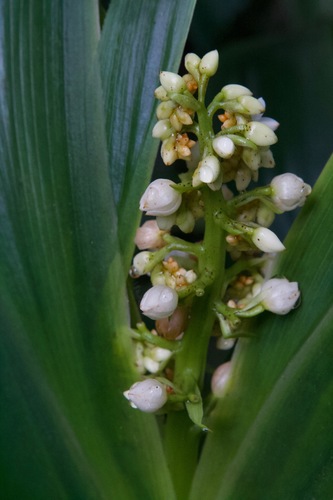
Where it lives
Recorded sightings
—
geo-referenced records in GBIF, from museums, herbaria and field observers.
Drag the globe to turn it. Dots are where records exist, not a range map; darker means more records.
In the stacks
Searching the stacks…
Every page naming Haemodoraceae in the Biodiversity Heritage Library →
This page is assembled live from iNaturalist, GBIF, Wikipedia, the Source Library and the Internet Archive. It is not yet part of the hand-edited codex. iNaturalist taxon 71528.