- Animals
- ›Arthropods
- ›Hexapods
- ›Insects
- ›Winged and Once-winged Insects
- ›Ants, Bees, Wasps, and Sawflies
- ›Narrow-waisted Wasps, Ants, and Bees
- ›Ants, Bees, and Stinging Wasps
- ›Formicoidea
- ›Ants
- ›Formicine Ants
- ›Plagiolepidine Ants
- ›Plagiolepis
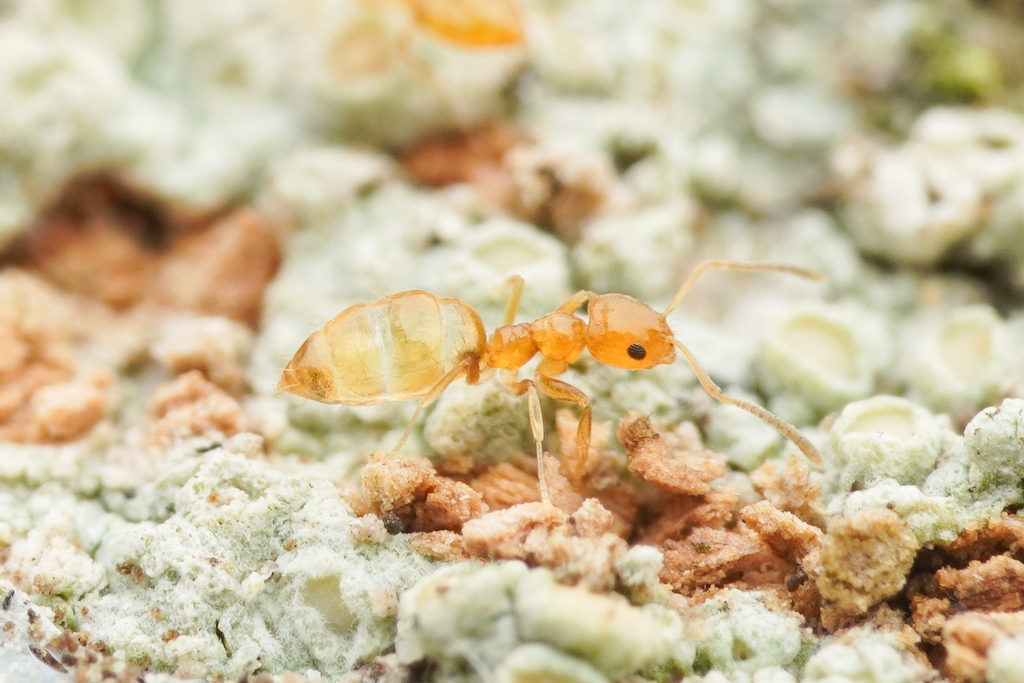
Little Yellow Ant
Plagiolepis alluaudi
Plagiolepis alluaudi, the little yellow ant, is a species of Plagiolepis. The species is native to Madagascar, an island off the coast of East Africa. It is known to be a widespread invasive species. In an effort to distinguish its name from other small and yellow species of ant it may be called Alluaud's little yellow ant, after Charles A. Alluaud.
From the article Plagiolepis alluaudi on Wikipedia (CC BY-SA), quoted section by section
What it does
Plagiolepis alluaudi consumes honeydew, a product of plant sap that is produced by insects such as aphids, mealybugs, and scale insects. P. alluaudi is known to protect these insect species—which are often agricultural pests—from predators, going so far as to raise the pests' offspring in their nest until the larvae reach adulthood. Colonies of P. alluaudi contain thousands of egg-laying queen ants, forming supercolonies.
Wikipedia: “Ecology”
Listen
Looking for field recordings…
Where it lives
Recorded sightings
—
geo-referenced records in GBIF, from museums, herbaria and field observers.
Drag the globe to turn it. Dots are where records exist, not a range map; darker means more records.
In the stacks
Searching the stacks…
Every page naming Plagiolepis alluaudi in the Biodiversity Heritage Library →
This page is assembled live from iNaturalist, GBIF, Wikipedia, the Source Library and the Internet Archive. It is not yet part of the hand-edited codex. iNaturalist taxon 69494.