- Animals
- ›Arthropods
- ›Chelicerates
- ›Arachnids
- ›Spiders
- ›Typical Spiders
- ›Entelegyne Spiders
- ›Net-casting Spiders
- ›Menneus
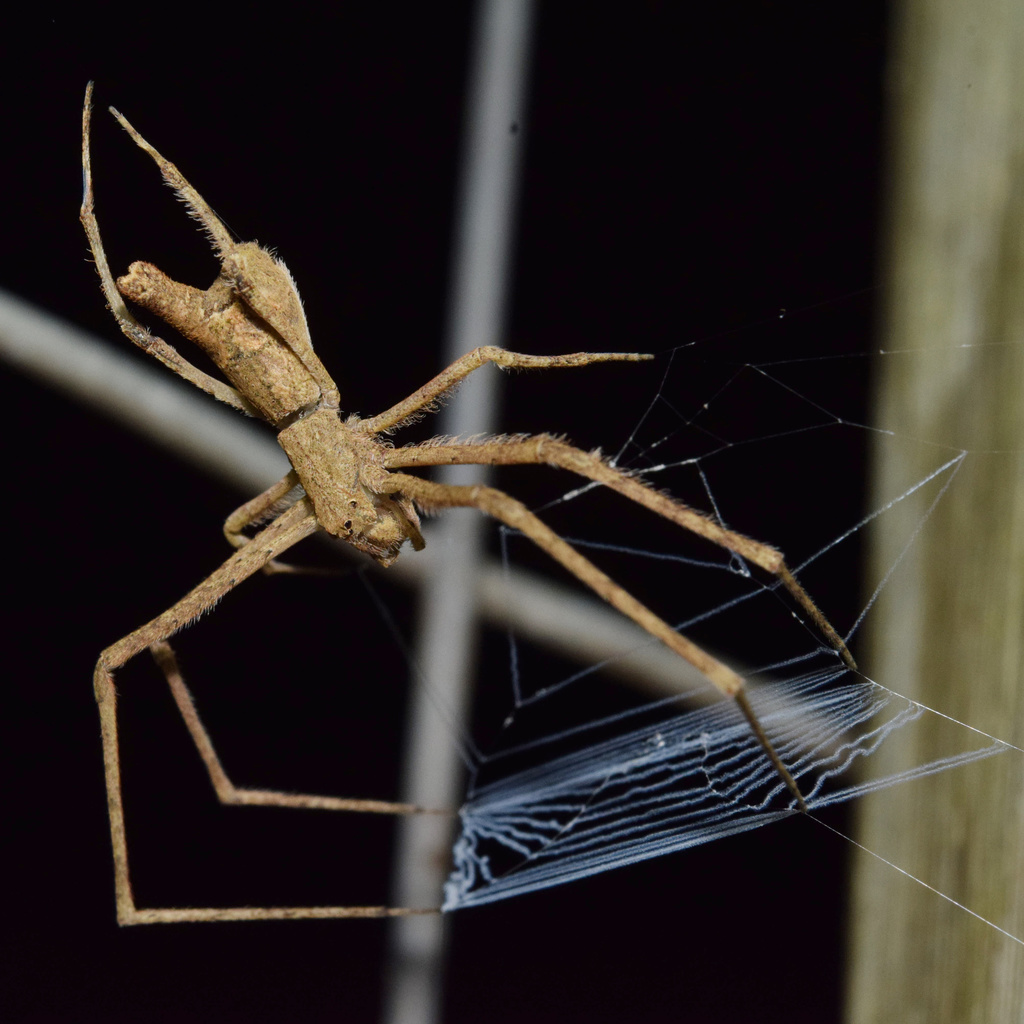
Camel-back Spider
Menneus camelus
Menneus camelus, also known as the camel-back net-casting spider, is a species of net-casting spider in the family Deinopidae. It is endemic to eastern South Africa.
From the article Menneus camelus on Wikipedia (CC BY-SA), quoted section by section
Range & habitat
Menneus camelus was originally described from Durban, South Africa. It is a South African endemic known from eight provinces and occurs in more than ten protected areas at altitudes ranging from 4 to 1,762 metres above sea level.
Wikipedia: “Distribution”
What it does
The species constructs small, rectangular expandable webs made with cribellate silk held in their front legs. It has been sampled from the Fynbos, Grassland, Indian Ocean Coastal Belt, Savanna, and Thicket biomes. Menneus camelus is also synanthropic and frequently found in and around houses in South Africa. It has been recorded from avocado orchards.
Wikipedia: “Habitat and ecology”
In human culture
The species epithet "camelus" refers to the camel-like humps on the female's abdomen, which give the spider its distinctive profile.
Wikipedia: “Etymology”
Where it lives
Recorded sightings
—
geo-referenced records in GBIF, from museums, herbaria and field observers.
Drag the globe to turn it. Dots are where records exist, not a range map; darker means more records.
In the stacks
Searching the stacks…
Every page naming Menneus camelus in the Biodiversity Heritage Library →
This page is assembled live from iNaturalist, GBIF, Wikipedia, the Source Library and the Internet Archive. It is not yet part of the hand-edited codex. iNaturalist taxon 674907.