
Net-casting Spiders
Deinopidae
Deinopidae, also known as net-casting spiders, are a family of circumtropical cribellate spiders first described by Carl Ludwig Koch in 1850. They are a group of stick-like elongated spiders that catch prey by stretching a web across their front legs before propelling themselves forward. These unusual webs will stretch two or three times their relaxed size, entangling any prey that touch them.
The posterior median eyes have excellent night vision, allowing them to cast nets accurately in low-light conditions. These eyes are larger than the others, and sometimes makes these spiders appear to only have two eyes. Ogre-faced spiders (Deinopis) are the best known genus in this family. The name refers to the perceived physical similarity to the mythological creature of the same name. This family also includes the humped-back spiders (Menneus).
3 branches of this family, most-observed first

Pantropical Ogre-faced Spiders
genusAsianopis

American Ogre-faced Spiders
genusDeinopis
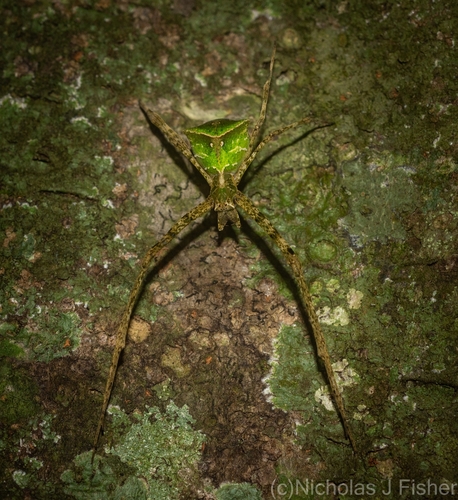
Hump-back Spiders
genusMenneus
Where it lives
Recorded sightings
—
geo-referenced records in GBIF, from museums, herbaria and field observers.
Drag the globe to turn it. Dots are where records exist, not a range map; darker means more records.
In the stacks
Searching the stacks…
Every page naming Deinopidae in the Biodiversity Heritage Library →
This page is assembled live from iNaturalist, GBIF, Wikipedia, the Source Library and the Internet Archive. It is not yet part of the hand-edited codex. iNaturalist taxon 50003.