- Animals
- ›Chordates
- ›Vertebrates
- ›Amphibians
- ›Frogs and Toads
- ›Poison Frogs
- ›Poison Dart Frogs
- ›Colostethinae
- ›Ameerega
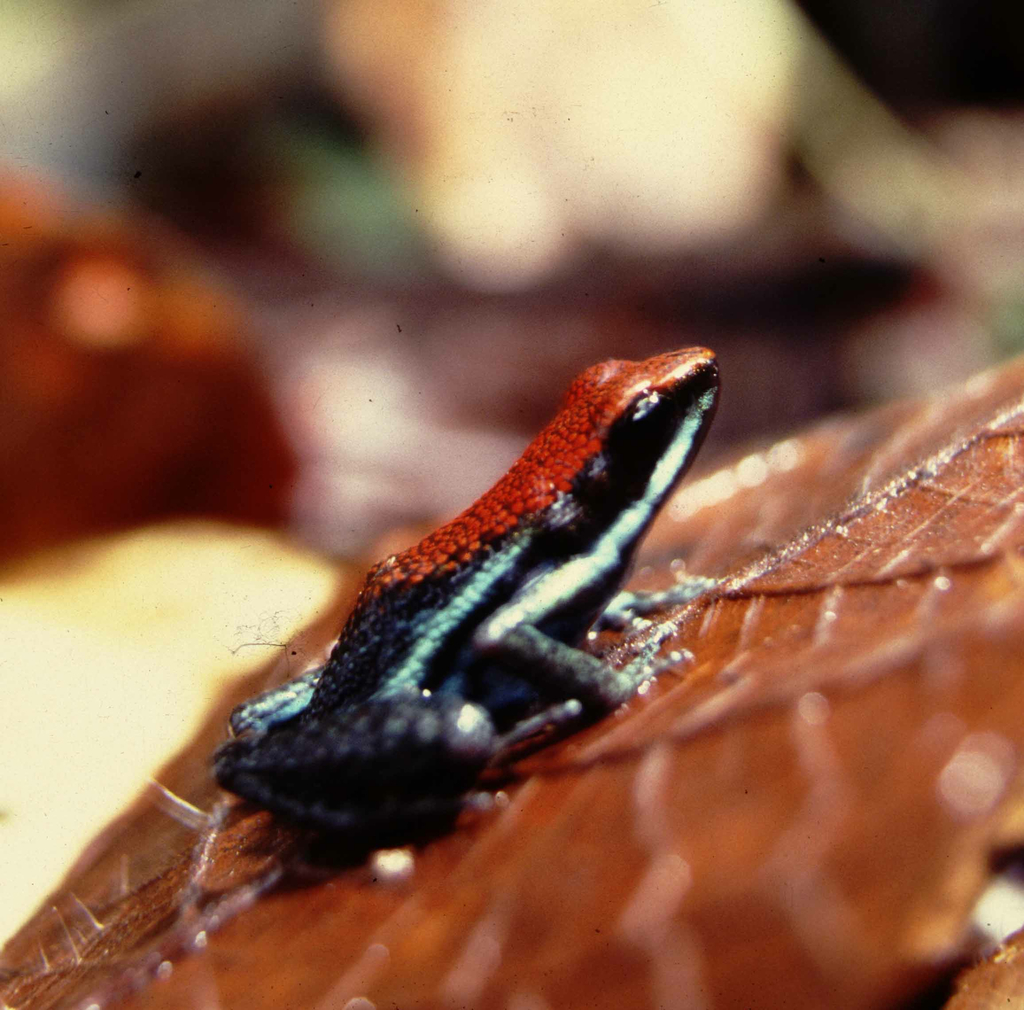
Ruby Poison Frog
Ameerega parvula
Ameerega parvula is a species of poison dart frog that lives in Colombia, Ecuador and Peru.
From the article Ameerega parvula on Wikipedia (CC BY-SA), quoted section by section
Description
The size of Ameerega parvula ranges between 17.5 and 24 mm. Mature frogs display a black base color and a dark red spotted back. Their body and limb undersides exhibit either black with blue marbling or blue with black marbling. The marbling pattern extends partially onto the body's sides. Additionally, there is an unfinished light blue stripe that starts at the forelimbs, runs along the upper lip, and concludes near the outer edge of the eye or nostril.
Range & habitat
This diurnal frog has been observed on the leaf litter near streams in rainforests, including secondary rainforests. Scientists observed the frog between 150 and 1200 meters above sea level. The frog's range includes several protected parks, for example Parque Nacional Yasuní, Parque Nacional Sangay, Limoncocha Reserva Biológica, and the Santiago Comaina Reserved Zone.
Wikipedia: “Habitat”
What it does
The female frog lays her eggs on the ground. After the eggs hatch, the frogs carry the tadpoles to water. The tadpoles measure 12.10 to 27.13 mm long during stages 25–40. They are brown in color with dark brown-black spots. The tail is light brown near the body and lighter gray-tan near the end. There are small gray and brown spots on the tail. The top fin is clear. The belly is transparent and the intestines are visible. Young frogs are blue-black in color. Some of them do not have spots.
Wikipedia: “Reproduction”
Listen
Looking for field recordings…
Where it lives
Recorded sightings
—
geo-referenced records in GBIF, from museums, herbaria and field observers.
Drag the globe to turn it. Dots are where records exist, not a range map; darker means more records.
In the stacks
Searching the stacks…
Every page naming Ameerega parvula in the Biodiversity Heritage Library →
This page is assembled live from iNaturalist, GBIF, Wikipedia, the Source Library and the Internet Archive. It is not yet part of the hand-edited codex. iNaturalist taxon 64896.