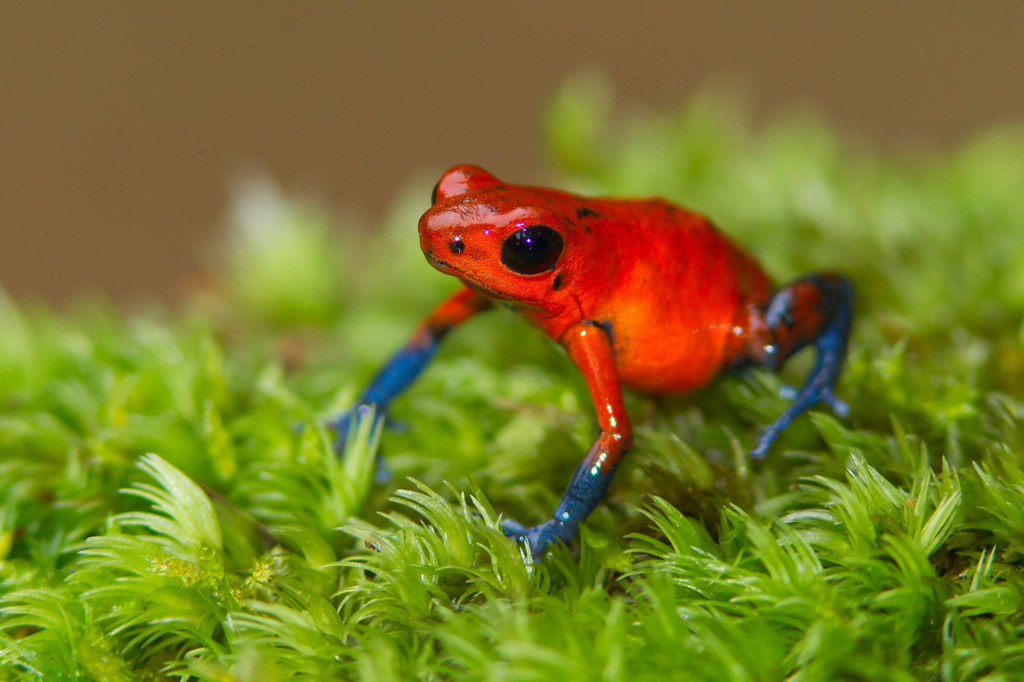
Poison Dart Frogs
Dendrobatidae
The poison dart frog (also known as the dart-poison frog, the poison frog or formerly known as the poison arrow frog) is the common name of a group of frogs in the family Dendrobatidae which are native to tropical Central and South America. These species are diurnal and often have brightly colored bodies. This bright coloration is correlated with the toxicity of the species, making them aposematic. Some species of the family Dendrobatidae exhibit extremely bright coloration along with high toxicity — a feature derived from their diet of ants, mites and termites— while species which eat a much larger variety of prey have cryptic coloration with minimal to no amount of observed toxicity. Many species of this family are threatened due to human infrastructure encroaching on their habitats.
These amphibians are often called "dart frogs" due to the aboriginal South Americans' use of their toxic secretions to poison the tips of blowdarts. However, out of over 170 species, only four have been documented as being used for this purpose (curare plants are more commonly used for aboriginal South American darts) all of which come from the genus Phyllobates, which is characterized by the relatively large size and high levels of toxicity of its members.
4 branches of this family, most-observed first · about 209 known species
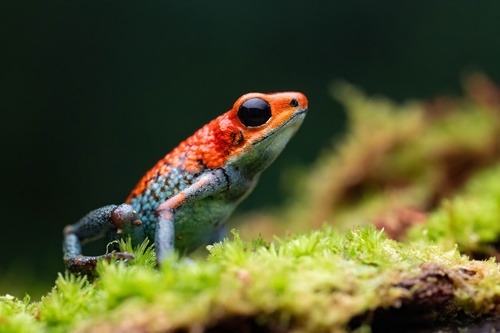
Dendrobatinae
subfamilyDendrobatinae

Colostethinae
subfamilyColostethinae

Hyloxalinae
subfamilyHyloxalinae
Amazonas Rocket Frog
speciesColostethus poecilonotus
Where it lives
Recorded sightings
—
geo-referenced records in GBIF, from museums, herbaria and field observers.
Drag the globe to turn it. Dots are where records exist, not a range map; darker means more records.
In the stacks
Searching the stacks…
Every page naming Dendrobatidae in the Biodiversity Heritage Library →
This page is assembled live from iNaturalist, GBIF, Wikipedia, the Source Library and the Internet Archive. It is not yet part of the hand-edited codex. iNaturalist taxon 20980.