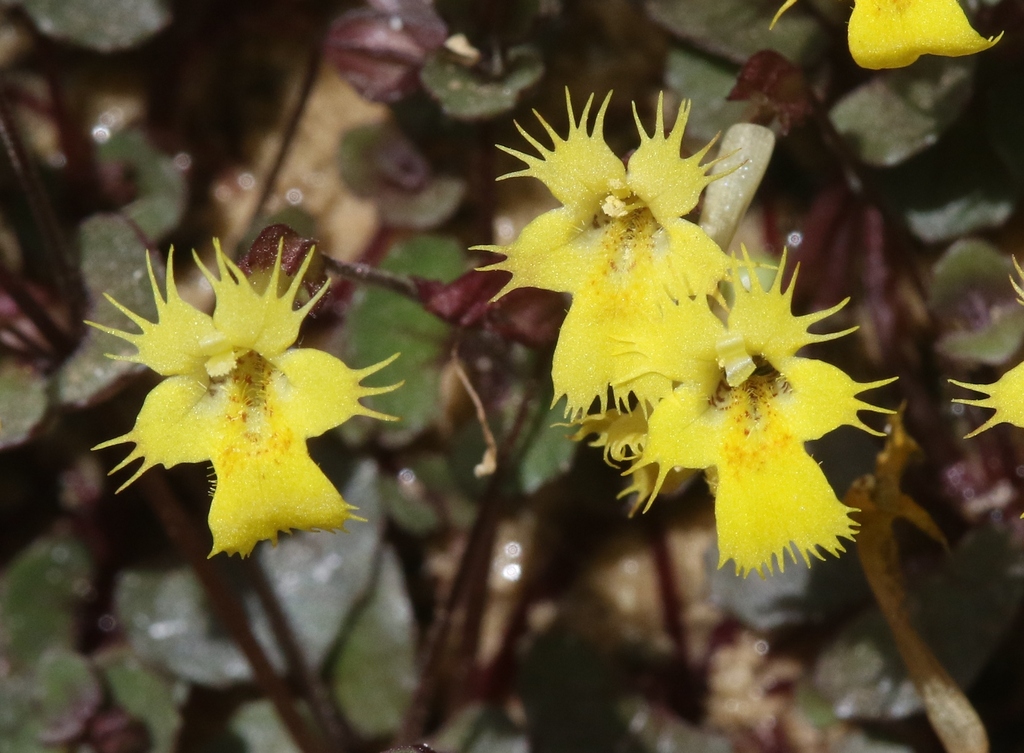
lopseed family
Phrymaceae
Phrymaceae, also known as the lopseed family, is a small family of flowering plants in the order Lamiales. It has a nearly cosmopolitan distribution, but is concentrated in two centers of diversity, one in Australia, the other in western North America. Members of this family occur in diverse habitats, including deserts, river banks and mountains.
Phrymaceae is a family of mostly herbs and a few subshrubs, bearing tubular, bilaterally symmetric flowers. They can be annuals or perennials. Some of the Australian genera are aquatic or semiaquatic. One of these, Glossostigma, is among the smallest of flowering plants, larger than the aquatic Lemna but similar in size to the terrestrial Lepuropetalon. The smallest members of Phrymaceae are only a few centimeters long, while the largest are woody shrubs to 4 m tall. The floral structure of Phrymaceae is variable, to such an extent that a morphological assessment is difficult. Reproduction is also variable, being brought about by different mating systems which may be sexual or asexual, and may involve outcrossing, self-fertilization, or mixed mating. Some are pollinated by insects, others by hummingbirds. The most common fruit type in this family is a dehiscent capsule containing numerous seeds, but exceptions exist such as an achene, in Phryma leptostachya, or a berry-like fruit in Leucocarpus.
15 branches of this family, most-observed first

monkeyflowers
genusErythranthe

Diplacus
genusDiplacus

Monkeyflowers
genusMimulus

Phryma
genusPhryma
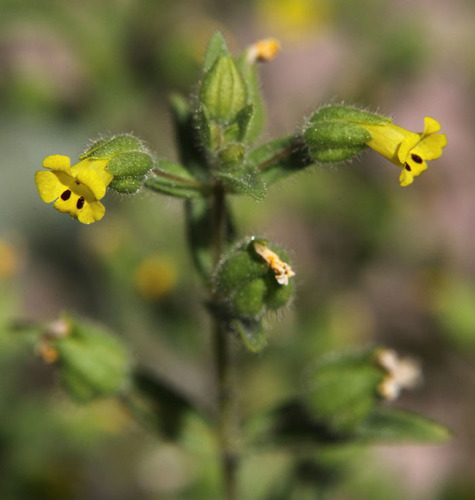
Mimetanthe
genusMimetanthe
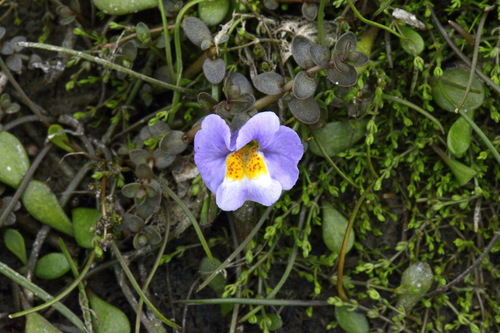
Thyridia
genusThyridia
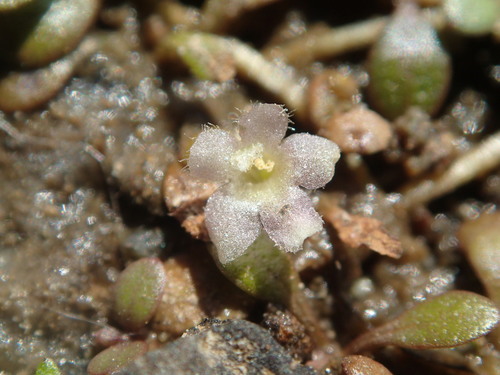
mudmats
genusGlossostigma
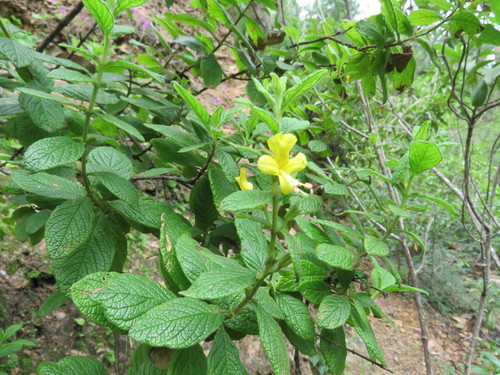
Hemichaena
genusHemichaena

Peplidium
genusPeplidium
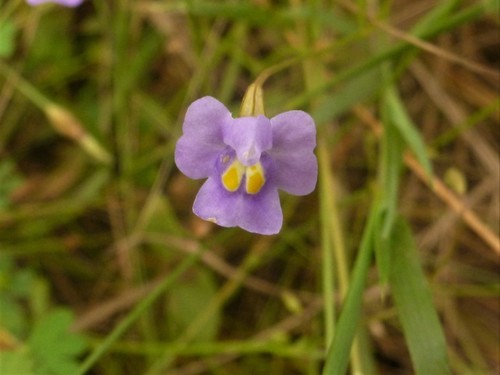
Uvedalia
genusUvedalia
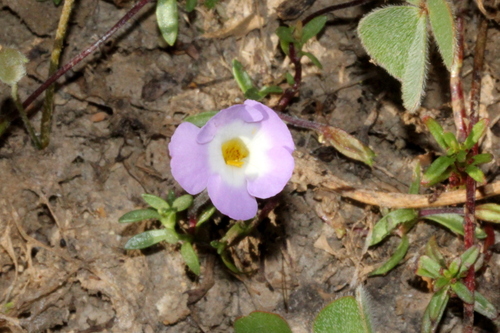
Elacholoma
genusElacholoma

Leucocarpus
genusLeucocarpus
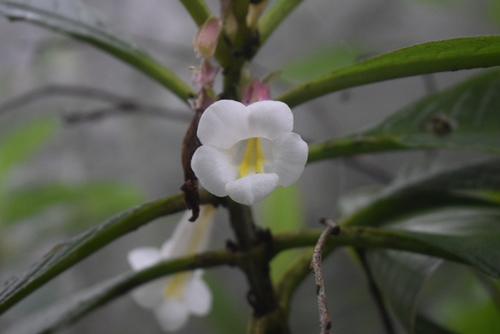
Cyrtandromoea
genusCyrtandromoea

Microcarpaea
genusMicrocarpaea
Mimulicalyx
genusMimulicalyx
Where it lives
Recorded sightings
—
geo-referenced records in GBIF, from museums, herbaria and field observers.
Drag the globe to turn it. Dots are where records exist, not a range map; darker means more records.
In the stacks
Searching the stacks…
Every page naming Phrymaceae in the Biodiversity Heritage Library →
This page is assembled live from iNaturalist, GBIF, Wikipedia, the Source Library and the Internet Archive. It is not yet part of the hand-edited codex. iNaturalist taxon 64552.