- Plants
- ›Vascular Plants
- ›flowering plants
- ›Dicots
- ›Gentians, Dogbanes, Madders, and Allies
- ›Dogbane Family
- ›milkweeds
- ›Asclepiadeae
- ›Cynanchinae
- ›Cynanchum
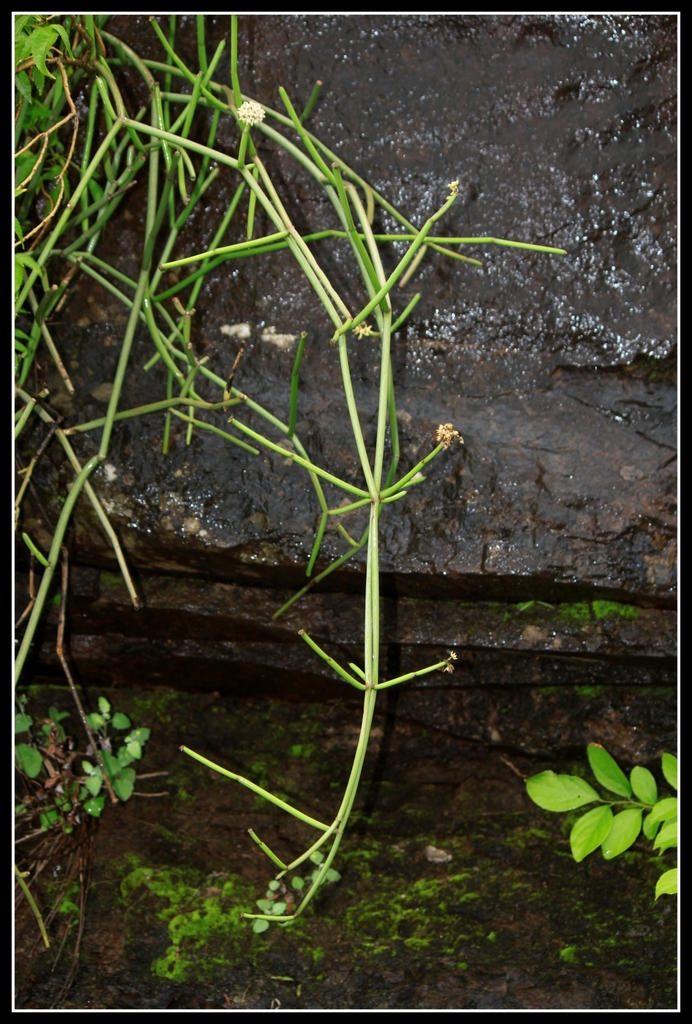
Cynanchum acidum
Cynanchum acidum is a species of flowering plant in the family Apocynaceae, typically found in the arid parts of peninsular India where it is used in religious sacrifices. The plant is religiously linked to Hinduism and is believed to be a major ingredient of the Soma in Ancient India.
From the article Cynanchum acidum on Wikipedia (CC BY-SA), quoted section by section
Description
Cynanchum acidum is a perennial leafless, jointed shrub with green, cylindrical, fleshy glabrous with twining branches having milky white latex and with its leaves reduced to scales. Its flowers are white or pale greenish white, are fragrant and grow in umbels on branch extremities. The fruits follicles taper at both ends; seeds are flat, ovate, comose. This leafless plant grows in rocky, sterile places all over India.
Where it lives
Recorded sightings
—
geo-referenced records in GBIF, from museums, herbaria and field observers.
Drag the globe to turn it. Dots are where records exist, not a range map; darker means more records.
In the stacks
Searching the stacks…
Every page naming Cynanchum acidum in the Biodiversity Heritage Library →
This page is assembled live from iNaturalist, GBIF, Wikipedia, the Source Library and the Internet Archive. It is not yet part of the hand-edited codex. iNaturalist taxon 632685.