- Plants
- ›Vascular Plants
- ›flowering plants
- ›Dicots
- ›Buttercups, Poppies, and Allies
- ›buttercup family
- ›Anemones, buttercups, larkspurs and allies
- ›anemones and allies
- ›Clematis
- ›Viticella
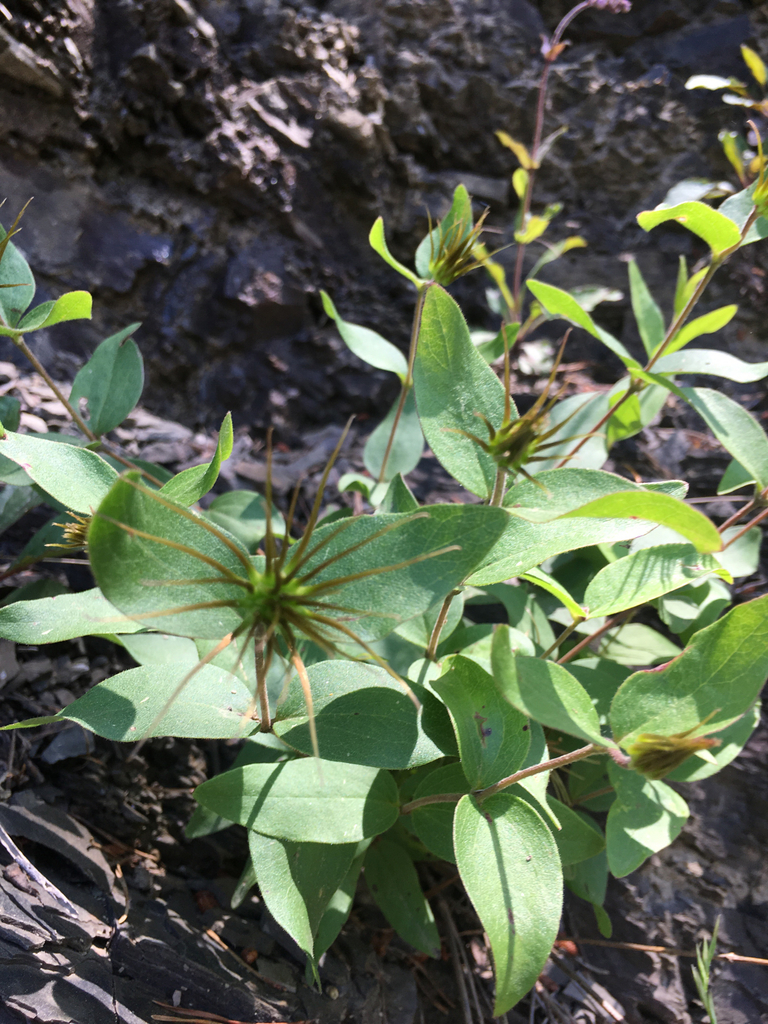
Millboro Leather Flower
Clematis viticaulis
Clematis viticaulis is a species of perennial flowering plant in the buttercup family, known by the common names Millboro leatherflower and grape clematis.
From the article Clematis viticaulis on Wikipedia (CC BY-SA), quoted section by section
Description
Clematis viticaulis is a woody vine, producing erect, hairy stems up to 0.5 metres (1.6 ft) long. The thin, leathery oval leaves are up to 8 centimeters long by 4.5 wide and are oppositely arranged on the stems. The inflorescence is a single urn-shaped flower. There are no petals, just hairy purple or blue- or green-tinged sepals which are lance-shaped and up to 2.5 centimeters long. The sepal tips are pointed or rounded and spread, curve, or curl backward. The fruit is an achene with a plumelike, copper-colored extension up to 4 centimeters long. These seedheads replace the faded flowers and remain throughout July, when the plants may go semi-dormant.
Range & habitat
It is endemic to the Appalachian Mountains in western Virginia, in the Eastern United States. It is known from Bath, Augusta, and Rockbridge Counties. This plant is limited to the shale barrens habitat and woodlands along its edges. There are 18 to 20 occurrences, with a total global population of 1500 to 2500 individuals. Despite its rarity and endangered species status, the plant's population is generally stable, with only minor threats, such as herbivory and road maintenance. Recruitment from seed is uncommon but the plants live a long time once established.
Wikipedia: “Distribution and habitat”
Where it lives
Recorded sightings
—
geo-referenced records in GBIF, from museums, herbaria and field observers.
Drag the globe to turn it. Dots are where records exist, not a range map; darker means more records.
In the stacks
Searching the stacks…
Every page naming Clematis viticaulis in the Biodiversity Heritage Library →
This page is assembled live from iNaturalist, GBIF, Wikipedia, the Source Library and the Internet Archive. It is not yet part of the hand-edited codex. iNaturalist taxon 62779.