- Animals
- ›Arthropods
- ›Hexapods
- ›Insects
- ›Winged and Once-winged Insects
- ›Ants, Bees, Wasps, and Sawflies
- ›Narrow-waisted Wasps, Ants, and Bees
- ›Ants, Bees, and Stinging Wasps
- ›Spider Wasps, Velvet Ants, and Allies
- ›Velvet Ants
- ›Sphaeropthalminae
- ›Dasymutillini
- ›Dasymutilla
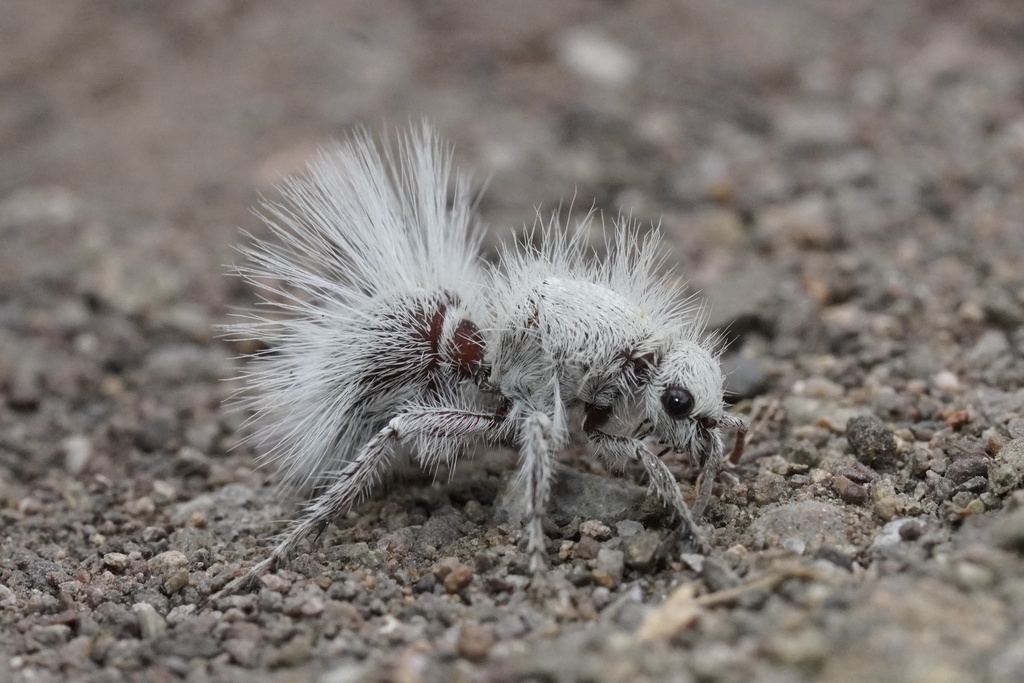
Thistledown Velvet Ant
Dasymutilla gloriosa
Dasymutilla gloriosa, sometimes referred to as the thistledown velvet ant, is a member of the genus Dasymutilla. Only females are wingless, as in other mutillids. Compared to other mutillids, it is mid-sized, being larger than some of the smallest known species like Dasymutilla vesta but smaller than some of the largest known species like Dasymutilla klugii. It ranges from Utah, Nevada, California, Arizona, New Mexico, Texas and south into Mexico.
Rather than having aposematic coloration like other mutillids, the females of this species are camouflaged by their resemblance to the fruit of Creosotebush, which occurs in the same habitats. However, this species' coloration appears to be primarily an adaptation to hot desert conditions instead of predation pressure; their internal and external body temperature are less compared to orange Dasymutilla species in the same habitat.
Listen
Looking for field recordings…
Where it lives
Recorded sightings
—
geo-referenced records in GBIF, from museums, herbaria and field observers.
Drag the globe to turn it. Dots are where records exist, not a range map; darker means more records.
In the stacks
Searching the stacks…
Every page naming Dasymutilla gloriosa in the Biodiversity Heritage Library →
This page is assembled live from iNaturalist, GBIF, Wikipedia, the Source Library and the Internet Archive. It is not yet part of the hand-edited codex. iNaturalist taxon 62765.