- Plants
- ›Vascular Plants
- ›flowering plants
- ›Dicots
- ›Sunflowers, Bellflowers, Fanflowers, and Allies
- ›Sunflowers, Daisies, Asters, and Allies
- ›Asteroideae
- ›Sunflowers and Allies
- ›Engelmanniinae
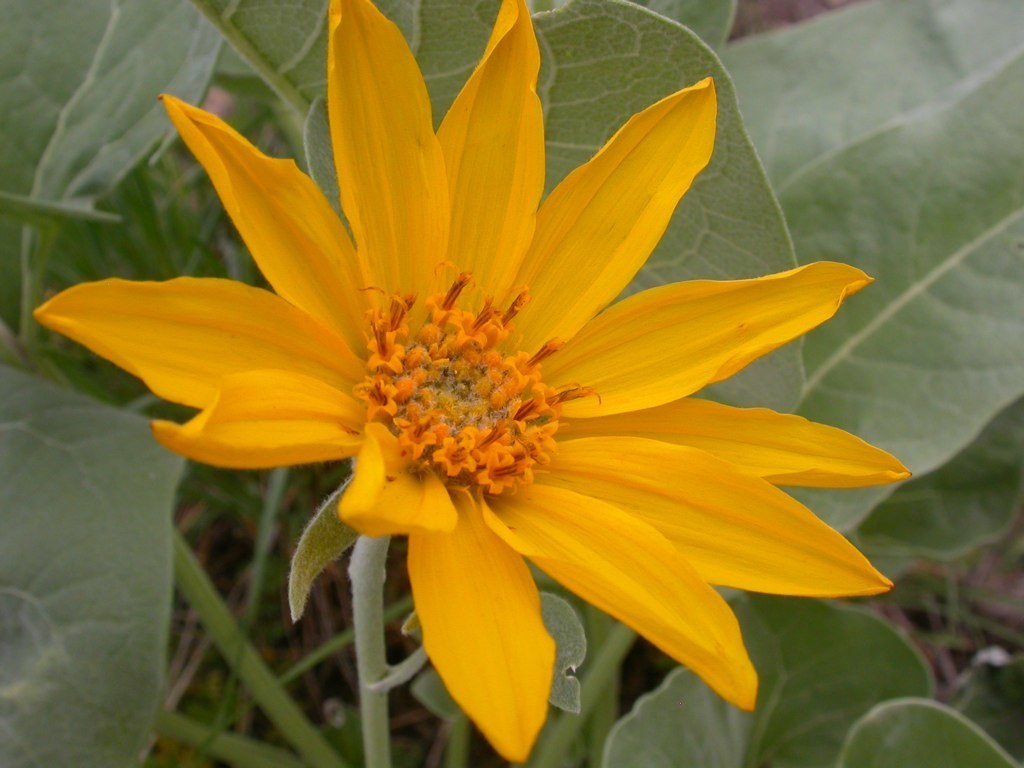
balsamroots
Balsamorhiza
Balsamorhiza is a genus of plants in the family Asteraceae known commonly as balsamroots. These are perennials with fleshy taproots and caudices bearing erect stems and large, basal leaves. Atop the tall stems are showy yellow sunflower-like blooms. Balsamroots are native to western North America (United States and Canada).
Native Americans used the sticky sap of this plant as a topical antiseptic for minor wounds. The entire plant is edible and nutritious, but not necessarily enjoyable because it contains a bitter, strongly pine-scented sap. The large taproots produced by Balsamorhiza sagittata are edible and were harvested, dried, and ground into a starchy flour by Native Americans when other food plants were scarce. The plants' large taproots are reported to be very palatable and far less bitter than the above-ground parts of the plant.
7 branches of this genus, most-observed first
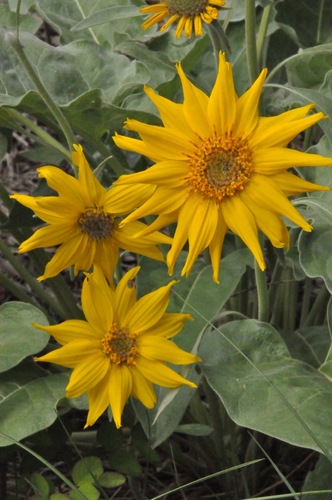
Artorhiza
subgenusArtorhiza
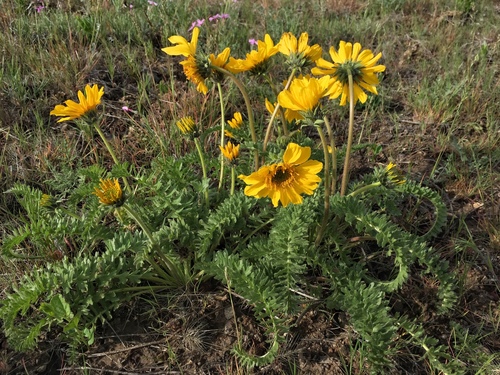
Balsamorhiza
subgenusBalsamorhiza
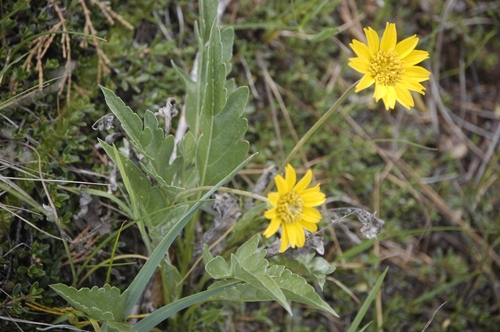
Balsamorhiza deltoidea × sericea
hybridBalsamorhiza deltoidea × sericea
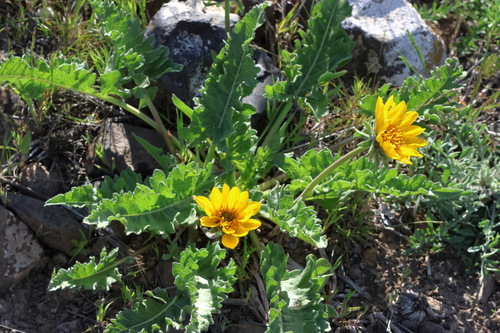
Balsamorhiza careyana × hookeri
hybridBalsamorhiza careyana × hookeri
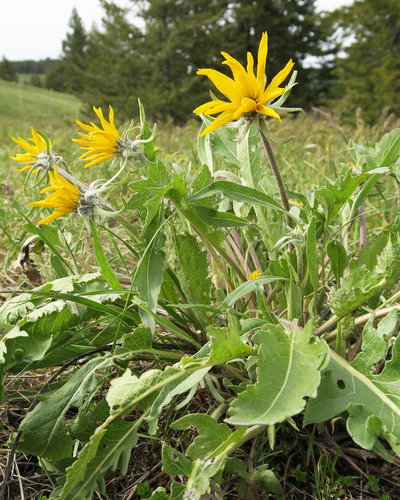
Balsamorhiza × tomentosa
hybridBalsamorhiza × tomentosa
Balsamorhiza × terebinthacea
hybridBalsamorhiza × terebinthacea
Balsamorhiza × bonseri
hybridBalsamorhiza × bonseri
Where it lives
Recorded sightings
—
geo-referenced records in GBIF, from museums, herbaria and field observers.
Drag the globe to turn it. Dots are where records exist, not a range map; darker means more records.
In the stacks
Searching the stacks…
Every page naming Balsamorhiza in the Biodiversity Heritage Library →
This page is assembled live from iNaturalist, GBIF, Wikipedia, the Source Library and the Internet Archive. It is not yet part of the hand-edited codex. iNaturalist taxon 62267.