- Plants
- ›Vascular Plants
- ›flowering plants
- ›Dicots
- ›Mints, Plantains, Olives, and Allies
- ›Plantain Family
- ›Penstemon and allies
- ›Keckiella
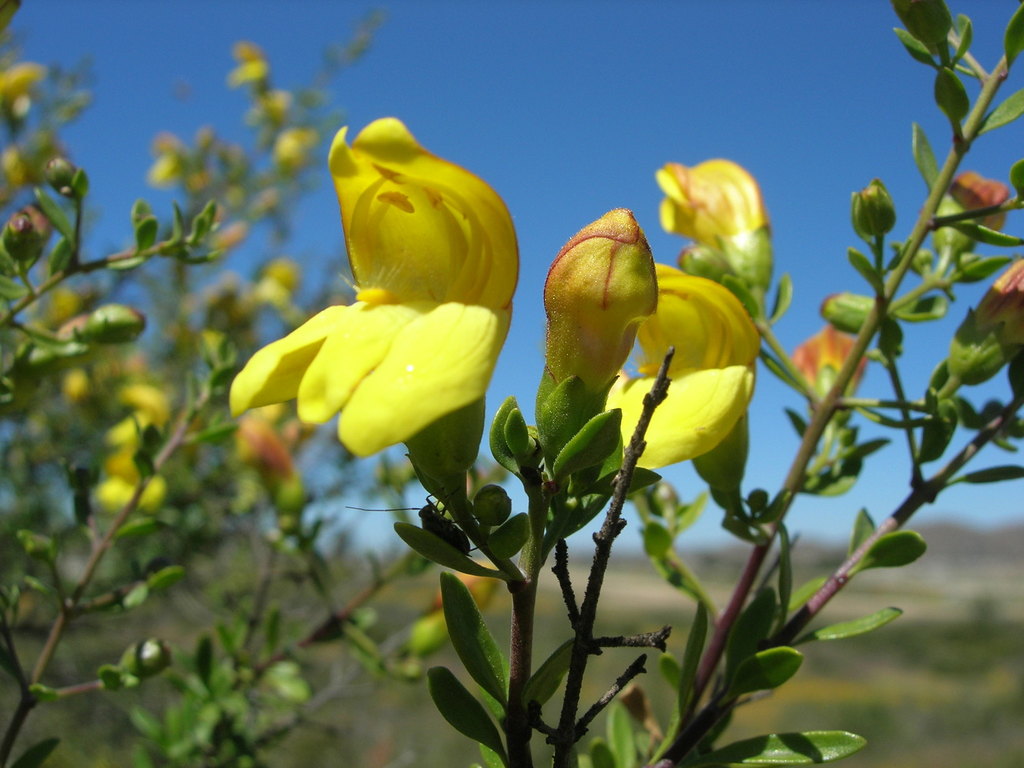
chaparral beardtongue
Keckiella antirrhinoides
Keckiella antirrhinoides (formerly Penstemon antirrhinoides) is a species of flowering shrub in the plantain family known by the common names snapdragon penstemon and chaparral beardtongue.
It is native to the Mojave Desert and Sonoran Deserts of California, Arizona, and northern Baja California. It is also found in the chaparral—Colorado Desert ecotone of the Peninsular Ranges.
From the article Keckiella antirrhinoides on Wikipedia (CC BY-SA), quoted section by section
Description
Keckiella antirrhinoides is desert shrub that grows one half to two and a half meters tall, with spreading branches. The oppositely-arranged leaves are up to 2 centimeters long and are lance-shaped or narrow ovals. They are deciduous during dry periods. The plant produces branchlike inflorescences which bear snapdragon-like flowers. Each hairy, glandular flower is about 2 centimeters wide, with three lower lobes which lie flat or curve down and two upper lobes which join to form a curved lip. Inside the flower are shiny filamentous stamens holding anthers and a flat, densely hairy sterile stamen called a staminode. The flowers are light yellow and dry to nearly black.
Range & habitat
Snapdragon penstemons are native to northwestern Mexico and the southwestern United States. In Mexico it is grows in both Baja California and in Sonora. In the US it is found in nine counties in the western two-thirds of Arizona, but just Clark County at the southern tip of Nevada.In California it is known from San Bernardino, Riverside, Los Angeles, Orange, and San Diego counties in southern California.
Wikipedia: “Range”
Where it lives
Recorded sightings
—
geo-referenced records in GBIF, from museums, herbaria and field observers.
Drag the globe to turn it. Dots are where records exist, not a range map; darker means more records.
In the stacks
Searching the stacks…
Every page naming Keckiella antirrhinoides in the Biodiversity Heritage Library →
This page is assembled live from iNaturalist, GBIF, Wikipedia, the Source Library and the Internet Archive. It is not yet part of the hand-edited codex. iNaturalist taxon 62062.