- Plants
- ›Vascular Plants
- ›flowering plants
- ›Dicots
- ›Sunflowers, Bellflowers, Fanflowers, and Allies
- ›Sunflowers, Daisies, Asters, and Allies
- ›chicories, dandelions, and allies
- ›Lettuce, Chicory, Dandelion and Salsify Tribe
- ›Lettuce subtribe
- ›Lactuca
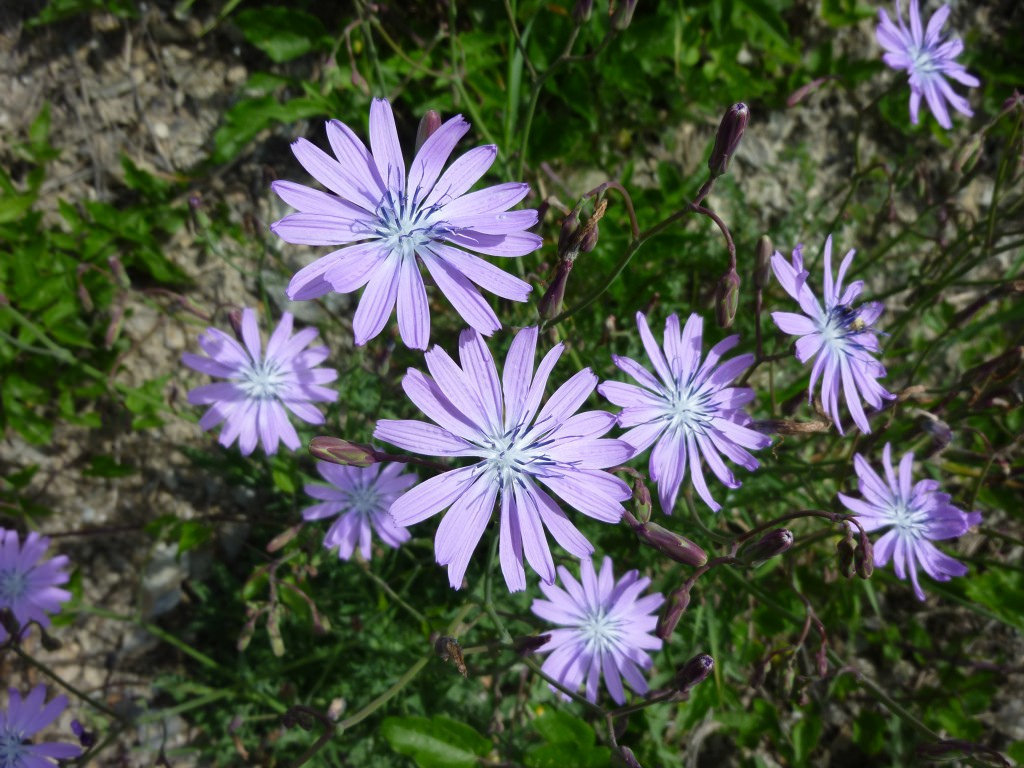
mountain lettuce
Lactuca perennis
Lactuca perennis, common names: mountain lettuce, blue lettuce or perennial lettuce, is a perennial herbaceous plant species belonging to the genus Lactuca of the family Asteraceae. It is widespread across most of central and southern Europe. Its leaves are edible.
From the article Lactuca perennis on Wikipedia (CC BY-SA), quoted section by section
Description
Lactuca perennis reaches on average 60 centimetres (24 in) of height, with a minimum height of 20 centimetres (7.9 in). This plant is glabrous, the stems are erect and branched, leaves are greyish-green, the lower ones with a small petioles, the upper ones partly amplexicaul. It is hermaphrodite and entomophilous. The flowers are violet-blue, with a size of 30–40 millimetres (1.2–1.6 in). The flowering period extends from April through August and the seeds ripen from July until September. In southern France it is sometimes referred to by its Occitan name “breou”[1] or “breu”[2]
Range & habitat
These plants prefer calcareous well-drained soils and they are common on sunny rocky soils, on dry meadows, on roadsides and on banks of rivers. They can be found on average at 500–2,000 metres (1,600–6,600 ft) above sea level.
Wikipedia: “Habitat”
Where it lives
Recorded sightings
—
geo-referenced records in GBIF, from museums, herbaria and field observers.
Drag the globe to turn it. Dots are where records exist, not a range map; darker means more records.
In the old herbals & bestiaries

In the stacks
Searching the stacks…
Every page naming Lactuca perennis in the Biodiversity Heritage Library →
This page is assembled live from iNaturalist, GBIF, Wikipedia, the Source Library and the Internet Archive. It is not yet part of the hand-edited codex. iNaturalist taxon 61297.