- Animals
- ›Arthropods
- ›Hexapods
- ›Insects
- ›Winged and Once-winged Insects
- ›Butterflies and Moths
- ›Owlet Moths and Allies
- ›Underwing, Tiger, Tussock, and Allied Moths
- ›Tiger Moths and Allies
- ›Tiger Moths
- ›Spilosomina
- ›Spilosoma
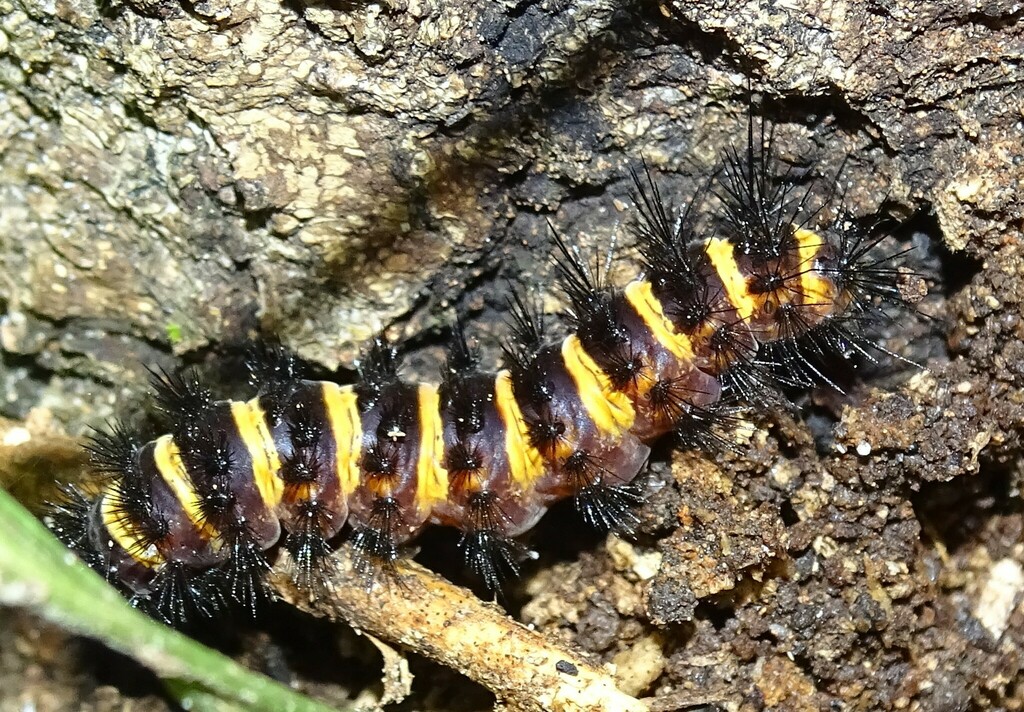
Agreeable Tiger Moth
Spilosoma congrua
The agreeable tiger moth (Spilosoma congrua) is a medium-sized moth belonging to the family Erebidae, subfamily Arctiinae, commonly known as the tiger moths. It was first described by the British entomologist Francis Walker in 1855 and is one of the most common white tiger moths found in North America. The species is easily recognised by its bright white wings, pronounced black eyes, white abdomen with rows of black spots, and a distinctive orange or yellow "bib" on the thorax just behind the head. These features separate it from its close relatives, the Virginia tiger moth (Spilosoma virginica) and the dubious tiger moth (Spilosoma dubia).
The agreeable tiger moth ranges across most of the contiguous United States, southern Canada, and there is some evidence of disjunct populations in India. It inhabits open woodlands, meadows, fields, roadsides, and suburban gardens. The larvae are generalist feeders, consuming a wide variety of herbaceous plants, including many common weeds and garden vegetables, which sometimes brings the species into mild conflict with agriculture. Adults are nocturnal and are attracted to lights. The species has one to three generations per year depending on latitude and climate.
From the article Agreeable tiger moth on Wikipedia (CC BY-SA), quoted section by section
Range & habitat
The agreeable tiger moth inhabits a wide range of open and semi-open habitats. It is most common in:
Old fields and meadows Roadsides and railway verges Forest edges and clearings Suburban gardens and parks Abandoned agricultural land Wetlands and marshes edges The species avoids dense, closed-canopy forest and extremely arid deserts, although it may occur in riparian corridors through otherwise unsuitable terrain. The key requirement for habitat suitability is the presence of herbaceous host plants for the larvae. In urban and suburban areas, the agreeable tiger moth is often one of the more commonly observed white moths at porch lights. It tolerates moderate levels of habitat disturbance and may benefit from the proliferation of weedy host plants in human-modified environments.
Wikipedia: “Habitat”
What it does
Many tiger moths, including species in the genus Spilosoma, possess tympanal organs on the thorax that allow them to detect the ultrasonic echolocation calls of bats, their primary nocturnal predators. When exposed to ultrasound, these moths may exhibit evasive flight manoeuvres, such as diving, spiralling, or dropping to the ground. Some arctiines also produce their own ultrasonic clicks in response to bat calls, which are thought to jam the bat's echolocation or to warn the bat of the moth's unpalatability. Whether S. congrua engages in such acoustic aposematism has not been studied, but it is plausible given that the behaviour is widespread in the subfamily.
Wikipedia: “Acoustic behaviour”
In human culture
The generic name Spilosoma is derived from the Greek words spilos (a spot, stain, or blemish) and soma (body), referring to the spotted abdomen characteristic of many members of the genus. The specific epithet congrua is Latin for "agreeable", "congruous", or "fitting". The precise reason for Walker's choice of this name is unknown. It may refer to the pleasing symmetry of the black spots on the white body, or it may simply have been an arbitrary choice from the vocabulary of descriptive Latin terms. The common name "agreeable tiger moth" directly translates the scientific name and was adopted by early 20th century American entomologists. The alternative name "New Hope tiger moth" derives from a later synonym, Spilosoma spesnova, where spes nova means "new hope" in Latin. This name was proposed by Smith in 1985 for what was thought to be a separate species, but was later synonymised.
Wikipedia: “Etymology”
Listen
Looking for field recordings…
Where it lives
Recorded sightings
—
geo-referenced records in GBIF, from museums, herbaria and field observers.
Drag the globe to turn it. Dots are where records exist, not a range map; darker means more records.
In the stacks
Searching the stacks…
Every page naming Spilosoma congrua in the Biodiversity Heritage Library →
This page is assembled live from iNaturalist, GBIF, Wikipedia, the Source Library and the Internet Archive. It is not yet part of the hand-edited codex. iNaturalist taxon 61240.