- Animals
- ›Arthropods
- ›Hexapods
- ›Insects
- ›Winged and Once-winged Insects
- ›Ants, Bees, Wasps, and Sawflies
- ›Narrow-waisted Wasps, Ants, and Bees
- ›Ants, Bees, and Stinging Wasps
- ›Bees and Apoid Wasps
- ›Bees
- ›Miner, Fairy, Allied Panurgine, and Oxaeine Bees
- ›Typical Mining Bees
- ›Andrenini
- ›Andrena
- ›Andrena
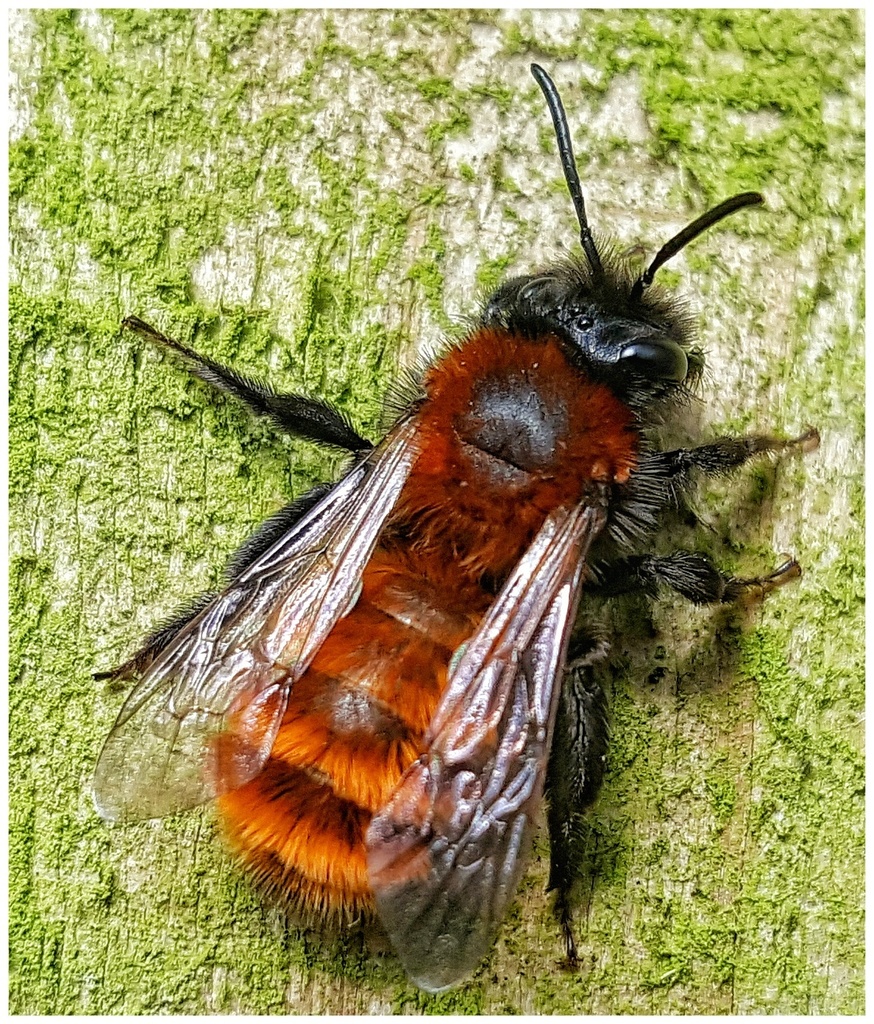
Tawny Mining Bee
Andrena fulva
The tawny mining bee, Andrena fulva, is a European species of the sand bee (Andrena) genus. The males are 10–12 mm (0.4–0.5 in) and the females 8–10 mm (0.3–0.4 in) long. The female is covered with fox-red hair on the dorsal surface of its thorax and abdomen and black hair on its head and ventral surface. The male is less distinctive, being clad in golden-brown or reddish-brown hairs, with some long white hairs on the face, and a tooth on each of the mandibles.
The tawny mining bee lives in Europe, ranging from the Balkans to southern Scandinavia, the United Kingdom and Ireland. It lives among short vegetation in light woodlands and dry grasslands, and also in parks and gardens. It is widely distributed but has a low population density. It is present in lowland England and Wales and at a few sites in southern Scotland. In Ireland it was only known at two locations in County Kilkenny in 1927, and until 2012 was considered extinct, when it was rediscovered at several locations throughout Ireland.
Listen
Looking for field recordings…
Where it lives
Recorded sightings
—
geo-referenced records in GBIF, from museums, herbaria and field observers.
Drag the globe to turn it. Dots are where records exist, not a range map; darker means more records.
In the stacks
Searching the stacks…
Every page naming Andrena fulva in the Biodiversity Heritage Library →
This page is assembled live from iNaturalist, GBIF, Wikipedia, the Source Library and the Internet Archive. It is not yet part of the hand-edited codex. iNaturalist taxon 60579.