- Plants
- ›Vascular Plants
- ›flowering plants
- ›Dicots
- ›Nances, Willows, and Allies
- ›Flax Family
- ›Linoideae
- ›Linum
- ›Linum
- ›Linum perenne
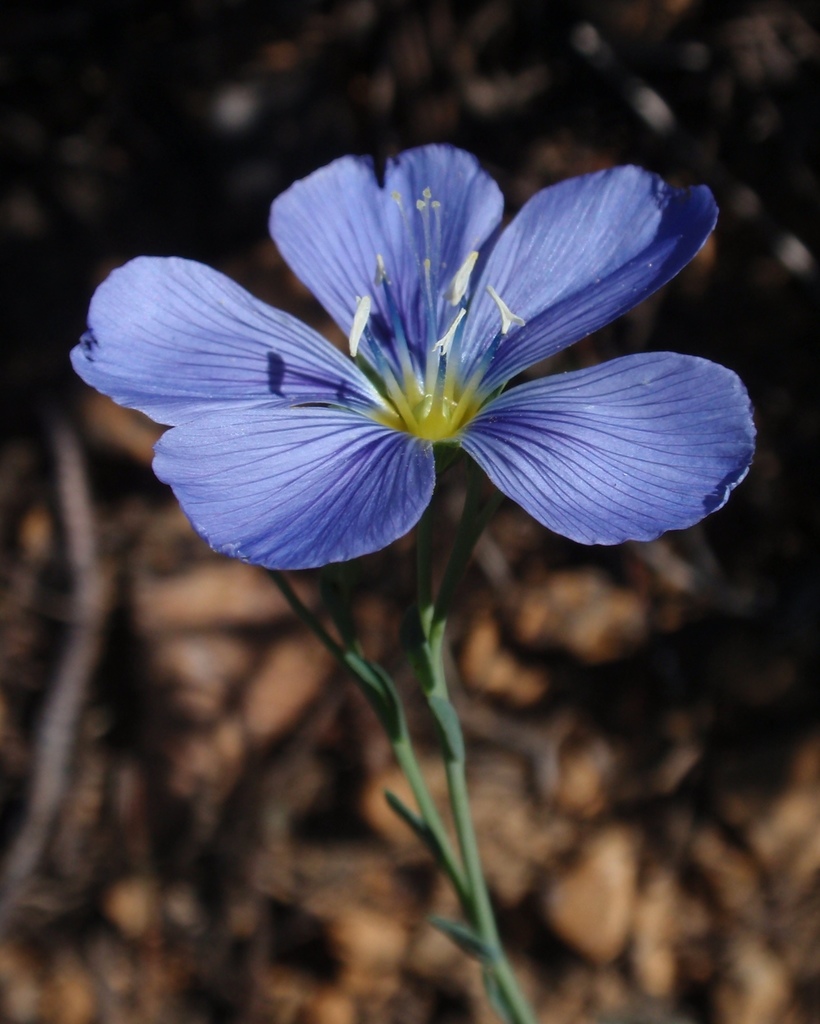
Lewis flax
Linum lewisii
Linum lewisii (Linum perenne var. lewisii) (Lewis flax, blue flax or prairie flax) is a perennial plant in the family Linaceae, native to western North America from Alaska south to Baja California, and from the Pacific Coast east to the Mississippi River (USDA Plant Profile: Linum lewisii). It grows on ridges and dry slopes, from sea level in the north up to 11,000 ft (3,400 m) in the Sierra Nevada.
From the article Linum lewisii on Wikipedia (CC BY-SA), quoted section by section
Description
It is a slender herbaceous plant growing to 80 centimetres (31+1⁄2 inches) tall, with spirally arranged narrow lanceolate leaves 1–3 cm (1⁄2–1+1⁄4 in) long. The flowers are pale blue or lavender to white, often veined in darker blue, with five petals 1–1.5 cm long and in varying length styles. The flowers open in the morning and fade, dropping their petals by noon on hot, sunny days.
Range & habitat
The plant is native to western North America from Alaska south to Baja California, and from the Pacific Coast east to the Mississippi River. It grows on ridges and dry slopes, from sea level in the north up to 11,000 feet (3,400 metres) in the Sierra Nevada.
Wikipedia: “Distribution and habitat”
How it is grown
Blue flax is a durable wildflower in garden conditions, never becoming overly aggressive towards other plants. Plants are easily grown from seed. Blue flax grows well in lean soils without much organic matter and are healthier in well-drained soils.
== References ==
Wikipedia: “Cultivation”
Where it lives
Recorded sightings
—
geo-referenced records in GBIF, from museums, herbaria and field observers.
Drag the globe to turn it. Dots are where records exist, not a range map; darker means more records.
In the stacks
Searching the stacks…
Every page naming Linum lewisii in the Biodiversity Heritage Library →
This page is assembled live from iNaturalist, GBIF, Wikipedia, the Source Library and the Internet Archive. It is not yet part of the hand-edited codex. iNaturalist taxon 60490.