- Animals
- ›Arthropods
- ›Hexapods
- ›Insects
- ›Winged and Once-winged Insects
- ›Butterflies and Moths
- ›Butterflies
- ›Whites, Yellows, and Sulphurs
- ›Whites
- ›Marbles and Orangetips
- ›Anthocharis
- ›Anthocharis
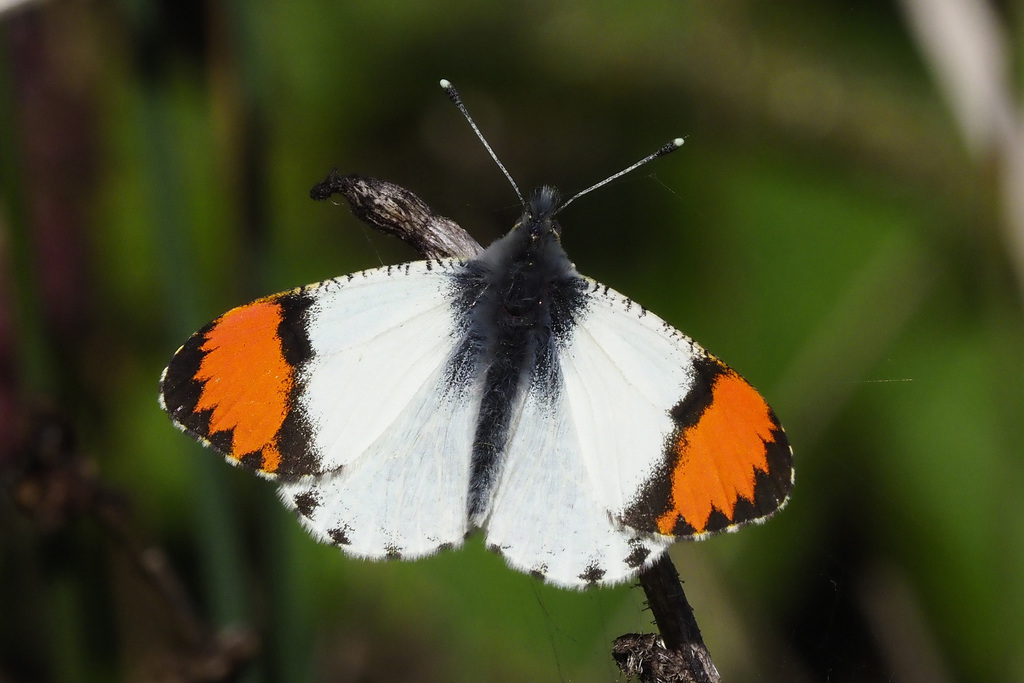
Sara Orangetip
Anthocharis sara
Anthocharis sara, the Sara orangetip, is one of three species in the Sara orangetip complex. It has a population extending from Baja California into extreme southwest Oregon and another extending from the east slope of the Sierra Nevada into far western Nevada. The common name Pacific orangetip is obsolete since it implies a distribution that includes two separate species.
From the article Anthocharis sara on Wikipedia (CC BY-SA), quoted section by section
Description
The adult female orange-tip has orange tips at the ends of its wings while the male has ultraviolet reflective tips that appear orange to human eyes but appear "bee purple" to the butterfly. Females lay creamy white eggs that turn orange-red a few hours after they are laid. Fifth instar A. sara larvae are a dark green color and have small black pinacula. The larvae are a plain green, and when they mature they form a light brown, thorn-shaped pupa.
What it does
During the mating season, the males patrol, flying up and down a linear path as a way to increase the likelihood of sexual encounters with females. Males usually patrol by the sides of streams and roads in the canyon bottoms. There seems to be a hierarchy between the males in which the best sites are taken by the dominant males.
Wikipedia: “Reproductive behavior”
In human culture
Like many butterfly species, they have strongly seasonal life cycles. A. sara have two consecutive flights at one point in the year and are not present for the other half of the year. The first brood lives from late January to April and the second brood lives from May to early July. There has been known to occasionally be some overlap between the two generations. In captivity, the pupae of A. sara have been observed staying in diapause for up to three years. The species is found in a variety of habitats including orchards, fields, meadows, and canyons.
Wikipedia: “Life history”
Listen
Looking for field recordings…
Where it lives
Recorded sightings
—
geo-referenced records in GBIF, from museums, herbaria and field observers.
Drag the globe to turn it. Dots are where records exist, not a range map; darker means more records.
In the stacks
Searching the stacks…
Every page naming Anthocharis sara in the Biodiversity Heritage Library →
This page is assembled live from iNaturalist, GBIF, Wikipedia, the Source Library and the Internet Archive. It is not yet part of the hand-edited codex. iNaturalist taxon 59124.